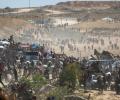
The recently signed Gaza Peace Agreement is a 'landmark' step towards stability in the Middle East, India has said, reiterating that a two-state solution remains 'the only pragmatic path' to achieving durable peace between Israel and Palestine.
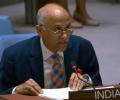
In a strong retort against Pakistan in the United Nations Security Council, India on Monday said its neighbour as a country that 'bombs its own people' and conducts 'systematic genocide'.

A UN Security Council report states that The Resistance Front (TRF) claimed responsibility for the Pahalgam terror attack and published a photograph of the attack site. The report also cites assertions that the attack could not have happened without the support of Pakistan-based Lashkar-e-Tayyiba (LeT).
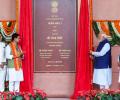
Prime Minister Narendra Modi inaugurated Kartavya Bhavan, the first of ten Common Central Secretariat buildings, aiming to consolidate ministries for improved efficiency. The building will house several key ministries, relocating them from older, outdated structures.

Construction of all ten buildings of the Common Central Secretariat (CCS) is slated for completion in the next 22 months. Several ministries currently housed in Shastri Bhavan, Krishi Bhavan, Nirman Bhavan, and Udyog Bhavan will begin relocating to four new locations. The first building, Kartavya Bhavan, will be inaugurated by Prime Minister Narendra Modi.

The government stated that Operation Sindoor was launched in response to a 'barbaric' attack by 'Pakistan-sponsored terrorists,' focusing on dismantling terror infrastructure and neutralizing terrorists likely to be sent across to India.

'...it should not delude itself into thinking that India's security or its great-power ambitions will be advanced by those partnerships.'
'Instead, what India should focus on is on riding out the next three-and-a-half years of Trump's presidency with minimal damage to itself.'
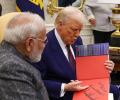
'The current strain in the relationship is serious and likely to be long lasting.' 'Even if Trump suddenly changes his attitude toward India -- which he is entirely capable of doing -- it is unlikely that New Delhi will be able to pick up the pieces and respond as if nothing has happened.'
It is also the first time that TRF has been mentioned in any UN document. This marks the first mention of the LeT and any other Pakistan-based terror group in the report since 2019.
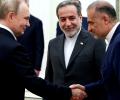
On Monday, June 23, 2025, Russian President Vladimir Putin hosted Iran's Foreign Minister Abbas Araqchi in Moscow.
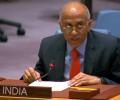
India's Permanent Representative to the UN Ambassador Parvathaneni Harish said that the Indian sub-continent offers a "stark contrast" in terms of progress, prosperity and development models.

The stock and bond markets told Trump firmly that any idea of isolating China would lead to harming the US economy and this forced Trump to backtrack, points out Aakar Patel.
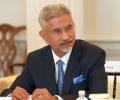
External Affairs Minister S Jaishankar says Operation Sindoor conveyed India's resolve to act against terrorism, following UN Security Council's call to bring Pahalgam attackers to justice.
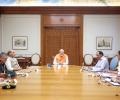
The NSAB is an advisory body that provides inputs to the National Security Council Secretariat.

Defence Minister Rajnath Singh stated India's readiness to assist Pakistan in combating terrorism if it cannot act on its own, highlighting Operation Sindoor as a demonstration of India's capabilities. He also criticized Pakistan's appointment to a UN counter-terrorism committee.

Gandhi urged the prime minister to speak out "clearly, boldly and forthrightly" on behalf of the legacy that India has long represented.
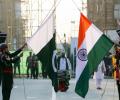
The UN Security Council will hold closed consultations on Monday on the situation between India and Pakistan after Islamabad sought an emergency meeting on the issue. Pakistan, which currently sits as a non-permanent member of the council, requested the meeting in light of rising tensions between the two countries following a terror attack in India. The meeting comes after India's foreign minister spoke with all council members except China and Pakistan, emphasizing the need to bring perpetrators of the attack to justice. The Pakistani envoy has argued that the situation in Jammu and Kashmir poses a threat to regional and international peace and security, justifying the need for a council discussion.
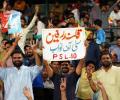
The experienced Indian crew members in Pakistan Cricket Board's roster set to be replaced after escalating cross-border tensions in the aftermath of Pahalgam terrorist attack.

The post further read that "at a moment of heightened regional turbulence", President Trump "demonstrated great strategic foresight and stellar statesmanship through robust diplomatic engagement with both Islamabad and New Delhi," Dawn reported.
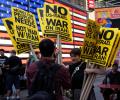
Israel's aerial assault on Iran is widely viewed as an act of naked aggression with no basis in international law, carried out unilaterally despite US opposition and aimed at derailing ongoing US-Iran nuclear negotiations, observes Ambassador M K Bhadrakumar.

Modi, who visited Cyprus in the first leg of his three-nation visit, reiterated India's support for Cyprus's unity and for a peaceful resolution of the Cyprus Question based on UN Security Council resolutions, international law, and the EU Acquis.
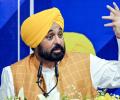
Punjab Chief Minister Bhagwant Mann took a jibe at the Bharatiya Janata Party over Operation Sindoor on Wednesday, saying this is the first time that Indian representatives have been sent abroad to convey about the country's victory in an armed conflict.
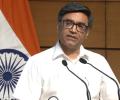
India carried out missile strikes on terror targets in Pakistan and Pakistan-Occupied Kashmir, including the Jaish-e-Mohammad stronghold of Bahawalpur and Lashkar-e-Taiba's base in Muridke, after the Pahalgam attack that killed 26 civilians. The Foreign Secretary said the actions were measured, non-escalatory, proportionate and responsible.

India has carried out strikes against nine terrorist infrastructure in Pakistan and Pakistan-occupied Kashmir, Defence Minister Rajnath Singh said on Wednesday. The strikes were in retaliation to the Pahalgam terror attack in which 26 civilians were killed. Singh said the strikes were precise and destroyed the targets set under Operation Sindoor.
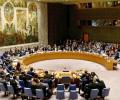
The United Nations Security Council held closed-door consultations on rising tensions between India and Pakistan, with envoys calling for restraint and dialogue. The consultations, requested by Pakistan, lasted for about an hour and a half. UN Secretary-General Antonio Guterres expressed concern over the tensions, urging both countries to avoid a military confrontation. India's former Permanent Representative to the UN, Syed Akbaruddin, said that no consequential outcome could be expected from the discussion.

India's Foreign Secretary Vikram Misri said on Thursday that the choice of de-escalation is with Pakistan, as India only responded to the April 22 Pahalgam terror attack, which killed 26 people. He added that Pakistan has been escalating the situation with cross-border terrorism against India for decades.
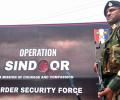
Their shared brief: To assert India's case with clarity, rebut hostile narratives, and secure enduring partnerships for global counter-terror cooperation.

India succeeded in busting the Pakistani narrative on Operation Sindoor, particularly among the Organisation of Islamic Conference (OIC) member nations, where Islamabad sought succour after carrying out terror activities across the border, Shiv Sena leader Shrikant Shinde said.
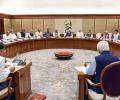
India has reached out to key global powers, including members of the UN Security Council, and apprised them about the reasons behind its military strikes on nine terror targets in Pakistan and Pakistan-occupied-Kashmir in retaliation for the Pahalgam terror attack. New Delhi also conveyed to the countries that it will retaliate if Islamabad escalates the already tense situation.
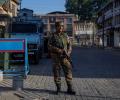
India has reached out to Denmark and other non-permanent members of the UN Security Council to apprise them of the Pahalgam terror attack and its cross-border linkages. External Affairs Minister S Jaishankar has spoken to his counterparts from several nations, conveying India's resolve to bring the perpetrators to justice. The outreach comes as India mulls options for responding to the attack, with Prime Minister Modi assuring the harshest response for the "perpetrators and conspirators." India has also received condolences and condemnations from world leaders, including US President Donald Trump and French President Emmanuel Macron.

UN Secretary-General Antnio Guterres expressed concern over the heightened tensions between India and Pakistan, calling for maximum restraint and urging both countries to step back from the brink. Guterres offered his "good offices" to both governments in the service of peace and condemned the recent terror attack in Pahalgam, emphasizing the need to bring those responsible to justice. He also stressed that a military confrontation would be detrimental and could easily spin out of control. His remarks came hours before a closed consultation of the UN Security Council on the matter, requested by Pakistan. The UN Secretary-General highlighted the need for de-escalation, diplomacy, and a renewed commitment to peace.
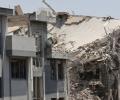
An inconclusive end to this war will pose high risk for Netanyahu of a cascading demand for a regime change in Israel, predicts Ambassador M K Bhadrakumar.
The Union Budget 2025-26 has allocated Rs 1,024.30 crore for expenses incurred by the Council of Ministers, the Cabinet Secretariat and the Prime Minister's Office, and for hospitality and entertainment of state guests. The allocated amount is a bit more than the Rs 1,021.83 crore earmarked in 2024-25.
The United Nations Security Council (UNSC) has strongly condemned the terrorist attack in Jammu and Kashmir, urging that those responsible be held accountable and brought to justice. The Council issued a press statement expressing its deepest sympathy to the victims' families and calling for all states to cooperate in combating terrorism. UN Secretary-General Antonio Guterres also expressed concern about the situation, urging India and Pakistan to exercise restraint.
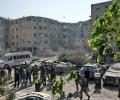
At the end of the day, for many worldwide, the ongoing mutual attacks between Israel and Iran would seem a contest devoid of any moral high ground and only a bout between two ordinary adversaries, one that nevertheless risks spinning out of control into a larger conflagration, notes Shyam G Menon.
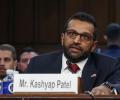
Patel has previously worked at the justice department as a trial attorney for three years before taking on roles at the National Security Council, the office of the director of National Intelligence, and the department of defence, the report said.

President Barack Obama met his National Security Council team at the White House to review potential holiday threats and discuss America's security posture in Pakistan in view of the horrific terrorist attack on a school in Peshawar that left 141 dead, mostly children.
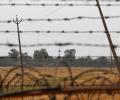
The UN Security Council could meet soon to discuss the situation between India and Pakistan, with the UNSC President expressing concern over rising tensions between the nuclear-armed neighbors. The President, Ambassador Evangelos Sekeris of Greece, said a meeting would provide an opportunity to express views and help diffuse tensions. Sekeris also condemned terrorism in all its forms, including the recent attack in Pahalgam, and called for de-escalation and dialogue between India and Pakistan.

'Fears in Washington began to intensify when it was realised that subsequent Pakistani and Indian attacks on major military facilities -- which were significant in terms of geographic scope and intensity -- could rapidly take both sides to where neither actually wanted to go.' 'The US objective was to stop the fighting as soon as possible. Everything else was secondary.'
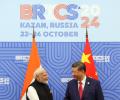
'Don't play the American game... India is too big for a US game.'
 © 2026 Rediff.com - Advertise with us - Disclaimer - Privacy Policy - Sitemap - Feedback - About us - Terms of use - Grievances