
Chief of Army Staff General Upendra Dwivedi stated that the armed forces are fully prepared for 'Operation Sindoor 2.0' if the need arises, emphasising enhanced synergy across all three services for modern multi-domain warfare.

Lieutenant General Seth's involvement in the army's capability development and modernisation efforts is evident from the key appointments he has held in the Strategic Planning and Capability Development Directorates, including Colonel Capability Development for Mechanised Forces, Brigadier Perspective Plans and Acquisition, and Additional Director General Capability Development.

Vayu Shakti-2026 showcased the Indian Air Force's readiness for combat operations in both day and night conditions.

The Battle Axe Division of the Army's Southern Command organised an academia-industry interaction on drone innovation in Jaisalmer, promoting collaboration for emerging defence technologies.

The Bhairav Battalion is positioned between the Para Special Forces and regular infantry units to meet modern warfare requirements, especially in view of drone-intensive warfare.
'The tools of warfare are changing. The MoD must deepen its engagement with technology thinkers that can present compelling visions of where warfare may be heading.'

Army Chief General Upendra Dwivedi emphasized the importance of indigenous equipment for the Indian Army, highlighting the force's modernization efforts and readiness for future warfare.

Indian and US military contingents will participate in a joint exercise in Alaska, focusing on tactical drills and integrated use of military systems.

Chief of Defence Staff Gen Anil Chauhan asserted that the armed forces are free of nepotism and urged children to join to serve the nation. He also spoke about Operation Sindoor and the use of technology in warfare.
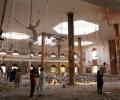
In 2025, India launched Operation Sindoor, a multi-domain combat mission against Pakistan in response to cross-border terrorism. The operation involved precision strikes, military retaliation, and diplomatic measures, marking a significant shift in India's security policy.
India is witnessing trailers of future conflicts and its adversaries will continue with efforts to achieve their strategic aims, Army Chief Gen MM Naravane said on Thursday delving into national security challenges emanating from China and Pakistan.

The Indian Army is set to implement revised physical fitness norms for all personnel, from Agniveers to senior officers, with combined physical tests to be conducted twice annually. The new guidelines aim to enhance combat readiness and will take effect from April 1, 2026.

Chief of Defence Staff General Anil Chauhan emphasized the need for constant high military preparedness, citing Operation Sindoor as an ongoing example. He also highlighted the importance of 'information warriors, technology warriors and scholar warriors' in future warfare.

Top Indian military commanders highlight the success of Exercise Trishul in enhancing jointness and interoperability among the Army, Navy, and Air Force. The exercise, culminating in Amphex 2025, involved 30,000 troops, multiple aircraft, and naval vessels, including INS Vikrant.

Chief of Defence Staff Gen Anil Chauhan identifies China border dispute as India's biggest national security challenge, followed by Pakistan's proxy war. He also highlighted regional instability, future warfare scenarios, and dealing with nuclear-armed adversaries as major concerns.

After Operation Sindoor, the Army and Navy now view the IAF as not a supporting arm, but the spearhead of India's warfighting capability, capable of decisive outcomes across domains, explains Air Commodore Nitin Sathe (retd).

The Pahalgam massacre highlights the evolution of terrorism into a multi-domain challenge. India's response must similarly evolve -- from tactical retaliation to comprehensive strategic deterrence. To establish a credible and sustained deterrent, India must also carry out continuous kinetic operations, both overt and covert, suggest Sakshit Raina and Rahul Mishra. To establish a credible and sustained deterrent, India must also carry out continuous kinetic operations, both overt and covert, suggest Sakshit Raina & Rahul Mishra.

Defence attaches of several major countries who are part of many international groupings, as also of several Islamic countries attended the briefing, sources said.
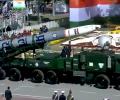
India showcased its indigenous short-range tactical missile Pralay for the first time at the Republic Day parade on Sunday. The missile, developed by the Defence Research and Development Organisation (DRDO), is capable of carrying a nuclear warhead and has a range of 150 to 500 kms. The parade featured an array of other indigenously built missiles, surveillance systems, and weapon systems, reflecting India's growing military prowess. The DRDO displayed its latest innovations for national security, including the quick reaction surface-to-air missile, airborne early warning and control system, and drone detect, deter and destroy system.
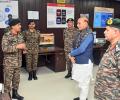
Defence Minister Rajnath Singh announced that India's defence exports have crossed a record Rs 21,000 crore, a significant jump from Rs 2,000 crore a decade ago. He set a target of achieving defence exports of Rs 50,000 crore by 2029. Singh highlighted the importance of mastering frontier technologies in the face of evolving warfare, emphasizing the role of military training centers in preparing soldiers for future challenges. He also underscored the government's commitment to strengthening integration and jointness among the three services, aiming to enhance the armed forces' ability to face challenges together.
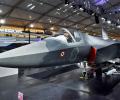
If I were to explain stealth to a layperson, I'd ask them to think of the game chupan-chupai (hide and seek) we played as children, explains Air Commodore Nitin Sathe (retd).
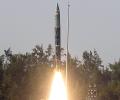
Ahead of Republic Day, the Indian Army announced on Thursday the addition of two new features to this year's parade: battlefield surveillance systems and a Defebce Research and Development Organisation tableau showcasing Pralay, short-range ballistic missiles.

Addressing an event in New Delhi, Gen Pande also said the recent global developments have underscored that the security of the nation can neither be outsourced nor be dependent on the largesse of others.

The ongoing Russia-Ukraine conflict has demonstrated the integration of multiple forces in domains of air, land, sea, cyber, information and space, and how they are "united" to achieve the goal, Vice Chief of the Air Staff, Air Marshal A P Singh, said on Friday.

Economic strangulation, information blackout, computer virus and hypersonic missiles will be the weapons of the future, says Air Chief Marshal VR Chaudhari.

The Chief of Air Staff, addressing a press conference ahead of the Air Force Day on October 8, asserted that the IAF will continue to remain deployed along the frontier in the region till complete disengagement takes place in the remaining contested areas.

In the current complex and dynamic strategic environment, refining the IAF's strategy, building robust capabilities and developing a flexible mindset to "prosecute future wars" will prove decisive, the chief of air staff said.

Notably, the IAF recently signed a memorandum of understanding with the IIT-Madras to develop indigenous solutions to maintain various weapon systems.
Historically, India has never been expansionist in its outlook and her approach has always been of peaceful coexistence and one designed to deter the forces of terror and disruption.

Throughout 2022, China turned to the PLA as an increasingly capable instrument of Statecraft, strengthening its ability to 'fight and win wars' against a 'strong enemy', points out Ajai Shukla.
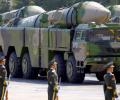
China is expanding its nuclear force and is likely to have a stockpile of about 1,500 warheads by 2035, up from the current estimated number of 400, the Pentagon has said in a report that notes that Beijing aims to expand its national power through both domestic and foreign policy initiatives.

'The Chinese fault lines are tremendous and we need to exploit them.'

The CDS has the option to focus on key areas of capability development to fight new generation wars or get bogged down in trying to bring cosmetic changes to humour the political leadership, asserts Brigadier Narender Kumar (retd).

'There are certain critical deficiencies like shortage of fighter squadrons and force multipliers which must be addressed on priority to retain our combat edge'

'We would have faced many more Galwans had Indian troops not reacted and retaliated the way they did.'

This is the first time since Independence that a new operational branch is being created, Chaudhari said in his speech on the occasion of 90th anniversary celebrations of the IAF.

Only 75 aircraft were deployed to support the invasion, observes Group Captain Murli Menon (retd).

The entire gamut of China's activities is aimed at keeping India on tenterhooks, cause fatigue to its troops and keeping its security system unstable, so that it cannot play a meaningful role in international geopolitics as an effective partner of the US and Japan, observes Lieutenant General Syed Ata Hasnain (retd).
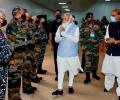
'Perhaps the most important political trend affecting armed conflict in the 21st century, will be in the relationship between civilians and those who fight on their behalf,' points out Lieutenant General Anil Chait (retd), who served as chief of the Integrated Defence Staff and Central Army Commander.

Easy availability of drones has increased the complexity of security challenges and the Indian military is developing capabilities to effectively deal with the threats, be it from State-sponsored elements or by states themselves, Army Chief Gen M M Naravane said on Thursday.
