
Lok Sabha adjourned sine die, marking the end of the 19-day Winter Session. Key bills were passed, including one opening the civil nuclear sector to private companies and another replacing MNREGA.

'It interferes in administrative matters of institutions, robbing them of their independence in day-to-day affairs and appointments.'

Booth-level officers in Kerala boycotted work following the suicide of a colleague allegedly due to work strain related to the Special Intensive Revision exercise. Trade unions and political leaders are demanding investigations and changes to the process.

Trai has ordered BFSI firms to move service and transaction calls to the 1600 series from 2026 to reduce spam, financial fraud, and rising digital arrest scams.

The new rules allow for a staggered implementation road map, giving companies, data fiduciaries, data principals, and other stakeholders up to 18 months to comply with the administrative guidelines under the DPDP Act.
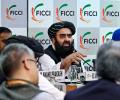
Afghan Acting Foreign Minister Amir Khan Muttaqi met Federation of Indian Chambers of Commerce and Industry (FICCI) members on Monday to discuss opportunities in his country, especially in the mining sector. The Taliban, who now control Afghanistan, is seeking to repair its ties with New Delhi, and is hopeful of Indian public and private sectors increasing investments in the mining and power sector, and greater trade and commerce.

Union Minister Amit Shah on Wednesday introduced three Bills in Lok Sabha for the removal of prime minister, chief ministers and ministers arrested on serious criminal charges for 30 days, drawing fierce protests from the Opposition as the draft laws were referred to a Joint Committee of Parliament. Three House marshals formed a protective ring around Shah. Even after the House was adjourned, the Opposition members continued with the sloganeering.
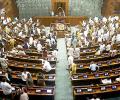
The Monsoon session of Parliament concluded after facing disruptions and protests over the revision of electoral rolls in Bihar. Despite the disruptions, the government managed to pass key legislations.

The Lok Sabha witnessed chaotic scenes as opposition members protested the introduction of three draft laws, leading to torn bills, sloganeering, and adjournments.

The government plans to introduce three bills in Parliament to address the removal of a prime minister, Union minister, chief minister, or minister of a Union Territory when arrested or detained on serious criminal charges.

Union Home Minister Amit Shah introduced bills in Lok Sabha addressing the removal of arrested PMs, CMs, and ministers, sparking opposition protests. Shah emphasized the need for public decision on whether leaders should govern from jail, criticizing the Congress party's stance on the matter.

'I want to ask the entire nation and the opposition. Can a Chief Minister, Prime Minister, or any leader run the country from jail?'

Opposition parties allege the Modi government is attempting to turn India into a 'dictatorship' with the introduction of three Bills that seek to provide for removal of the prime minister, chief ministers and ministers arrested on serious charges, and vowed to oppose it 'tooth and nail'.

The government rejected the Opposition's demand for a discussion on electoral roll revision in Bihar, citing that the matter is sub judice and pending before the judiciary.

In a letter to Dhankhar, Ramesh said sending the Bill to the joint committee of both Houses means "devaluation and denigration" of the status and functions of the standing committee.

Former chief justices of India, who have conveyed their views to a parliamentary committee on the bill proposing simultaneous polls, have endorsed the constitutionality of the 'one nation, one election' concept but have raised concerns over its various aspects, including the power given to the Election Commission, and offered suggestions.
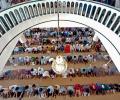
The All India Muslim Personal Law Board (AIMPLB) has urged Muslims to wear a black armband on their right hand during Juma prayers on the last Friday of Ramzan as a mark of protest against the Waqf (Amendment) Bill. The AIMPLB has been vocal in its opposition to the Bill, calling it "controversial, discriminatory and damaging." The organization has planned nationwide protests against the Bill, with large sit-ins scheduled in several cities.

Her black bag had "National Herald Ki Loot" emblazoned over it in red colour.
While the BJP went back to the drawing board to recraft its political and governance outreach and regained momentum by notching up surprisingly big wins in a string of assembly polls, the burst of fresh optimism in the main opposition Congress and other INDIA bloc parties fizzled out.

The joint committee of Parliament examining the Waqf (Amendment) Bill submitted its report to Lok Sabha Speaker Om Birla on Thursday. The panel adopted the report by a majority vote, with changes suggested by members of the ruling BJP. Opposition members, who submitted dissent notes, called the exercise an attempt to destroy Waqf boards and termed the bill an attack on the constitutional rights of the Muslim community.

The report was tabled by Bharatiya Janata Party member Medha Vishram Kulkarni, a member of the panel.

During the talks, the two sides appreciated the deepening of the defence ties as a key pillar of the strategic partnership and welcomed the creation of a Ministerial Committee on Defence Cooperation under the Strategic Partnership Council.

The "construct of the DPDP Act" cannot be changed at this stage, though there may be some minor tweaks in the language of the Rules and formats in certain legitimate cases.
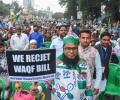
The Lok Sabha, India's lower house of Parliament, will debate the contentious Waqf (Amendment) Bill on Wednesday. The bill has been met with strong opposition from several parties who claim it is unconstitutional. The government, however, insists the bill aims to improve the management of Waqf properties in India by bringing transparency and efficiency.

A leading Catholic Church daily in Kerala has described the Waqf amendment bill as a crucial test of secularism in Parliament, urging MPs to support it. The editorial in Deepika daily comes as the union government prepares to table the bill for parliamentary consideration. The editorial calls the bill a test of secularism and warns MPs that failing to support it would mark them in history as endorsing religious fundamentalism. The paper added that the bill will also put an end to the injustices faced by thousands of Hindu, Christian, and Muslim citizens who have suffered due to the Waqf law. The editorial also recalled the recent statement addressed to Kerala MPs by Kerala Catholic Bishops' Council (KCBC) where the KCBC President Cardinal Mar Baselios Cleemis Catholicos urged amending provisions in the Waqf law that validate claims over land which people of Munambam have lawfully possessed. Opposition parties have slammed the bill as "unconstitutional" and against the interest of the Muslim community.
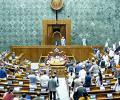
The government has moved to increase the strength of the joint committee of Parliament that will scrutinise the two bills proposing simultaneous elections from 31 MPs to 39, giving representation to more parties.
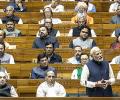
A constitutional amendment bill for holding Lok Sabha and assembly elections simultaneously is likely to be introduced in Parliament on Tuesday and could be referred to a joint committee of the two Houses.
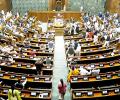
Lok Sabha was adjourned sine die on Friday amid protests by opposition and treasury benches over the alleged insult to Dr B R Ambedkar and directions by Speaker Om Birla to members against holding demonstrations at any gate of Parliament.
The government has also listed three new bills for the session -- 'The Protection of Interests in Aircraft Objects Bill, 'Tribhuvan Sahkari University Bill', and the 'Immigration and Foreigners Bill'.
The Indian Parliament will introduce a constitutional amendment bill on Tuesday that seeks to hold Lok Sabha and state assembly elections simultaneously. The bill, popularly known as "one nation, one election", will be introduced by Union Law Minister Arjun Ram Meghwal and is likely to be referred to a joint committee of both houses for wider consultations. The bill also aims to align elections in the union territories of Jammu and Kashmir, Puducherry, and the NCT of Delhi. The move has been met with mixed reactions, with some supporting the idea of reducing election-related expenses and others expressing concerns about its impact on democratic processes.

A 39-member parliamentary panel has been constituted to examine the two bills proposing simultaneous elections to the Lok Sabha and state assemblies. The panel, chaired by BJP leader Bhratruhari Mahtab, will include prominent members from various political parties, including the BJP, Congress, SP, TMC, and DMK. The panel is expected to submit its report to the Lok Sabha by the first day of the last week of the next session. The government has decided to increase the committee's strength to include more political parties, highlighting the significance of this proposal to reform the election process in India.
The two 'One Nation One Election' (ONOE) bills, including one requiring an amendment in the Constitution, that lay down the mechanism to hold simultaneous elections were introduced in the Lok Sabha on Tuesday after a fiery debate.
'It is not as if Hindus are not being touched at all, and only Muslims are.'
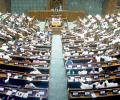
Introducing the bill, Rijiju said the consultation process of the Joint Parliamentary Committee (JPC) was the largest ever exercise carried out by a parliamentary panel in India's democratic history.

Opposition MPs, some of whom have given their dissent, slammed the exercise as undemocratic, claiming that they were given little time to study the final report and frame their dissent notes.
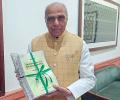
'They want to snatch the land and give it to their friends'

However, BJP members claimed that the opposition members were abusing the chairman of the committee Jagadambika Pal.
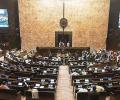
A corrigendum to the joint parliamentary committee report on the Waqf Amendment Bill, 2024, was tabled in the Rajya Sabha after Opposition MPs alleged that dissent notes were redacted from the report. BJP MP Medha Vishram Kulkarni tabled the corrigendum, which included the un-redacted dissent notes. The Opposition MPs, led by Leader of Opposition Mallikarjun Kharge, had earlier accused the government of misleading the House by deleting the dissent notes. The government, however, denied the allegations. Chairman Jagdeep Dhankhar thanked the government for the corrigendum, saying it showed that parliamentary institutions are blossoming. Opposition MPs, however, said it was done under their pressure.
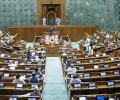
The deportation of Indians from the United States, deaths in the Maha Kumbh stampede and the joint Parliamentary committee report on the Waqf bill were among the issues that led to heated exchanges and some disruptions in an otherwise smooth first part of the Budget session that ended on Thursday.
All opposition members of the parliamentary panel on the Waqf Amendment Bill were suspended for a day on Friday amid continuous protests and accusations against Chairman Jagdambika Pal of steam-rolling through the proceedings.
 © 2026 Rediff.com - Investor Information - Advertise with us - Disclaimer - Privacy Policy - Sitemap - Feedback - About us - Terms of use - Grievances