
Skyroot Aerospace successfully launched India's first privately developed orbital rocket, Vikram-1, placing multiple technology demonstration payloads and commemorative items, including a postcard from Prime Minister Narendra Modi, into low Earth orbit, marking a significant entry into the global orbital launch market.

The Indian Space Research Organisation (Isro) on Thursday came out with the Indian Space Policy 2023 to promote greater private sector participation in the entire value chain of the space economy. According to the policy, Isro will encourage new-generation entities to participate in space exploration and human presence in outer space, including collaboration with domestic and international stakeholders. The policy also sets a road map for Isro to transition from manufacturing operational space systems to focus energies on research and development in advanced technologies.

'The Indian private space sector is no longer a high-risk bet; it is a highly bankable, globally competitive asset class capable of easing the global small satellite launch bottleneck.'

'IN-SPACe like an octopus is stretching its tentacles everywhere and choking ISRO.'

'With India's growing capabilities in the space sector, this creates promising opportunities for enhanced collaboration and market access.'

'ISRO will not manufacture any launch vehicles. That will all be done by the private sector or public sector undertakings.'

There is no answer to the question of how IN-SPACe invited EOIs for ISRO's mature rockets and whether it was based on any government policy decision.
'The prime minister has given us the task of taking at least 300 satellites to orbit in the next five to six years.'

US Ambassador to India, Sergio Gor, highlighted the evolving US-India space partnership, moving from cooperation to "co-creation" at the Bengaluru Space Expo. He emphasised joint design, funding, and co-authoring the future of human discovery, citing the NISAR satellite and India's participation in the Artemis Accords as key examples of this growing synergy.

Weighing 190 kg, Mission Drishti is India's heaviest privately developed Earth observation satellite.

Skyroot Aerospace is set to launch the maiden test flight of its orbital-class rocket, Vikram-1, from SDSC-SHAR on July 18, marking a significant milestone for India's private sector in the global launch business.

A rocket designed and developed by ISRO is being transferred to industry for production.
Nine ISRO associations want to know whether this is simply an effort to expand India's industrial capacity or part of a larger policy under which ISRO itself will eventually withdraw from rocket manufacturing.

India's move to privatise PSLV rocket production through IN-SPACe has triggered debate over national security, ageing technology and the agency's role.

Prime Minister Narendra Modi inaugurated Skyroot's Infinity Campus, highlighting government reforms and the rise of private space companies in India. He also unveiled the company's first orbital rocket, Vikram-I.

The move is meant to enhance the operational capability of the armed forces, reduce import dependence and increase domestic value addition.

The Department of Space has directed that requests for voluntary retirement or resignation from Group 'A' Scientific and Technical personnel associated with the prestigious Gaganyaan human spaceflight programme and other important missions should not be accepted as a matter of routine.

The Union Cabinet on Wednesday approved the participation of the private sector in the entire range of space activities, including planetary exploration missions, Union minister Jitendra Singh said. The newly-created Indian National Space Promotion and Authorisation Centre (IN-SPACe) will provide a level playing field for private companies to use Indian space infrastructure, Singh, who is the minister of state in the Prime Minister's Office, said.

Prime Minister Narendra Modi lauded young Indian innovators for the country's first privately developed orbital rocket, Skyroot Aerospace's Vikram-1, which made India the third nation with private orbital launch capabilities. While praising the 28-year-old average age of the Skyroot team, Modi made a veiled remark about a "56-year-old young man," widely understood to be a dig at Congress leader Rahul Gandhi, who recently turned 56.

Their message is blunt: Public scientific wealth should not be transferred at what they describe as 'throwaway prices'.capability, recruitment, promotional avenues and the voice of its employees.

The larger question raised by the associations is simple: If ISRO is no longer to manufacture launch vehicles, what will happen to the institution's accumulated capabilities and the people who built them?

'He didn't touch upon the core questions raised by the nine employee associations.'
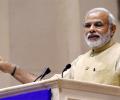
Prime Minister Narendra Modi, in his Independence Day address, highlighted technology and innovation as central to India's goal of becoming a developed nation by 2047. He called for India to lead in emerging technologies like AI, quantum computing, and space, announcing a massive AI skilling initiative for one crore youth. Modi stressed the importance of becoming a global innovation hub, bolstering energy security with nuclear power, and strengthening cybersecurity.
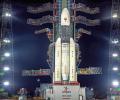
Finance Minister Nirmala Sitharaman on Saturday announced giving the private sector a role in India's space programme, including in satellites, launches and space-based services.

Nine employee associations at ISRO have written to Chairperson V Narayanan, seeking official clarification on the proposed transfer of manufacturing and operational functions to private entities. They raised concerns about ISRO's future role, employee consequences, and recruitment, following comments by IN-SPACe chairperson Pawan Goenka regarding ISRO's eventual exit from launch vehicle manufacturing.

It is about proving that the agency can still deliver when the stakes are high.

'An instruction came from somebody in Delhi saying, "don't go with the launch".'

'It is not economical to operate GSLV-Mk II due to its cost and complexity. Future launches to be managed with LVM3.'

The appointment comes as Agnikul prepares for Mission 02, a flight that will attempt, for the first time on Indian soil, the recovery of an orbital-class rocket booster and the extension of a rocket's upper stage into an on-orbit platform.

While recovery efforts are ongoing, the likelihood of recovery currently appears low.

'India is vulnerable to the West Asia crisis in three ways: Energy costs, the business Indian companies conduct in the region, and remittances from the Indian diaspora.'

Built as an expendable, short-duration turbojet engine for single-mission applications, it can power tactical cruise missiles, anti-ship missiles, and long-range loitering munitions.

India took another leap in space infrastructure with the foundation stone laid for a new launch pad at the country's second rocket port in Kulasekarapattinam.

'A favourable base, last year's policy measures, the carryover impact of a good monsoon and improving earnings should all help.'

'Improved law and order and transparent governance have helped change UP's investment image.'

The challenge thrown by the youth movement creates the opportunity for a more consequential debate on India's economic trajectory because it must remain centered on India's youth as its driving impulse, asserts former foreign secretary Shyam Saran.

Several Indian real estate companies, including BPTP Ltd and Smartworld Developers, are rethinking or shelving their initial public offering (IPO) plans, which were expected to raise around 15,000 crore, due to weaker housing demand, higher costs, and a more cautious investment climate.

The private consortium would invest more than Rs 1,200 crore over the next five years to launch a constellation of 12 state-of-the-art Earth Observation satellites equipped with panchromatic, multispectral, hyperspectral, and microwave SAR (synthetic aperture radar) sensors.

Government sources said amendments were being considered to the Atomic Energy Act to allow private sector participation and the Civil Liability for Nuclear Damage Act to limit the liability on suppliers of equipment to build atomic energy plants.

'The scrapping of import duty would help Indian companies compete in international markets, thus paving the way for India becoming a space manufacturing hub for the world.'

The EoI comes at a time when ISRO is working to enhance LVM3's payload capacity to five tonnes in GTO and is also evaluating the procurement of a Russian semi-cryogenic engine for the vehicle's second stage.
