
'Energy prices would shoot up with the closure of Hormuz again.'

'In the current environment, India is effectively paying a premium for supply security and diversification.'

State-run Oil and Natural Gas Corporation (ONGC) has made a significant gas discovery in the deep waters of the Mahanadi Basin off the Odisha coast, recording encouraging flow and sustained reservoir pressure, a breakthrough for India's deepwater exploration programme.

Rahul Gandhi accuses the government of compromising India's energy security by allowing the US to dictate oil supply relationships, raising concerns about the impact of global conflicts on India's energy access.

State-run Oil and Natural Gas Corporation (ONGC) has approved the development of a 1.75 million tonnes (mt) strategic petroleum reserve (SPR) in Mangaluru, a project deemed of national importance, with plans for broad commercial utilisation.

Tata Sons Chairman N Chandrasekaran affirmed India's robust economic position amidst global uncertainty, emphasising that energy security, advanced manufacturing jobs, and investment in human capital are 'critical' for sustaining the nation's long-term growth.

Top commanders of the Indian Navy will discuss the implications of the West Asia crisis on India's energy security and review operational readiness at a three-day conference.

External Affairs Minister S Jaishankar discussed the West Asia conflict's impact on the global economy, particularly energy security, with US Secretary of State Marco Rubio. He also engaged with GCC ambassadors and his Sri Lankan and German counterparts on the same issue.

Gautam Adani emphasised the importance of energy security and digital infrastructure in shaping geopolitical power, urging India to develop sovereign capabilities across the AI value chain.

Prime Minister Narendra Modi will chair a meeting with senior ministers to assess the petroleum, power, and fertiliser sectors in light of the ongoing situation in West Asia, focusing on ensuring uninterrupted supply and stable logistics.

Despite decades of efforts towards energy transition, oil will remain the critical energy source for all nations for some decades. We can hope for peace opening the Strait of Hormuz, but must prepare for war closing it, points out former foreign secretary Ranjan Mathai.
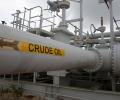
MEA spokesperson Randhir Jaiswal said India's energy decisions are guided by national interest.

India addresses the escalating conflict in West Asia, outlining its diplomatic efforts to ensure energy security, the safety of its citizens, and advocating for a peaceful resolution through dialogue.

Prime Minister Narendra Modi on Thursday discussed with a group of senior ministers the prevailing global security situation and how to maintain supply chain uninterrupted despite conflicts in different zones, including the Strait of Hormuz, the Black Sea, the Red Sea, and the Gulf of Aden.

Amazon has announced plans to invest an additional $7 billion in renewable energy projects in India by 2030, building on its existing USD 4 billion commitment. This new investment will fund four major wind and solar projects with a combined capacity of 934 megawatts, making Amazon a leading corporate purchaser of carbon-free energy in the country.

US Secretary of State Marco Rubio kick-started a three-day visit to India on Tuesday to advance bilateral ties in energy, trade and investment, defence, critical technologies, and exchange views on the West Asia crisis.

Prime Minister Narendra Modi has begun a six-day tour of the UAE, the Netherlands, Sweden, Norway and Italy to strengthen bilateral relations amid geopolitical challenges. The trip will focus on energy security, trade, and technological cooperation.
Prime Minister Narendra Modi will chair a meeting with senior ministers to review the petroleum, power, and fertiliser sectors in light of the evolving situation in West Asia, focusing on ensuring uninterrupted supply and stable logistics.
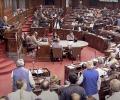
Opposition MPs in the Rajya Sabha criticised the Modi government's economic policies, citing the LPG crisis, lack of energy security, and concerns over the Economic Stabilisation Fund.

Mining magnate Anil Agarwal has cautioned that the government's decision to transfer operations of a producing offshore oil and gas block from Vedanta to state-run ONGC could send a "very wrong signal" to investors, urging policymakers to maintain regulatory stability.

India's foreign secretary Vikram Misri on Thursday participated in a high-level meeting hosted by the United Kingdom on the evolving situation in West Asia, underlining concerns over maritime security, energy supply disruptions and the need for diplomatic de-escalation.

India has stated its commitment to protecting its economic interests and ensuring energy security after the US House of Representatives passed a bill allowing the US President to impose tariffs of up to 100 per cent on countries, including India and China, for purchasing Russian crude oil. The Ministry of External Affairs affirmed India's resolve to maintain diversified energy sourcing and has articulated its concerns to US interlocutors regarding the bill's potential implications.

Union Home Minister Amit Shah has assured residents of Siang Valley that their concerns regarding the proposed 11,200-MW Siang Upper Multipurpose Project (SUMP) will be addressed through dialogue. Shah emphasised the project's national importance for Arunachal Pradesh's development and strategic interests, promising attractive rehabilitation packages and no compromise on local culture. This assurance comes amidst sustained opposition from indigenous communities worried about environmental, livelihood, and cultural impacts.
Industry experts and the India Energy Storage Alliance (IESA) advocate for a unified framework to address the significant supply gap in domestic cell manufacturing, crucial for enhancing India's energy storage capabilities and reducing reliance on imports.

Prime Minister Narendra Modi addressed the ASEAN-India summit, advocating for a free, inclusive, and rules-based Indo-Pacific based on cooperation. He proposed nine initiatives, including a long-term maritime plan, free e-visas, and cooperation in civil nuclear energy, emphasizing India's commitment to ASEAN's unity and centrality amidst global uncertainties.

India's Indo-Pacific approach has traditionally emphasised strategic autonomy, ASEAN centrality, freedom of navigation, respect for international law and an inclusive regional order. Its growing defence and maritime partnerships with Australia, Japan, Indonesia, Vietnam and other Southeast Asian countries provide additional depth to this approach, point out Dr Kumar and Dr Jasmeet Kaur.

There is no cause for concern, as the overall situation arising out of the crisis is firmly under control, the Centre informed while briefing political parties at the all-party meet.
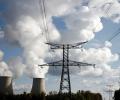
India's brittle energy security is inextricably linked to two opposing paradigms - fossil fuels, and the transition to green energy. The first powers the present; the second paves the way for Viksit Bharat in 2047.

NIT Rourkela has secured a patent for a solar-powered electric vehicle (EV) charging microgrid designed to enhance efficiency, reliability, and sustainability. The technology integrates solar panels, the conventional grid, and a unique energy storage system combining batteries and supercapacitors, managed by an improved mixed droop technique. This innovation addresses challenges like power surges, renewable energy fluctuations, and battery degradation, with plans for future scaling and industry integration.

'India should not trade away its energy security for temporary tariff relief. Neither signing a trade agreement nor stopping Russian oil purchases can protect it from future US action.'

Navigating this geopolitical minefield requires a cold-blooded blend of immediate tactical pleading, structural domestic diversification, and aggressive collective resistance, suggests Ambassador Rajasekhar.

The Indian government has released commemorative postage stamps honouring Dr Ram Bux Singh, known as the "father of modern biogas". Dr Singh made significant contributions to biogas technology in India and globally, including developing early gobar gas plants and establishing Asia's first gobar gas research station. The stamps were released on November 13, alongside a book detailing his legacy and biogas technology.

One should not expect the blue wave to reverse some of Mr Trump's hostile measures against India on immigration and on trade. The Democrats are unlikely to ease the limits placed on the entry of Indian professionals into the US. They are equally unlikely to ease up on Mr Trump's protectionist policies cautions former foreign secretary Shyam Saran.

Goldman Sachs has upgraded India to 'overweight' with a Nifty target of 28,500 by 2027-end, driven by an anticipated 15 per cent earnings growth, strong domestic demand, robust earnings, and historically low foreign positioning.

India has strongly condemned the recent attack on Riyadh's financial district, which injured two Indian nationals, and called for an immediate end to strikes targeting Saudi Arabia's civilian and economic infrastructure amidst escalating West Asia tensions.

'India will become number one. There is no doubt about it. Andhra Pradesh will be number one in India.'
India has prohibited the export of lithium-ion battery black mass to bolster domestic recycling capabilities and enhance the recovery of critical minerals like lithium, cobalt, nickel, and manganese. This move aims to ensure feedstock availability for local recyclers, reduce import dependence, and strengthen supply chains for electric vehicles and clean energy technologies, aligning with the Aatmanirbhar Bharat vision.

US President Donald Trump has issued a waiver from sanctions under the Sanctioning Russia and Iran Act, citing national interest. This move comes after a deal with Russia for diesel supply and ahead of a US official's visit to India, where concerns about the act's impact on India's oil imports were raised.

US Secretary of State Marco Rubio visited Reliance Industries' Jamnagar refinery, a day after calling India a crude oil refining 'superpower', and met with top Indian business leaders Gautam Adani and N Chandrasekaran to advance bilateral ties in energy, trade, investment, and defence.

Prince William and Princess Catherine of Wales are set to conclude their three-day visit to India next week with a meeting with Prime Minister Narendra Modi in New Delhi. Their trip will also include attending the 2026 Earthshot Prize ceremony in Mumbai, focusing on climate action, innovation, and strengthening UK-India ties across various sectors.
