
The Canadian government is seeking to revoke the citizenship of Tahawwur Rana Hussain, a Pakistan-born businessman accused of involvement in the 2008 Mumbai terror attacks, due to misrepresentation on his citizenship application.

'Despite acting in some 100 films and television plays, people still remember the daadi of Hum Log.'

Indian authorities have requested additional information from the United States based on the interrogation of Tahawwur Rana, an accused in the 2008 Mumbai terror attacks. The request was made through the Mutual Legal Assistance Treaty (MLAT).

'At a time when there was little awareness of world music, playing western tunes on eastern instruments like the flute and the dholak, blending vocal polyphony with Indian folk and contemporary styles, Salilkaku created a new musical genre in Bengal called Gana Sangeet.'

It also aims to reduce the powers of the Supreme Court, with some authorities shifted to the proposed Constitutional Court, and immunity to the president from criminal proceedings for life.
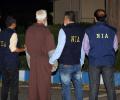
A Delhi court has allowed Tahawwur Hussain Rana, accused in the 26/11 Mumbai attacks, to have three phone calls with his brother to discuss engaging a private counsel. His judicial custody has been extended until September 8.

The actor, who got married on February 5, would have probably faded into oblivion but the re-release of her 2016 film, Sanam Teri Kasam, brought her right back in the news.
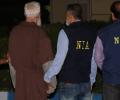
A Delhi court extended the judicial custody of Tahawwur Hussain Rana, accused in the 26/11 Mumbai terror attack, until August 13. The order was passed after Rana was produced via video conference. Rana is associated with David Coleman Headley. NIA has filed a supplementary chargesheet against Rana.

Tahawwur Hussain Rana, a jailed accused in the 2008 Mumbai terror attacks, has moved a court in New Delhi seeking permission to speak to his family. The 64-year-old Pakistani-origin Canadian businessman is currently in judicial custody and is accused of conspiring with David Coleman Headley and operatives of Lashkar-e-Taiba (LeT) and Harkat-ul-Jihadi Islami (HUJI) to carry out the terror attacks. Rana was brought to India after the American Supreme Court dismissed his review plea against his extradition.

Security has been heightened outside the Patiala House Court in Delhi ahead of the expected appearance of Tahawwur Rana, a key accused in the 2008 Mumbai terror attacks. Rana, who was extradited from the US, is likely to be produced in court on Thursday. The Delhi Police and paramilitary forces are carrying out thorough security checks to prevent any untoward incidents.
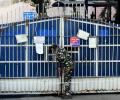
Tahawwur Hussain Rana, a Pakistani-born Canadian national accused in the 2008 Mumbai terror attacks, is likely to be lodged in a high-security ward in Tihar jail upon his extradition from the US. Rana, a close associate of David Coleman Headley, a US citizen who was also involved in the attacks, will be brought to India after his last-ditch attempt to evade extradition was rejected by the US Supreme Court. The attacks, which lasted nearly 60 hours, resulted in the deaths of 166 people and sent shockwaves across the country.
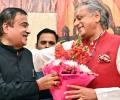
Senior Congress leader Shashi Tharoor welcomed the extradition of Tahawwur Hussain Rana, a key accused in the 26/11 case, and said everyone associated with the conspiracy of the Mumbai terror attacks must face the court of justice. He described Rana's extradition as a "step forward for justice." Rana, a Pakistan-born Canadian national and close associate of David Coleman Headley, is being brought to India after his last-ditch attempt to evade extradition failed. Tharoor expressed hope that the interrogation of Rana would provide more details about the Mumbai attacks and said he was "very glad" that Indian authorities managed to get Rana's custody.
Tahawwur Hussain Rana, a Pakistani-origin Canadian businessman and accused in the 26/11 Mumbai terror attacks, has moved a court seeking permission to talk to his family members. The NIA has been directed to file a reply by April 23.
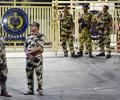
Security has been heightened outside the National Investigation Agency (NIA) headquarters in New Delhi, where Tahawwur Rana, the mastermind of the 2008 Mumbai terror attacks, is being held following his extradition from the United States. Rana was brought to India after the US Supreme Court dismissed his review plea against extradition. The NIA secured an 18-day custody of Rana after he was produced before a special court in Delhi. Additional police and paramilitary forces have been deployed to ensure law and order. The extradition of Rana, a close associate of David Coleman Headley, the main conspirator of the Mumbai attacks, is a significant development in the investigation into the 2008 attacks.

The central government has appointed advocate Narender Mann as special public prosecutor to conduct trials and other matters related to the National Investigation Agency case RC-04/2009/NIA/DLI against Tahawwur Hussain Rana and David Coleman Headley, who is in a US prison following a plea deal.
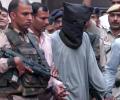
The National Investigation Agency has informed a Delhi court that Mumbai attack accused Tahawwur Rana could spill the beans on the ongoing and future terror plans of outfit Lashkar-e-Taiba and its chief Hafiz Saeed for India.

A Delhi court on Monday extended by 12 more days the NIA custody of 26/11 Mumbai attack accused Tahawwur Hussain Rana.
He was sent to judicial custody on May 9 and lodged in Tihar jail after his custodial interrogation by the NIA.
Senior advocate Dayan Krishnan, who led India's arguments for the extradition of 26/11 accused Tahawwur Rana in a United States court, is set to lead the National Investigation Agency's (NIA) prosecution in Delhi.

Tahawwur Hussain Rana, a key figure in the 2008 Mumbai terror attacks, has been extradited from the US to India and produced before a Delhi court. Rana, a close associate of David Coleman Headley, was brought to India after the US Supreme Court dismissed his review plea against extradition. The National Investigation Agency (NIA) has sought 20 days of custody to interrogate Rana, citing clinching evidence, including emails. The agency believes that Rana's interrogation is critical to understanding the larger conspiracy behind the attacks and his role in planning them.
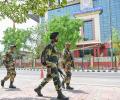
The 64-year-old Pakistani-origin Canadian businessman would also be questioned on his suspected links with the officials of Pakistan spy agency Inter-Services Intelligence (ISI) and his association with terror group Lashkar-e-Taiba (LeT), which had orchestrated the attacks.
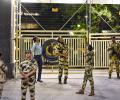
Tahawwur Hussain Rana, a Pakistani-born Canadian national accused of playing a role in the 2008 Mumbai terror attacks, has been extradited from the United States to India. Rana was arrested in the US in 2009 and convicted in 2011 for providing material support to the Lashkar-e-Taiba terror group, which carried out the Mumbai attacks. He had been fighting extradition since 2012, but the US Supreme Court ultimately denied his review petition, paving the way for his transfer to India. Rana will now face trial in India for his alleged role in the attacks, which killed 166 people.

Tahawwur Hussain Rana, the key mastermind of the 2008 Mumbai terror attacks, is being interrogated for eight to ten hours daily by the National Investigation Agency (NIA) to unravel a larger conspiracy behind the strikes. Rana, who was extradited from the US, is being grilled by NIA investigators to probe a larger conspiracy behind the attacks, in which 166 people were killed and over 238 injured. He is being allowed to meet his lawyer and is being provided with basic necessities. The investigators hope to find some important leads on his travels in parts of northern and southern India days before the carnage in Mumbai on November 26, 2008.
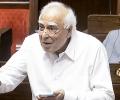
Rajya Sabha MP Kapil Sibal has congratulated both the previous UPA government and the current dispensation for the extradition of Tahawwur Hussain Rana, the mastermind behind the 2008 Mumbai attacks. Sibal expressed confidence that the extradition will shed light on the involvement of individuals within Pakistan's establishment in the attacks. Rana is being questioned by the National Investigation Agency (NIA) to uncover the full extent of the conspiracy behind the deadly 2008 terror strikes. Sibal highlighted the efforts of the UPA government in establishing the NIA and pursuing Rana's extradition, and also acknowledged the current government's success in bringing him back to India. The interrogation is expected to focus on Rana's potential ties to the Lashkar-e-Taiba (LeT) and his role in the Mumbai attacks.
The National Investigation Agency (NIA) has alleged that key conspirator Tahawwur Rana, who has been remanded to 18-day NIA custody, devised terror plots similar to the 26/11 Mumbai attacks that were meant to target multiple Indian cities. The NIA believes that the tactics used in the Mumbai attacks were intended for execution in other cities as well, and that similar plots were developed elsewhere. Rana will be questioned in detail in order to unravel the complete conspiracy behind the deadly 2008 attacks, which saw 166 persons being killed and over 238 sustaining wounds.

Devika Rotawan, a survivor of the 26/11 Mumbai terror attacks, has demanded the death penalty for Tahawwur Hussain Rana, a key accused extradited from the US. Rotawan, a key witness in the case, identified terrorist Mohammed Ajmal Kasab in court during the trial. She believes the extradition is a "big win" for India and called for further action against other conspirators in Pakistan.
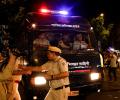
Tahawwur Rana, a Canadian citizen and native of Pakistan, was extradited to India to face charges related to his alleged role in the 2008 Mumbai terror attacks. The US Department of Justice said Rana allegedly commended the LeT terrorists who carried out the attacks and suggested they should be awarded Pakistan's highest gallantry award. Rana is accused of facilitating a fraudulent cover for his childhood friend, David Headley, to conduct surveillance in Mumbai for the Lashkar-e-Taiba (LeT) terrorist group. He is also accused of helping Headley submit false visa applications to Indian authorities. This extradition follows a lengthy legal process that began in 2020 with India's request for Rana's surrender. Rana, who was previously convicted in the US for providing material support to LeT, will now face trial in India on 10 criminal charges related to the Mumbai attacks.

'It is typical of China's strategic deception of making virtue out of necessity,' observes Rup Narayan Das.
The National Investigation Agency (NIA) has begun questioning Tahawwur Hussain Rana, the mastermind behind the 2008 Mumbai terror attacks, to uncover the larger conspiracy behind the deadly strikes. Rana, who was extradited from the US, is being held at the NIA headquarters in New Delhi. The interrogation is focused on his possible connection with the Lashkar-e-Taiba (LeT) and his suspected links with the Pakistani spy agency Inter-Services Intelligence (ISI).
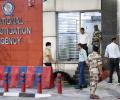
Tahawwur Hussain Rana, the mastermind behind the 2008 Mumbai terror attacks, has been taken into 18-day custody by the National Investigation Agency (NIA) in India. Rana was extradited from the United States after years of legal battles and will be questioned to unravel the complete conspiracy behind the attacks.

The Congress party has claimed credit for the extradition of Tahawwur Rana, an accused in the 2008 Mumbai terror attacks, from the US, saying the Modi government did not initiate the process and merely benefited from the "mature, consistent and strategic diplomacy" begun under the UPA. Former Home Minister P Chidambaram said the government did not secure any breakthrough to make the extradition possible, nor is it the result of any grandstanding. He added that it was a testament to what the Indian state can achieve when diplomacy, law enforcement and international cooperation are pursued sincerely and without any kind of chest-thumping. Chidambaram detailed the UPA government's efforts in securing Rana's extradition, citing the registration of a case against him in 2009, diplomatic pressure on Canada and the US, and continued efforts despite legal setbacks. He highlighted the role of the UPA in securing Rana's conviction for other terrorism-related offences and the cooperation between the US and Indian agencies in gathering evidence and securing his extradition. The Congress leader further stated that it was the UPA's groundwork that paved the way for Rana's extradition, even after the change in government in 2014.
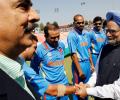
22 images that captures glimpses of a most unusual Indian who led the nation for 10 years.

Tahawwur Rana, accused in the 2008 Mumbai terror attacks, has been extradited to India after the US Supreme Court denied his last-ditch effort to avoid being sent back. Rana, a close associate of David Coleman Headley, another key conspirator in the attacks, was expected to be extradited "shortly" after his legal appeals failed. This decision comes after a multi-agency team from India traveled to the US to complete all necessary paperwork and legalities with the US authorities. Rana's extradition marks a significant development in the pursuit of justice for the victims of the Mumbai attacks.
Tahawwur Hussain Rana, a key accused in the 26/11 Mumbai terror attacks, was brought to India on Thursday after being "successfully extradited " from the US, the National Investigation Agency (NIA) said. The 64-year-old Canadian citizen of Pakistani origin landed in Delhi in a special plane on Thursday evening, ending days of speculation of when and how he will be extradited, officials said. The NIA said in a statement that it had secured the successful extradition after years of sustained and concerted efforts to bring to justice the key conspirator behind the 2008 mayhem that claimed 166 lives. Rana is accused of conspiring with David Coleman Headley alias Daood Gilani, and operatives of designated terrorist organisations Lashkar-e-Taiba (LeT) and Harkat-ul-Jihadi Islami (HUJI) along with other Pakistan-based co-conspirators, to carry out the the three-day terror siege of India's financial capital.
Tahawwur Hussain Rana, a Pakistan-born Canadian national and close associate of David Coleman Headley, is set to be extradited to India from the US. Rana was involved in the planning and execution of the 2008 Mumbai terror attacks, which killed 166 people, including six Americans. He assisted Headley in obtaining a visa for India, established a front company in Mumbai, and helped in reconnaissance of targets in Mumbai and New Delhi. Rana was convicted in the US for providing material support to Lashkar-e-Taiba (LeT) and sentenced to 14 years in prison. His extradition to India will allow authorities to question him about his involvement in the Mumbai attacks and potentially uncover new information about the role of Pakistani state actors.

Speaking at a function organised the Pakistani community in London, Gilani said he has confirm reports that Mehsud had assassinated Bhutto.

Gilani, 67, tested positive after attending a hearing of the National Accountability Bureau in a corruption case.

Pakistan's opposition parties on Thursday sought the immediate resignation of Prime Minister Yousuf Raza Gilani following his conviction by the supreme court for contempt on the issue of pursuing graft cases against President Asif Ali Zardari.
Peace will remain elusive in South Asia and the Middle East unless the issues of Kashmir and Palestine are resolved, Prime Minister Yousuf Raza Gilani said on Friday.
Pakistan Prime Minister Yousuf Raza Gilani told his Indian counterpart Manmohan Singh that Kashmir and other longstanding issues have to be addressed "earnestly" and noted their meeting was a "win-win" event.
