
E-commerce players may soon rent out drones, so you can use them the way you book a cab on an app, and test viable use-cases for last-mile delivery.

The trade relationship between India and the United States has been strained by the imposition of 25% tariff by the US on Indian goods.
'Only those who live through these situations understand the true cost of war.'

China supplied more than $20 billion worth of arms to Pakistan. These include 20 J-10CE and JF-17 Block III fighter aircraft, Wing Loong drones, frigates, submarines, Hongqi HQ-9P surface-to-air missiles, 240 PL-15E air-to-air missiles, LY-80 air defence systems, ZDK early warning aircraft and other weapons.

India has strongly condemned Pakistan's recent drone attacks on Indian cities and civilian infrastructure, calling it a "deranged fantasy" and a desperate attempt to deceive the world. Foreign Secretary Vikram Misri also accused Pakistan of attacking religious sites, including a gurdwara in Amritsar, in an attempt to give a communal color to the situation. Misri criticized Pakistan's "blatantly farcical denial" of the attacks and said the country is resorting to disinformation tactics.

A villager was killed and three others were injured in shelling by Pakistan in forward areas of Jammu and Kashmir's Poonch and Rajouri districts early Friday morning, prompting Army troops to retaliate. The shelling also caused significant damage to property, with many houses and hundreds of vehicles affected. The firing and shelling were directed at areas in Rajouri, Poonch, and Jammu districts, apart from Kashmir's Kupwara and Baramulla districts, overnight.

A meeting with Chinese President Xi Jinping on the sidelines of the SCO summit is being planned.
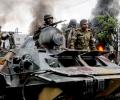
Glimpses from around the world that will make you smile and cry.
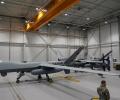
The Agency said it has delivered the required certification notifying Congress of this possible sale on Thursday.

Glimpses of the spectacular drone show over the Sabarmati riverfront as Ahmedabad prepares for the National Games 2022 opening ceremony
On June 14, 2025, the US army celebrated its 250th anniversary with a parade championed by President Donald Trump in Washington, DC.
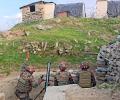
Army troops opened fire after noticing suspicious movement in a forward area near the Line of Control (LoC) in Rajouri district, while security forces conducted searches at more than a dozen places in Poonch, Samba, and Kathua districts of Jammu and Kashmir on Tuesday, officials said.

The Saudi statement came as tensions soared significantly, with Pakistan claiming that its three airbases were targeted by Indian missiles and drones early Saturday.

It was "possibly a Pakistani fishing vessel", but the identity and other details will be ascertained once the boat is intercepted, the official said.
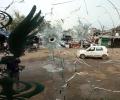
People in several districts of Punjab, Jammu and Kashmir and Gujarat spent an anxious night as authorities enforced blackouts amid heightened tension between India and Pakistan.

In view of the possible traffic snarls, as faithful throng roads in large numbers to witness the immersion processions, the city police will create a 'green corridor' for seamless movement of vehicles and connectivity between eastern and western suburbs, he said.
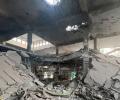
'This operation was a culmination of such long (period) of efforts, and gives us satisfaction that whatever we have been doing, we have been doing correctly'

Virender Sehwag and Shikhar Dhawan launched a bitter attack on Pakistan following its blatant violation of the ceasefire agreement with India on Saturday.

Those involved in the incident targeted a motorcycle, two cars, one religious structure and a bakery, and indulged in arson. The police had to lob tear gas shells and lathi-charge to disperse the mob, the official said.

A dazzling aerial rangoli appeared over Mumbai as 500 drones painted the night sky in spectacular harmony on Tuesday, November 14, 2023.
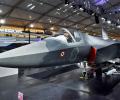
If I were to explain stealth to a layperson, I'd ask them to think of the game chupan-chupai (hide and seek) we played as children, explains Air Commodore Nitin Sathe (retd).
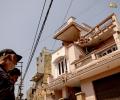
The casualties were reported hours before India and Pakistan agreed to end hostilities, which soared after the Indian Armed Forces hit terror launchpads in Pakistan and Pakistan-occupied Kashmir earlier this week in response to the Pahalgam attack.

The Border Security Force (BSF) launched "Operation Sindoor" in retaliation to unprovoked firing and shelling by Pakistani Rangers along the International Border (IB) in Jammu. BSF troops destroyed three terrorist launch pads and targeted 76 Pakistani border outposts and 42 forward defence locations. The BSF action came after Pakistan launched heavy firing and shelling on 60 Indian posts and 49 forward positions, reportedly providing cover for an attempted infiltration by 40-50 terrorists.

Pakistani drones were intercepted by Indian air defence in Jaisalmer. Explosions were heard and flashes seen in the sky.
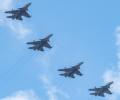
Pakistani military targets at Rafiqui, Murid, Chaklala, Rahim Yar Khan, Sukkur and Chunian were engaged using air-launched precision weapons from Indian fighter jets and the retaliation largely focused on command and control centres, radar sites and weapon storage areas, Qureshi said.

Indian Oil Corporation (IOC), the nation's largest oil firm, on Friday said ample stocks of petrol, diesel and cooking gas LPG are available in the country and there is no need for panic buying of fuel. The statement comes after social media was flooded with posts and videos showing people queuing at petrol pumps to stock fuel as tensions between India and Pakistan escalated.

India on Monday evacuated 290 Indian nationals and one Sri Lankan citizen from Iran amid an escalation in hostilities between the Persian Gulf nation and Israel following the United States bombing of three Iranian nuclear sites.

Amid Indian strikes, PCB in huddle to decide whether PSL should continue

Rescue operations were underway on Friday to trace over 45 people missing following flash floods triggered by cloudbursts in three districts of Himachal Pradesh, officials said on Friday.
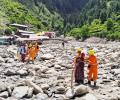
Authorities continue evacuating stranded pilgrims from areas around Dharali village in Uttarkashi, focusing on air rescue and relief operations due to damaged roads. Chief Minister Pushkar Singh Dhami is overseeing the efforts, with central government support.
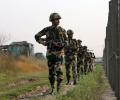
Army troops could not open fire on the terrorists due to the presence of Pakistani posts nearby, they said. Drone footage of the area showed a blood trail, indicating that the terrorists had suffered injuries due to the fall.

Embassy sources told PTI that it has set up a 24x7 helpline and is maintaining contact with members of the community.

Even as sectors across India embrace technological transformation, the construction side of the real estate industry continues to trail global trends. While technologies like Building Information Modelling (BIM), 3D printing, drone surveillance, and IoT-enabled smart building systems are increasingly common overseas, their adoption in Indian construction remains limited and largely experimental, developers said.
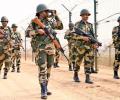
The Border Security Force (BSF) foiled a major infiltration attempt by suspected terrorists along the International Border (IB) in Samba district of Jammu and Kashmir. The incident occurred on May 8, 2025, amid heightened tensions between India and Pakistan. It is not yet clear whether any terrorists were hit by the firing.
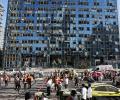
Scenes from war-torn Iran and Israel.
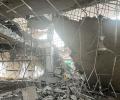
Indian Air Force S-400 Sudarshan Chakra air defence missile systems were fired last night against targets moving towards India. The targets were successfully neutralised in the operation multiple domain experts told ANI.
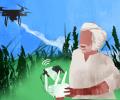
So far, the drones that were considered important for the agriculture sector were nature-made winged-insects - a key component of the bee-based natural pollination cycle. The new-age drone is a whirring machine with rotors that can help farmers plan and grow and manage their crops. For the farm sector in India, which has had low levels of mechanisation, the impact of drones can be tremendous. The use of drones can help it leapfrog to modernisation in the same way that mobile phones helped India overcome its traditional lack of connectivity.

A search operation by a joint team of security forces is underway to track down three Pakistan-based Jaish-e-Mohammad (JeM) terrorists in a forested area of Udhampur district in Jammu and Kashmir on Friday, officials said on Friday.
'Tom Curran went to the airport, but heard that the airport was closed.' 'Then he started crying like a little child. It took two or three people to handle him.'

Army Chief General Upendra Dwivedi asserted that Operation Sindoor was unlike any conventional mission and that it was akin to playing a game of chess as 'we did not know' what would be the enemy's next move.
