
LinkedIn has partnered with Wadhwani AI to launch 'AI for Future SMEs,' a digital empowerment programme for 2,000 small and micro entrepreneurs in northeast India. This 12-month initiative aims to build AI literacy and digital readiness in underserved regions, focusing on practical, business-focused training to improve productivity and market engagement in sectors like handloom, handicrafts, and tourism.

An industry-led AI curriculum taskforce has recommended shifting the present lecture-based teaching system for technical education to learning from real industry use cases and enhancing practical exposure of students.

Technology giant Google has announced a USD 5 million funding initiative for IIT Kharagpur to accelerate advanced AI research and cultivate scientific talent in India. The funding will support research in areas like Indic languages, agriculture, and educational technology, alongside expanding AI training and curriculum development for students and faculty. Google CEO Sundar Pichai highlighted the importance of this partnership in advancing India's innovation landscape.

The new approach emphasises practical understanding and contemporary skills, encouraging students to think critically and apply concepts in real-world contexts, says Srividya Sridhar, principal of Lotus Petal Senior Secondary School.

Chief Justice of India Surya Kant has called upon the Commonwealth Legal Education Association (CLEA) to develop model guidelines for disclosing AI assistance in legal research. He also stressed the importance of mandatory legal aid work for students and cautioned against relying solely on AI detection software for academic misconduct. The CJI highlighted the need for responsible AI use, evolving assessment methods, and uniform citation standards across the Commonwealth.

Goa College of Home Science has launched a certificate course on "marriage readiness" to help young people prepare for healthy and lasting relationships. This initiative follows Chief Minister Pramod Sawant's announcement about introducing pre-marriage counselling statewide to reduce divorces, amidst rising marriage and divorce-related petitions in Goa's civil courts.
Art education, physical education and wellbeing, vocational education and interdisciplinary studies will be compulsory.
A new report from Cambridge University Press & Assessment highlights the critical need for Indian policymakers to collaborate with teachers in developing AI education policies. The study emphasizes investing in teacher professional learning and involving educators and learners in the design and evaluation of AI tools to ensure policies are grounded in classroom realities and promote critical AI literacy.
A national study of top 75 Indian B-schools reveals a significant competency gap in AI skills among management graduates, with industry expectations far exceeding current MBA capabilities. A new framework by AIMS, EPSI, and IMC highlights the urgent need for management education to adapt to an AI-led workplace, emphasizing behavioural competencies alongside data fluency.

Cathy Li, Head of the Centre for AI Excellence at the World Economic Forum, advocates for integrating AI literacy into India's education curriculum and incentivising AI companies to prioritise child safety. She stresses the need for localised solutions that account for India's linguistic and cultural diversity, as well as varying levels of connectivity and digital literacy, to ensure AI systems are safe and beneficial for children.

IIT Madras has inaugurated a new state-of-the-art robotics laboratory, established with CSR support from Bechtel India. This collaboration aims to accelerate research, innovation, and industry applications in robotics and automation, specifically for the construction and infrastructure sectors, fostering advanced technological solutions and workforce development.

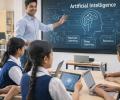
Union Education Minister Dharmendra Pradhan launched an artificial intelligence and computational thinking curriculum for classes 3 to 8, aiming to integrate structured AI education into the school system.
The Indian Institute of Management Ahmedabad (IIMA) has opened applications for the second batch of its two-year Blended MBA Programme in Business Analytics & Artificial Intelligence (BPGP: BA & AI). The programme, offered by the Krishnamurthy Tandon School of AI, aims to develop professionals who can integrate AI technology with management principles, addressing the industry's need for leaders capable of driving transformation and managing complex IT infrastructure, including data centres.

The Supreme Court has urged the Central Board of Secondary Education (CBSE) to consider exempting Class 6 students from its three-language policy for the current academic year. The policy, which mandates the study of three languages including two native Indian languages, is challenged by petitioners who question CBSE's jurisdiction over classes 6-8. The court emphasized finding a solution that avoids student pressure and suggested a potential deferral for Class 6.
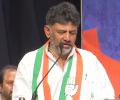
Karnataka Chief Minister D K Shivakumar lauded KEONICS' initiative to provide AI-based KEO computers to rural children, marking the institution's golden jubilee. The KEO computers, developed in Karnataka, aim to bridge the digital divide. Shivakumar also highlighted government efforts to promote IT beyond Bengaluru, enhance industry-oriented skills, and digitise property records, emphasising the state's commitment to technology and skill development.
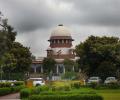
The Supreme Court has asked the CBSE to consider deferring the implementation of its three-language policy for Class 6 students, which mandates two native Indian languages, until the academic session starting 2027. The CBSE stated it would consider the suggestion. The policy, aligned with NEP-2020, makes two native Indian languages compulsory for Class 6 and Class 9, with provisions for foreign languages as additional options and no board exams for the third language in Class 10.

The Supreme Court has directed the Tamil Nadu government to comply with its previous order to identify land for establishing Navodaya Vidyalayas in each district of the state, emphasising cooperative federalism and urging a change in mindset regarding the central government's education policy.

The University of Delhi and semiconductor major AMD have signed a Memorandum of Understanding (MoU) to train up to 10,000 students and faculty in industry-relevant artificial intelligence skills over the next year. This collaboration will provide access to AMD's AI Engage Developer Programme, including its open-source ROCm AI software platform, learning resources, and developer GPU cloud credits, aiming to foster indigenous AI capabilities and bridge the gap between academia and industry.
Union Education Minister Pralhad Joshi announced that revised NCERT textbooks for classes 10 to 12 are being prepared in "mission mode," while textbooks for classes 1 to 9 under the new National Curriculum Framework have already been released. He emphasised NCERT's role in building a 'Viksit Bharat' and highlighted the need for curricula to evolve with AI advancements and the importance of India's young population as a global asset.

Chief selector Ajit Agarkar and his wife Fatema are set to launch ACE Juniors, a new-age early learning centre on July 29, focusing on developing creativity, emotional intelligence, and communication in children.
The 'CHESS+' initiative, Championing Excellence in Sport Skills, has been launched to establish a structured chess curriculum in schools across India. This program, a collaboration between the All India Chess Federation and Navodaya Vidyalaya Samiti, aims to enhance critical thinking and problem-solving skills among students, starting with a pilot in 30 Jawahar Navodaya Vidyalayas.

A report by Scholars at Risk, 'Free to Think 2026', states that academic freedom in India is "severely restricted" due to increasing government influence over higher education, university governance, and curbs on student expression. India is listed among six countries in this category, with its Academic Freedom Index score sharply declining. The report cites instances of faculty dismissals, event cancellations, and pressure on student protests, highlighting the alleged use of the UGC as a vehicle for state influence.
The Supreme Court has urged the CBSE to reconsider the implementation of its three-language policy for Class 9 students, emphasising that children should not be subjected to undue pressure. The court highlighted concerns about infrastructure, the starting point of the policy, and the definition of 'native' languages.
Chief Justice of India Surya Kant urged national law universities to proactively lead the integration of technology into the legal system, rather than merely reacting to changes. Speaking at a conclave, he stressed the importance of incorporating academic integrity and responsible AI use into the curriculum, rejecting outright bans on generative AI. The CJI highlighted that law schools must prepare graduates to critically engage with technological tools, ensuring justice, fairness, and human judgment remain central to the evolving legal landscape.
The HUMAIN AI Literacy Mission (HAILM) has been launched in India to integrate structured artificial intelligence education into schools nationwide. The initiative provides an age-appropriate AI curriculum for Classes 3-12, teacher training, and digital learning resources, aiming to equip students and educators with responsible AI understanding.

IICT and Netflix are offering scholarships to 100 students and working professionals, with up to 80 per cent financial support for courses in animation, VFX, gaming and creative technologies.
Maharashtra Governor Jishnu Dev Varma has urged state universities to establish a robust sports-friendly ecosystem to identify and develop exceptional sports persons capable of representing India. He highlighted the importance of sports in national development and student skill-building, advocating for greater participation from rural and tribal youth.

The question for the next 20 years is not whether India can become a $5 trillion or $10 trillion economy. Those are attractive targets, but the real question is whether India can create enough productive jobs, educate its children properly, make its cities liveable, and give hundreds of millions of people a substantially better life, asserts Ramesh Menon.

A parliamentary panel flagged staffing shortages at NCERT and CBSE, inadequate education spending, falling enrolment and poor internet connectivity in government schools.

The National Council of Educational Research and Training has reconstituted the Textbook Development Team for class 11 and 12 political science with a mandate to integrate cultural rootedness, Indian knowledge systems and inclusion, with at least four of the members having direct or indirect links with the RSS.

How did hundreds of errors slip through multiple stages of drafting, editing, proofreading, expert review and final approval before making their way into classrooms?

'It could be in IT, it could be in administration, it could be in legal, it could be in technical services, but entry level jobs are rapidly disappearing because AI is taking them over.' 'So, the big question what would happen if the bottom rung of the ladder is removed?'

The NCERT has included in the class 9 social science textbook a section on Emergency, which it described as "one of the major challenges to democracy in India" with Education Minister Dharmendra Pradhan hailing the move saying future generations should know about the "dark deeds".

High fees do not automatically translate into better teaching or stronger clinical exposure, points out Nayagam PP, career counsellor and founder of EduJob360.

The aim is to win over the country's enterprises, developers and startups as AI systems shift from answering questions to autonomously executing tasks.

'Now that NCERT has received the status of a deemed university, it will start its own MA courses, postgraduate courses, and doctoral research in education, fully funded by the government.'
Kerala Chief Minister V D Satheesan announced the state's vision to become a national hub for artificial intelligence and emerging technologies, coinciding with the launch of Naviq Technology by IBS Software Group. The state government is implementing initiatives like an AI-powered dashboard, a Global Job Watch Tower, and curriculum revisions to align with technological advancements and foster skill development in AI and semiconductor sectors.

90 per cent of institutions recorded no improvement in international student metrics, despite government initiatives such as the Study in India programme, UGC regulations on internationalisation, and efforts to attract foreign students.

'We can integrate AI and tech into education, but that is just a means and not an end.' 'Ultimately, we need to control what happens in a classroom and we need to let teachers innovate their teaching style to suit the needs of Gen Z and beyond.'

rediffGURU Nayagam PP, a certified career counsellor and the founder of EduJob360, answers admission related questions and guides aspirants on how to pick the right stream and college.
