
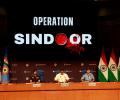
The Border Security Force (BSF) launched "Operation Sindoor" in retaliation to unprovoked firing and shelling by Pakistani Rangers along the International Border (IB) in Jammu. BSF troops destroyed three terrorist launch pads and targeted 76 Pakistani border outposts and 42 forward defence locations. The BSF action came after Pakistan launched heavy firing and shelling on 60 Indian posts and 49 forward positions, reportedly providing cover for an attempted infiltration by 40-50 terrorists.
'We should not just react when a terror attack happens on our soil.' 'Our approach should be continuous and a launch pad should be destroyed the moment it comes up.'
For Malegaon's Muslims, Rahul Gandhi's remarks were simply one more indication that the party they once supported no longer cares for them, notes Jyoti Punwani.

The Bombay High Court acquitted all 12 accused in the 2006 Mumbai train blasts case, citing a failure by the prosecution to prove their guilt and raising serious concerns about the investigation and evidence presented.

The attack has "footprints and tracks" similar to previous attacks claimed by The Resistance Front, the ministry said in a presentation, adding the terror organisation is just another name of designated terror outfit Lashkar-e-Tayiba.
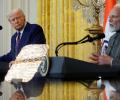
US President Donald Trump said on Friday that there has always been tension between India and Pakistan and the two countries will figure it out between themselves. Trump was asked about tensions between India and Pakistan in the wake of the Pahalgam terror attack, in which 26 civilians were killed, and if he would be talking to the leaders of the two nations. He said that he knows both leaders and that there is great tension between Pakistan and India, but there always has been.
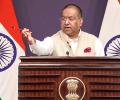
India expects Turkiye to strongly urge Pakistan to end its support to cross-border terrorism, said ministry of external affairs spokesperson, Randhir Jaiswal during the weekly briefing on Thursday.
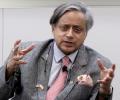
"I'm very glad you raised this, Ishaan. I didn't plant it. I promise you. This guy does this to his dad," Tharoor replied amid laughter from the audience.

Former Indian Army chief General Shankar Roychowdhury (Retd) has blamed "intelligence failure" for the recent terror attack in Pahalgam, Jammu and Kashmir, which claimed the lives of 26 civilians. He demanded accountability at the highest levels, stating that there must be someone responsible for the negligence and they must be held accountable for the consequences.
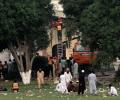
'...and the country should be impoverished completely.' 'Once this is done, the political class would take over and then play a part in real democracy where the army is under the control of the government, not vice-versa.'
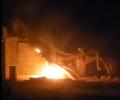
11, 13, 15 are not some random odd numbers but the number of days that Prime Minister Narendra Modi took to act against Pakistani terror strikes on Indian soil.

This came after Pakistan People's Party chairman Bilawal Bhutto Zardari on Saturday stated that Pakistan's Prime Minister Shehbaz Sharif had tasked him to lead a delegation to present Pakistan's case on the recent escalations of tensions between the two nations.
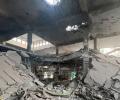
Pakistan claims it was a mosque and an educational complex that were hit in the strikes at Muridke, located at about 40 km from Lahore.

President Pezeshkian on Saturday said that Iran unequivocally denounces such "inhumane acts", Iran's embassy in New Delhi said in a post on X.

In a significant shift, Kashmiris from villages once considered strongholds of militancy have joined the condemnation of the recent massacre of 26 people in Pahalgam, raising slogans against terrorism and expressing solidarity with the victims. This unprecedented display of public sentiment across the valley marks a possible turning point in the region's fight against violence.
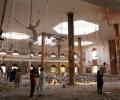
The Bahawalpur centre is notorious for hoarding arms and ammunition left behind by the NATO forces in Afghanistan, the officials said.
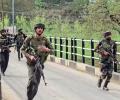
"More than 85,000 domiciles have been issued to non-locals, creating a pathway for demographic change in Jammu & Kashmir. These non-locals arrive posing as tourists, obtain domiciles, and then begin to act as if they own the land. Consequently, violence will be directed toward those attempting to settle illegally," TRF said in a statement which could not be independently verified by Rediff.

'There's a lot of sense in what Prime Minister Modi did, but the Indian government has to be really prepared for a really sharp escalation spiral.'
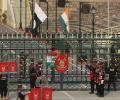
In the India-Pakistan situations, off-ramps have come either through foreign mediation (after months of kinetic warfare over Kargil, and a long stand-off with Op Parakram) or when a situation made it possible for both sides to claim a win, explains Shekhar Gupta.
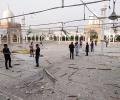
'Munir is clearly insecure and hence he needs the prop of a field marshal.'
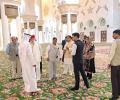
India succeeded in busting the Pakistani narrative on Operation Sindoor, particularly among the Organisation of Islamic Conference (OIC) member nations, where Islamabad sought succour after carrying out terror activities across the border, Shiv Sena leader Shrikant Shinde said.
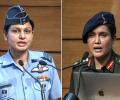
India conducted precision strikes on nine terror targets in Pakistan and Pakistan-Occupied Kashmir, targeting terrorist infrastructure to deter further attacks. The operation, codenamed 'Operation Sindoor', was detailed by two women military officers, Col Sofiya Qureshi and Wing Commander Vyomika Singh, at a press briefing in New Delhi. The officers highlighted the precise nature of the strikes, emphasizing the use of "niche technology weapons" to ensure no collateral damage. The briefing showcased India's military prowess and the growing role of women in the armed forces.

Tahawwur Hussain Rana, a key figure in the 2008 Mumbai terror attacks, has been extradited from the US to India and produced before a Delhi court. Rana, a close associate of David Coleman Headley, was brought to India after the US Supreme Court dismissed his review plea against extradition. The National Investigation Agency (NIA) has sought 20 days of custody to interrogate Rana, citing clinching evidence, including emails. The agency believes that Rana's interrogation is critical to understanding the larger conspiracy behind the attacks and his role in planning them.
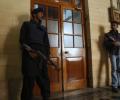
An armed guard of Qatal was also killed in the attack that took place on Saturday night.
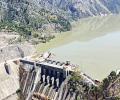
Pakistan has halted the construction of contentious canals in Punjab province after India suspended the Indus Waters Treaty following a deadly terrorist attack in Kashmir. The decision to suspend the canals project was made after Prime Minister Shehbaz Sharif met with PPP chairman Bilawal Bhutto-Zardari and agreed to address the concerns of Sindh province, where the project had sparked protests. The canals project, aimed at irrigating the desert region in Punjab, was seen as a threat to water resources in Sindh. Both sides have agreed to seek consensus on the issue in the Council of Common Interests (CCI), a high-powered inter-provincial body. Meanwhile, Pakistan has reiterated the importance of the Indus Water Treaty for its water security and economy, and condemned India's move to suspend it.
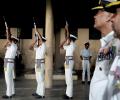
'It could be the Pakistan army's commercial interest, tactical or strategic interest or one of their leaders.' 'Even if you send a message that we have attempted to kill one of the Pakistani generals, that itself will serve the purpose.'
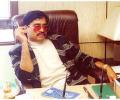
'6 shooters went to kill Dawood in Pakistan.'

The central government has appointed advocate Narender Mann as special public prosecutor to conduct trials and other matters related to the National Investigation Agency case RC-04/2009/NIA/DLI against Tahawwur Hussain Rana and David Coleman Headley, who is in a US prison following a plea deal.

The National Investigation Agency (NIA) has started interviewing eyewitnesses, including tourists, in connection with the deadly terrorist attack in Pahalgam, south Kashmir. The attack, carried out by terrorists from the Pakistan-based Lashkar-e-Taiba (LeT), claimed the lives of 26 people on April 22. Initial investigations suggest that five to seven terrorists were involved, aided by local militants trained in Pakistan. Security forces are conducting massive operations to hunt down the terrorists in the dense jungles of the Pir Panjal range.
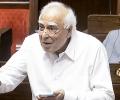
Rajya Sabha MP Kapil Sibal has congratulated both the previous UPA government and the current dispensation for the extradition of Tahawwur Hussain Rana, the mastermind behind the 2008 Mumbai attacks. Sibal expressed confidence that the extradition will shed light on the involvement of individuals within Pakistan's establishment in the attacks. Rana is being questioned by the National Investigation Agency (NIA) to uncover the full extent of the conspiracy behind the deadly 2008 terror strikes. Sibal highlighted the efforts of the UPA government in establishing the NIA and pursuing Rana's extradition, and also acknowledged the current government's success in bringing him back to India. The interrogation is expected to focus on Rana's potential ties to the Lashkar-e-Taiba (LeT) and his role in the Mumbai attacks.
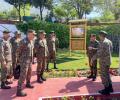
'Surgical strikes or air strikes, or both, are likely on the table.'

All major attacks orchestrated by the Lashkar-e-Tayiba in the near future would comprise only Indians. Vicky Nanjappa reports

China supplied more than $20 billion worth of arms to Pakistan. These include 20 J-10CE and JF-17 Block III fighter aircraft, Wing Loong drones, frigates, submarines, Hongqi HQ-9P surface-to-air missiles, 240 PL-15E air-to-air missiles, LY-80 air defence systems, ZDK early warning aircraft and other weapons.

The story of two Adils, one a Lashkar-e-Taiba terrorist and the other a pony 'wallah' who died protecting tourists, highlights the contrasting realities of life in Kashmir. While the terrorist, Aadil Thokar, is accused of the deadly attack on tourists in Baisaran, the heroic pony 'wallah', Syed Adil Hussain Shah, sacrificed his life to save them. Their stories, though separated by a tragic event, reveal the deep-rooted conflict and the enduring spirit of compassion in Kashmir.

According to the Daily Times, the Punjabi Taliban has broken off from LeT, and refuse to take orders from Lashkar supremo Hafiz Saeed.

The Pahalgam massacre highlights the evolution of terrorism into a multi-domain challenge. India's response must similarly evolve -- from tactical retaliation to comprehensive strategic deterrence. To establish a credible and sustained deterrent, India must also carry out continuous kinetic operations, both overt and covert, suggest Sakshit Raina and Rahul Mishra. To establish a credible and sustained deterrent, India must also carry out continuous kinetic operations, both overt and covert, suggest Sakshit Raina & Rahul Mishra.
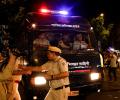
Tahawwur Rana, a Canadian citizen and native of Pakistan, was extradited to India to face charges related to his alleged role in the 2008 Mumbai terror attacks. The US Department of Justice said Rana allegedly commended the LeT terrorists who carried out the attacks and suggested they should be awarded Pakistan's highest gallantry award. Rana is accused of facilitating a fraudulent cover for his childhood friend, David Headley, to conduct surveillance in Mumbai for the Lashkar-e-Taiba (LeT) terrorist group. He is also accused of helping Headley submit false visa applications to Indian authorities. This extradition follows a lengthy legal process that began in 2020 with India's request for Rana's surrender. Rana, who was previously convicted in the US for providing material support to LeT, will now face trial in India on 10 criminal charges related to the Mumbai attacks.
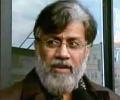
Tahawwur Hussain Rana, a Canadian national convicted in the United States for his role in the 2008 Mumbai terror attacks, has been extradited to India. Rana, a close associate of Pakistani-American terrorist David Coleman Headley, was involved in the conspiracy from 2005 onwards and assisted Headley in obtaining a visa for India. He is the third person to be sent on trial in India for the 26/11 attacks after Ajmal Kasab and Zabiuddin Ansari alias Abu Jundal. Rana's extradition comes after US President Donald Trump approved the request.
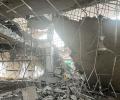
'India won't take anything from Pakistan lying down.'
