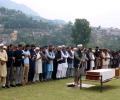
Sources have revealed that at least five hardcore terrorists affiliated with banned terror outfits Lashkar-e-Taiba (LeT) and Jaish-e-Mohammed (JeM) were killed in Indian strikes in Pakistan on May 7th. The strikes targeted nine terror sites in Pakistan and Pakistan-occupied Kashmir. Among the dead were Mudassar Khadian Khas, a LeT leader, and Hafiz Muhammed Jameel, the brother of JeM founder Maulana Masood Azhar. Other notable casualties included Mohammad Yusuf Azhar, a brother-in-law of Masood Azhar, and Khalid alias Abu Akasha, a LeT operative. The Pakistani military and government officials were present at the funerals of the slain terrorists.
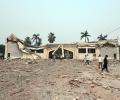
'Operation Sindoor had three objectives.' 'One, destroy the Lashkar-e-Taiba headquarters at Muridke and the Jaish-e-Mohammed headquarters at Bahawalpur.' 'Second, deter and defend any counterstrike by Pakistan.' 'And third, if they persist, demonstrably deliver counterforce punishment.' 'All of the three boxes, the IAF checked,' points out Shekhar Gupta.

Lashkar-e-Taiba terrorist Razaullah Nizamani Khalid alias Abu Saifullah Khalid, who was the brain behind the 2006 attack on the Rashtriya Swayamsevak Sangh headquarters, was killed by three unidentified gunmen in Sindh province of Pakistan on Sunday, officials in New Delhi said.
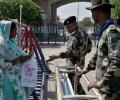
Pakistan Defence Minister Khwaja Asif has admitted the country's history of supporting, training and funding terrorist organisations as 'dirty work' for the West, a mistake for which he said Pakistan had suffered.
A total of nine terror sites in Pakistan, including five in Pojk, linked to Lashkar-e-Taiba (Let) and Jaish-e-Mohammed (Jem), were targeted with meticulous planning to avoid civilian casualties.
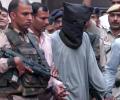
The National Investigation Agency has informed a Delhi court that Mumbai attack accused Tahawwur Rana could spill the beans on the ongoing and future terror plans of outfit Lashkar-e-Taiba and its chief Hafiz Saeed for India.

India has carried out strikes against nine terrorist infrastructure in Pakistan and Pakistan-occupied Kashmir, Defence Minister Rajnath Singh said on Wednesday. The strikes were in retaliation to the Pahalgam terror attack in which 26 civilians were killed. Singh said the strikes were precise and destroyed the targets set under Operation Sindoor.

Lashker-e-Taiba was put on the list on May 2 with all its aliases, including Al-Mansoorian, a shadow outfit, which has nowadays been active in Jammu and Kashmir.
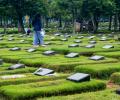
As many as 2,493 graves were identified as belonging to foreign terrorists who were killed in counter-insurgency operations.
These individuals often lacked identification to conceal their networks and maintain Pakistan's plausible deniability.
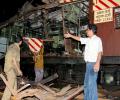
The Supreme Court has stayed the Bombay High Court verdict acquitting all 12 accused in the 2006 Mumbai train bomb blasts case, issuing notices and seeking responses from the accused.

The houses of two Lashkar-e-Taiba (LeT) terrorists allegedly involved in the Pahalgam attack were destroyed in Jammu and Kashmir in a blast on Thursday night. Security forces were conducting searches inside the houses of Adil Hussain Thokar and Asif Sheikh when the explosives already kept inside the houses went off.

The Indian Army has released a booklet on Operation Sindoor, which was launched to avenge the April 22 ghastly Pahalgam attack in which Pakistan-backed terrorists brutally killed 26 civilians, mostly tourists, and left many injured.
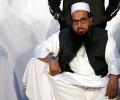
'The fight against terrorism will continue. We have set a new normal and the new normal is that we will follow an offensive strategy. Wherever terrorists are, we have to kill those terrorists and we have to destroy their infrastructure. So it is still not over but as we speak the ceasefire is still intact'
'Another demonstration of strong India-USA counter-terrorism cooperation. Appreciate the Department of State for listing The Resistance Front (TRF) as a designated Foreign Terrorist Organization and Specially Designated Global Terrorist.'

The National Investigation Agency (NIA) on Monday said that it has gathered a substantial body of evidence regarding identities of the terrorists involved in Pahalgam terror attack.

The government stated that Operation Sindoor was launched in response to a 'barbaric' attack by 'Pakistan-sponsored terrorists,' focusing on dismantling terror infrastructure and neutralizing terrorists likely to be sent across to India.
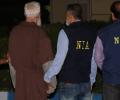
According to the chargesheet, Rana played a crucial role in supporting terrorist David Coleman Headley, a Pakistani-American operative linked to Lashkar-e-Taiba, by facilitating his reconnaissance missions across Mumbai.
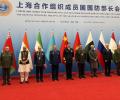
In his address, Singh said there should be "no double standards" in combating terrorism and urged the SCO member nations to condemn the menace with unity.

Tahawwur Hussain Rana, a jailed accused in the 2008 Mumbai terror attacks, has moved a court in New Delhi seeking permission to speak to his family. The 64-year-old Pakistani-origin Canadian businessman is currently in judicial custody and is accused of conspiring with David Coleman Headley and operatives of Lashkar-e-Taiba (LeT) and Harkat-ul-Jihadi Islami (HUJI) to carry out the terror attacks. Rana was brought to India after the American Supreme Court dismissed his review plea against his extradition.

Over 100 terrorists, including high-value targets such as Yusuf Azhar, Abdul Malik Rauf and Mudasir Ahmed, were eliminated during Operation Sindoor on May 7, the Indian military said on Sunday.

Afridi's remarks came as organisers confirmed the Indian pullout followed public backlash after the Pahalgam terror attack on April 22- an episode that has now cast a shadow over the tournament.

Jain currently heads RAW's Aviation Research Centre (ARC), which deals with aerial surveillance, among others.
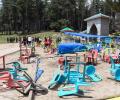
A team from India's National Investigation Agency (NIA) has reached Pahalgam in Jammu and Kashmir to assist local police in investigating a deadly terrorist attack that killed 26 people, mostly tourists, on Tuesday. The NIA team visited the site of the attack, Baisaran meadow, known for its scenic beauty. Security agencies have released sketches of three suspected Pakistani terrorists involved in the attack, identified as Asif Fauji, Suleman Shah, and Abu Talha. The Resistance Front (TRF), a shadow outfit of the Lashkar-e-Taiba terrorist group, claimed responsibility for the attack.
Nineteen years later, remembering how terror struck Mumbai's lifeline on July 11, 2006.
A UN Security Council report states that The Resistance Front (TRF) claimed responsibility for the Pahalgam terror attack and published a photograph of the attack site. The report also cites assertions that the attack could not have happened without the support of Pakistan-based Lashkar-e-Tayyiba (LeT).
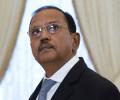
National Security Adviser Ajit Doval on Tuesday called for shunning double standards in combating terrorism and urged members of the Shanghai Cooperation Organisation (SCO) to hold accountable perpetrators, organisers and financers of cross-border terrorism, seen as reference to Pakistan.

The Director General of Air Operations said "whatever methods and whatever means we have chosen, it had the desired effects on the enemy targets",

BCCI secretary Devajit Saikia said that an invitation has been extended to chiefs of all three Armed forces, top-ranked officers and soldiers for the IPL 2025 final on June 3.

Prime Minister Narendra Modi on Wednesday hailed the Indian armed forces for carrying out targeted strikes at terror camps in Pakistan and Pakistan-Occupied Kashmir. The strikes were carried out in retaliation for the Pahalgam terror attack, which killed 26 civilians. Modi also said that his government will have zero tolerance towards terror.
It is also the first time that TRF has been mentioned in any UN document. This marks the first mention of the LeT and any other Pakistan-based terror group in the report since 2019.
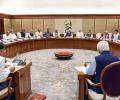
India has reached out to key global powers, including members of the UN Security Council, and apprised them about the reasons behind its military strikes on nine terror targets in Pakistan and Pakistan-occupied-Kashmir in retaliation for the Pahalgam terror attack. New Delhi also conveyed to the countries that it will retaliate if Islamabad escalates the already tense situation.
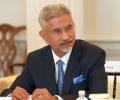
External Affairs Minister S Jaishankar says Operation Sindoor conveyed India's resolve to act against terrorism, following UN Security Council's call to bring Pahalgam attackers to justice.
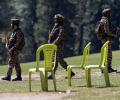
The officials said that intelligence agencies had been alerted about the possibility of a terror attack, but the inputs were utilised at another place, some 90 kilometres away from the site where the attack took place, resulting in a key security lapse.
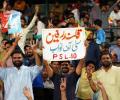
The Pakistan Cricket Board (PCB) has confirmed that the Pakistan Super League (PSL) will continue as scheduled despite escalating tensions with India.

Investigations said the accused was engaged in sharing classified details, including troop deployments and strategic locations, posing a threat to national security.

Banks have tightened their cyber security network to ward off any cyber threat in the wake of India launching missile attacks on Pakistan and Pakistan-occupied Kashmir. Banks have also improved their security at the branches near border areas due to heightened threat of a counter attack.
What was the aim of Operation Sindoor? Why was the operation halted so soon? asks Lieutenant General Prakash Katoch (retd).
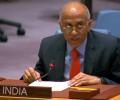
India's Permanent Representative to the UN Ambassador Parvathaneni Harish said that the Indian sub-continent offers a "stark contrast" in terms of progress, prosperity and development models.

The attack has "footprints and tracks" similar to previous attacks claimed by The Resistance Front, the ministry said in a presentation, adding the terror organisation is just another name of designated terror outfit Lashkar-e-Tayiba.
It was Prime Minister Narendra Modi who picked the evocative term 'Operation Sindoor' to codename the Indian armed forces' strikes on nine terror sites in Pakistan and Pakistan-occupied Kashmir, official sources said on Wednesday.
