
The Supreme Court on Thursday held that the Governor can reserve a bill for consideration of the President even in the second instance, when the bill is again sent by the state assembly to him whether in its amended or unamended form.

Prime Minister Narendra Modi announced that Parliament is on the verge of creating 'new history' by amending the Women's Reservation Act this week, ensuring its implementation by 2029. He highlighted the unanimous passage of the law in 2023 and the collective demand for its early enforcement.

The Shiromani Akali Dal (SAD) has called for the immediate passage of the women's reservation bill and the delimitation bill, advocating for a uniform 50 per cent increase in seats for all states to ensure fair and equitable representation.

Ten days after both Houses of Parliament were adjourned sine die, the Monsoon session is yet to end formally, giving rise to speculation that the government wants to pass a key legislation without convening a new session.

Major bills, including those on women's reservation, delimitation, and the Foreign Contribution (Regulation) Act (FCRA), face an uncertain future in the ongoing Monsoon session of Parliament due to persistent opposition protests and a lack of consensus.

Prime Minister Narendra Modi has appealed to opposition parties to support the delimitation-linked Women's Reservation Bill, highlighting its 40-year struggle. The bill aims to provide 33 per cent reservation for women in legislatures and increase Lok Sabha seats, requiring a two-thirds majority for passage. Despite previous setbacks and ongoing efforts to secure numbers, the government continues to push for this crucial legislation.

The Congress Working Committee (CWC) is set to meet to discuss the political situation in India, focusing on strategies to pressure the government regarding student issues, alleged embezzlement at the Ram temple, and upcoming Assembly elections. The meeting will also address the women's reservation bill.

'The BJP has all the instruments with them and they do have a sense of purpose, so I don't think there will be a challenge.'

India's banking system liquidity surplus has significantly narrowed due to tax outflows, including GST payments, and higher cash reserve ratio balances. This tightening liquidity has pushed the weighted average call rate closer to the RBI's marginal standing facility rate, with market participants anticipating a persistent deficit in the coming months.
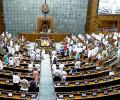
India's Monsoon session of Parliament remains formally unprorogued 40 days after adjournment, setting a new record. This unusual delay fuels speculation that the government intends to introduce a key legislation, possibly an amendment to the women's reservation law, without convening a new session. The proposed amendment aims for a 50 per cent seat expansion to address concerns over delimitation.

Parliamentary Affairs Minister Kiren Rijiju met Leader of Opposition Rahul Gandhi to discuss resolving the persistent deadlock in the Lok Sabha's monsoon session, focusing on the Delimitation Bill and FCRA Bill, though no immediate commitment was secured from the Congress leader.

The Congress and BJP are engaged in a political spat over the implementation of the Women's Reservation Bill and its proposed link to delimitation, with Rahul Gandhi urging unconditional implementation of the 2023 law and Kiren Rijiju highlighting the constitutional requirement for delimitation based on post-2026 census figures.

West Bengal Chief Minister Mamata Banerjee criticised the BJP after the central government failed to pass a Constitution amendment bill for women's quota in legislatures, accusing the BJP of using the bill as a political ploy to divide the country and Bengal.

'This is not about revering women; this is about women entering politics.' 'This is about women having a say in how State policies have to be shaped.'

Tamil Nadu Chief Minister M K Stalin has claimed victory for the state after the Constitution Amendment Bill was defeated in the Lok Sabha. Stalin criticised the Centre's handling of the Women's Reservation Bill and delimitation process, accusing the BJP of prioritising political gain over fairness and consultation.

The Lok Sabha has referred the contentious Foreign Contribution (Regulation) Amendment Bill, 2026, to a 31-member joint parliamentary committee for thorough scrutiny.
He said Congress would push Madhya Pradesh back into the BIMARU (laggard) category if given an opportunity again.

The DMK has announced it will meticulously examine the proposed delimitation Bill when it is introduced in Parliament, making a decision based on its merits to safeguard Tamil Nadu's interests. The party's stance will be independent, without consultation with the Congress party, despite their former alliance.

'When the House adjourned, they were not yet getting 360. They were short of that, maybe by six or seven or ten.' 'So they wanted to break more parties and get their support, and they were engaged in that.'

NDA floor leaders held a meeting after the Constitution Amendment Bill seeking to implement reservation for women in legislatures in 2029 and increase the number of seats of the Lok Sabha was defeated.

Maharashtra is grappling with an escalating drought crisis, with 305 talukas now declared drought-hit, prompting the state government to announce Rs 5,000 in financial aid for farmers before Diwali and extend comprehensive relief measures.

Introducing the 128th Constitution Amendment Bill, which was approved by a two-thirds majority in the Lok Sabha on Wednesday, Meghwal recounted the measures initiated by the Narendra Modi government for the empowerment of women over the last nine years.

The DMK has been charting an independent course from the Congress-led Opposition bloc on contentious issues during the Monsoon Session, including not joining a walkout over the anti-paper leak bill and participating in a debate on the National Honour Bill, signalling growing fault lines within the Opposition.

The Lok Sabha passed two Bills, including one to rename Kerala as Keralam, without debate as Opposition members continued their protests, demanding Union Home Minister Amit Shah's presence to address police excesses against student protesters and alleged Ram temple fund irregularities.
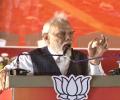
West Bengal Chief Minister Mamata Banerjee announced that the TMC will support the women's quota bill but opposes the delimitation bill introduced by the Modi government in the Lok Sabha. She also criticised the central government over central agency raids on TMC candidates.
BJP sources said the government would introduce a fresh Bill on the issue and has reached out to parties that opposed the earlier legislation.

Union Law Minister Arjun Ram Meghwal on Wednesday moved the women's reservation bill for passage in the Lok Sabha, saying it is a very important bill and urging members to pass it with unanimity.

The Congress party has issued a whip to its MPs in both the Rajya Sabha and Lok Sabha, mandating their presence from August 10-12 for discussions on "very important" issues. This directive comes amidst reports of potential debates on the Foreign Contribution (Regulation) Amendment Bill, 2026, and a Constitution Amendment Bill concerning delimitation, though the government's official business list did not explicitly mention these.

The government has released a set of FAQs to address concerns and clarify the details surrounding the Women's Reservation Bill, which aims to provide 33 per cent quota for women in legislatures.

Kiren Rijiju has strongly criticised the Congress for allegedly 'unfairly disrupting' the recent monsoon session.

The Indian government and opposition are preparing for a contentious Monsoon Session of Parliament, with key issues including the Constitution Amendment Bill on delimitation and women's reservation, the alleged NEET paper leak, and a row over Ram temple donations set to spark heated debates.

The ruling NDA coalition in India faces a significant challenge in passing the women's reservation bill in Parliament due to insufficient numbers. The bill requires a two-thirds majority in both houses, and the NDA needs to secure additional support or abstentions from other parties to achieve this.

Maharashtra Congress president Harshwardhan Sapkal criticised the BJP's stance on women's reservation, challenging them to reject ideological texts like the Manusmriti. He accused the BJP of using the issue for political gains and misrepresenting Congress president Mallikarjun Kharge's remarks.

The opposition on Tuesday termed as an 'election jumla' the women's reservation bill brought by the government with many leaders raising questions over the proposed legislation, contending it doesn't account for reservation for OBC communities and that it will be effective at the earliest by the 2029 Lok Sabha polls.

BJP president Nitin Nabin has accused West Bengal Chief Minister Mamata Banerjee and opposition parties like the Congress for the setback in implementing women's reservation in legislatures.
West Bengal Chief Minister Mamata Banerjee has accused the BJP-led central government of using the proposed amendment to the women's quota law as a front for the Delimitation Bill, which she claims will divide the country. She asserted that her party, the TMC, will fight this move at every step.

The Tamil Nadu Assembly has adopted a resolution, moved by Chief Minister C Joseph Vijay, urging the Union government to permanently fix the Lok Sabha strength at 543 and implement 33 per cent women's reservation by 2029. The resolution also opposes delimitation that could disadvantage states successful in population control.
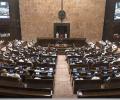
Once more women assume leadership roles and join the nation-building process, he said, adding they will become a guarantee of the country's bright future.

The BJP and the Opposition have engaged in a war of words over the implementation of the women's reservation bill, which aims to reserve seats for women in legislatures. The bill was defeated in the Lower House, leading to accusations and counter-accusations between the parties.

Rahul Gandhi accuses the government of using the women's reservation bill as a smokescreen to manipulate India's electoral map and diminish representation for certain states.
