
The Bill has been pending with the Governor for over a year after the Assembly passed it last April 6 amidst uproarious scenes and boycott by the opposition parties.

The Chhattisgarh government has introduced a bill in the state assembly to prevent religious conversions carried out through force, inducement, fraud, or misrepresentation. The bill, titled the Chhattisgarh Dharm Swatantraya Vidheyak, 2026 (Freedom of Religion Bill, 2026), aims to curb conversions achieved through coercion or undue influence.
The Chhattisgarh government has introduced a bill aimed at preventing religious conversions through force, inducement, or misrepresentation, sparking opposition and debate in the state assembly.

The Maharashtra assembly has passed the Freedom of Religion Bill 2026, introducing strict measures to prevent religious conversions through coercion, fraud, or marriage, sparking debate over constitutional rights and religious freedom.
About 50 people from various religious group attended a press conference on April 11, in West Sacramento, where California Assemblywoman Mariko Yamada, D-Davis, announced the introduction of Assembly Bill 1964, which would strengthen religious freedoms in the workplace.

The Maharashtra government has introduced the Maharashtra Freedom of Religion Bill 2026, which aims to prohibit religious conversions carried out through coercion, fraud, or marriage, with stringent penalties for violations.

A court in Maharashtra's Nashik district on Monday fixed May 2 for giving its verdict on the anticipatory bail plea filed by TCS employee Nida Khan, an accused in a case related to alleged sexual harassment and forcible religious conversion at the IT firm's local unit.

Lok Sabha takes up FCRA Amendment Bill amid opposition protests.
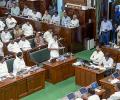
The Tamil Nadu Assembly passed a resolution on Thursday condemning the Centre's proposed Waqf Amendment Bill 2024, calling for its recall. Chief Minister M K Stalin argued that the amendment interferes with religious affairs and would negatively impact the Muslim minority. The resolution was unanimously passed by the Assembly, with support from all parties, including the opposition AIADMK and PMK. The BJP, however, walked out in protest, accusing the ruling DMK of engaging in divisive politics. The bill aims to streamline the Waqf Board's work and ensure efficient management of Waqf properties but has been criticized for potentially encroaching on religious freedom and autonomy. The Tamil Nadu government claims that the amendment would lead to government control over the Waqf Board and its properties, impacting its autonomy and potentially allowing for government acquisition of Muslim-owned lands.

The Karnataka Legislative Council passed a bill to curb hate speech, facing strong opposition from BJP and JD(S), who criticized it as 'draconian' and a threat to free speech. The bill proposes jail terms and fines for hate crimes and repeated offenses.

A fresh plea has been filed in the Supreme Court challenging the constitutional validity of the Waqf (Amendment) Act, 2025, claiming it was a "blatant intrusion" into the rights of a religious denomination to manage its own affairs in the matter of religion. The plea, filed by Samastha Kerala Jamiathul Ulema, argues that the amendments would distort the religious character of Waqfs and irreversibly damage the democratic process in their administration. Several other petitions have been filed in the apex court challenging the validity of the bill, including those by Congress MP Mohammad Jawed, AIMIM president Asaduddin Owaisi, and AAP MLA Amanatullah Khan.

Madhya Pradesh minister Kailash Vijayvargiya is facing criticism for his crass comments regarding the water crisis in Indore. This is the latest in a series of controversial remarks made by the veteran politician.

The Supreme Court on Monday agreed to consider listing for urgent hearing the petitions challenging the constitutional validity of the Waqf (Amendment) Act, 2025.

'Kashmir needs to be divided and we need the land of Panun Kashmir in Kashmir.'
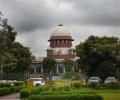
The Supreme Court of India will likely hear a batch of petitions challenging the constitutional validity of the Waqf (Amendment) Act, 2025 on April 15. The Act, which came into force on April 8, has been met with widespread criticism from various stakeholders, including politicians, the All India Muslim Personal Law Board (AIMPLB), and Jamiat Ulama-i-Hind. They argue that the law is discriminatory and violates the fundamental rights guaranteed under Articles 25 and 26 of the Constitution. The petitions allege that the amendments give the government more control over the administration of Waqf, effectively sidelining the Muslim minority from managing their own religious endowments.

Introducing the bill, Rijiju said the consultation process of the Joint Parliamentary Committee (JPC) was the largest ever exercise carried out by a parliamentary panel in India's democratic history.

The Lok Sabha, India's lower house of Parliament, will debate the contentious Waqf (Amendment) Bill on Wednesday. The bill has been met with strong opposition from several parties who claim it is unconstitutional. The government, however, insists the bill aims to improve the management of Waqf properties in India by bringing transparency and efficiency.

The All India Muslim Personal Law Board (AIMPLB) has announced its intention to challenge the Waqf (Amendment) Bill in court, labeling it a "black law" that threatens the community's rights. The AIMPLB, a major organization representing Muslims in India, asserts that the Bill, if passed, would lead to the seizure of Muslim properties and undermine the autonomy of Waqf Boards. The organization plans to launch nationwide protests against the Bill, echoing the farmers' agitation, and has urged all citizens to resist the legislation. The Bill has been met with criticism from various quarters, including opposition parties, who claim that the Centre is rushing it through Parliament without adequately addressing concerns raised by the Joint Parliamentary Committee (JPC).

A three-judge Supreme Court bench will hear petitions challenging the constitutional validity of the Waqf (Amendment) Act, 2025, on April 16. The petitions, including those by politicians and the All India Muslim Personal Law Board (AIMPLB) and Jamiat Ulama-i-Hind, were filed in the top court challenging the validity of the newly-enacted law. The Centre has filed a caveat in the apex court, seeking a hearing before any order is passed.
Terming forced religious conversion a "very serious" issue, the Supreme Court on Monday asked the Centre to step in and make sincere efforts to check the practice.

Both factions of the Jamiat Ulema-e-Hind (Arshad Madani and Mahmood Madani) slammed the Bill and expressed grave concerns over the proposed legislation.

A heavy rain Sunday morning did little to dispirit the thousands who gathered in the main courtyard of Tsuglagkhang, the Dalai Lama temple, to observe the 90th birth anniversary of the 14th Dalai Lama.

Chhattisgarh Deputy Chief Minister Vijay Sharma announced plans for a new anti-conversion law following the arrest of two nuns from Kerala on charges related to religious conversion and human trafficking. The announcement comes amid political tensions and accusations of wrongful arrest.

The Centre on Wednesday told the Supreme Court that nobody can claim right over government land and it is legally empowered to reclaim properties which are declared waqf by using the waqf by user principle.

In May, 40 Rohingyas were blindfolded and flown to the Andaman and Nicobar islands and then thrown into the sea and made to swim to an island in Myanmar. And after the Pahalgam attack, at least 300 Muslims were 'pushed back' to Bangladesh from Assam.

Forced religious conversion may pose a danger to national security and impinge on the religious freedom of citizens, the top court had said recently and asked the Centre to step in and make sincere efforts to tackle the "very serious" issue.

The 'Karnataka Protection of Right to Freedom of Religion Bill' was passed by the Legislative Assembly in December last.

The Madhya Pradesh cabinet on Saturday approved the Religious Freedom Bill 2020, which provides for prison term of up to 10 years and fine of Rs 1 lakh for conversion through marriage or by any other fraudulent means, state Home Minister Narottam Mishra said.

The Indian government defended the Waqf (Amendment) Act, 2025 in the Supreme Court, arguing that waqf, while an Islamic concept, is not an essential part of Islam. Solicitor General Tushar Mehta stated that waqf is essentially charity, which is recognized across religions, and cannot be considered a fundamental tenet of any faith. He also argued that the amended law addresses secular aspects of waqf and activities unrelated to Islam, and that "waqf by user" does not grant ownership of public land. Mehta highlighted the extensive consultations involved in the bill's creation, including feedback from various stakeholders. The hearing will continue on Thursday.

The bill to amend the law governing Waqf boards proposes far-reaching changes in the Wakf Act, 1995, including ensuring the representation of Muslim women and non-Muslims in such bodies.

In the last 11 years, India and the world witnessed what he stood for, what he promised and did not deliver, and what he actually stood for and practised without fearing how history would judge him. Modi's tenure has been punctuated with headline-grabbing decisions, symbolic gestures, and stage-managed moments that continue to define his leadership and India's politics, points out Ramesh Menon.

'The new Waqf bill sows the seed for conflict in every town and village of India.'

The Centre told the Supreme Court on Monday that religious freedom does not include a fundamental right to convert other people to a particular religion and that it certainly does not embrace the right to convert an individual through fraud, deception, coercion or allurement.

Amid opposition Congress's protest and walkout, the Karnataka legislative assembly on Wednesday okayed the anti-conversion bill, passed by the legislative council last week with minor amendments, that seeks to replace the ordinance that was in place to give effect to the bill.

'You have to separate the concept of India as a nation State which is very young and the Upanishadic wisdom which is timeless.'

'The irony of this country is that the party in Opposition and the party in power both depend on Muslims.'

California Governor Edmund G Brown Jr has signed two bills to promote civil rights and religious freedom, following his remarks at the North American Punjabi Association's Peace and Unity rally at the State Capitol on September 8.

Kharge claimed that the Centre accepted "intelligence failure" in an all-party meeting and said it should be held accountable for "not reinforcing" security arrangements in Kashmir to protect people.

In a statement issued on Monday, the US Commission for International Religious Freedom said that it was deeply troubled over the passage of the bill in Lok Sabha.

The BJP government in Gujarat has formed a five-member committee, headed by a retired Supreme Court judge, to assess the need for the Uniform Civil Code (UCC) in the state and to draft a bill for the same. The committee will submit its report within 45 days. The decision has sparked debate with the Opposition claiming it is an attempt to divert attention from pressing issues ahead of the upcoming local body polls, while the government insists the UCC will protect the rights of tribal communities. The committee will consult with religious leaders, including those from the Muslim community.
 © 2026 Rediff.com - Advertise with us - Disclaimer - Privacy Policy - Sitemap - Feedback - About us - Terms of use - Grievances