
Pakistan has decided to extend the closure of its airspace for Indian flights by another month, a media report said on Wednesday.

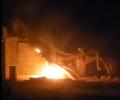
The houses of two Lashkar-e-Taiba (LeT) terrorists allegedly involved in the Pahalgam attack were destroyed in Jammu and Kashmir in a blast on Thursday night. Security forces were conducting searches inside the houses of Adil Hussain Thokar and Asif Sheikh when the explosives already kept inside the houses went off.
11, 13, 15 are not some random odd numbers but the number of days that Prime Minister Narendra Modi took to act against Pakistani terror strikes on Indian soil.
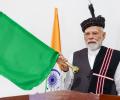
In the last 11 years, India and the world witnessed what he stood for, what he promised and did not deliver, and what he actually stood for and practised without fearing how history would judge him. Modi's tenure has been punctuated with headline-grabbing decisions, symbolic gestures, and stage-managed moments that continue to define his leadership and India's politics, points out Ramesh Menon.
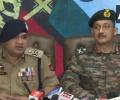
Security forces have intensified anti-terror operations after the April 22 Pahalgam terror attack, eliminating six hardcore terrorists in the past three days in Kashmir.

The BJP on Saturday accused the Congress of repeatedly supplying "oxygen" to Pakistan, and slammed the opposition party for its leader Charanjit Singh Channi's remarks questioning the veracity of Balakot air strikes after the 2019 Pulwama terror attack. BJP national spokesperson Sambit Patra alleged that the Congress is full of pro-Pakistan leaders who make statements against India's interests, and mocked the party for its letter that had advised its functionaries to toe the official line on the issue. Patra also criticized other Congress leaders for their comments on the Pulwama and Pahalgam terror attacks, accusing them of lowering the morale of the armed forces. He further slammed the Congress for claiming credit for the government's announcement of the caste census and said the party never carried out the exercise during its over 60-year stint in power.

Senior Central Reserve Police Force officers, Jammu and Kashmir police officers and others paid tribute to the 40 CRPF personnel who were killed this day in a 2019 terror attack at the Lathpora Pulwama war memorial on Tuesday, February 14, 2023.
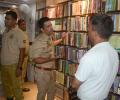
Bookstore owners were cautioned against keeping or distributing the books. Police personnel briefed the bookstore owners about the legal consequences of violating the ban.
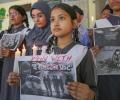
All 26 victims were men.

Kumar also said in the last three years, the Jaish-e-Mohammed has been "wiped out" in the Kashmir Valley. Only seven to eight terrorists are active now, he said.

The Congress party launched a scathing attack on the central government regarding the Pahalgam terror attack and Operation Sindoor, demanding accountability from Home Minister Amit Shah and clarification on the number of Indian jets downed during the operation.

Telugu star Varun Tej's first pan-India film Operation Valentine will release on March 1.

Jammu and Kashmir Chief Minister Omar Abdullah has reached out to state governments where Kashmiris are allegedly being harassed following the recent terror attack in Pahalgam. He responded to reports of harassment on social media, requesting his counterparts to take extra care. The attack, which killed 26 people, mostly tourists, has sparked fear and anxiety among Kashmiris across the country.
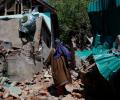
Authorities in Kashmir have launched a massive crackdown on terrorists and their sympathisers in the aftermath of the Pahalgam terror attack, razing homes of the ultras, raiding their safe havens and detaining hundreds of overground workers for questioning, officials said on Saturday.
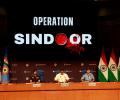
'We should not just react when a terror attack happens on our soil.' 'Our approach should be continuous and a launch pad should be destroyed the moment it comes up.'

"Vishwaguru has created a new model of democracy where there are symbols and buildings of democracy but the soil of democracy is now missing," he said.
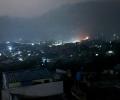
The Indian Army and Indian Air Force jointly conducted the Operation Sindoor in the early hours of May 7, destroying nine terror camps in Pakistan and Pakistan occupied Kashmir in retaliation to the terror attack in Pahalgam.
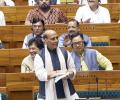
Here's a quick look at who spoke in the Lok Sabha on the first day of the Operation Sindoor debate.

SS Randhawa mentioned Modi's statement 'ghar me ghus ke marenge' and asked how did the Pulwama terror attack take place then.
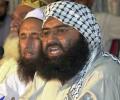
Jaish-e-Mohammad chief Maulana Masood Azhar has acknowledged that 10 members of his family and four close associates were killed in India's missile attack on the outfit's headquarters in Bahawalpur. The statement attributed to Azhar said those killed included his elder sister and her husband, a nephew and his wife, another niece, and five children from his extended family. The attack also claimed the lives of one of Azhar's close associates and his mother, along with two other close companions.
The Press Information Bureau has debunked a video of an Indian Army jawan claiming that the Pahalgam terror attack was orchestrated by the Indian Army and Indian government.
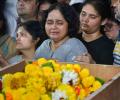
The US has issued a 'Do Not Travel' advisory for Jammu and Kashmir citing potential for terrorist attacks and violent civil unrest. The advisory, issued on Wednesday, comes a day after a deadly terror attack in Pahalgam that killed 26 people, mostly tourists. The advisory also warns against traveling within 10 kilometers of the India-Pakistan border.
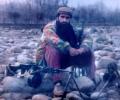
'A man with a gun commanded respect. I thought if I also got a gun, I could save my family. With this thought, I went to Pakistan and got training there'
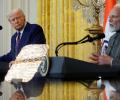
US President Donald Trump said on Friday that there has always been tension between India and Pakistan and the two countries will figure it out between themselves. Trump was asked about tensions between India and Pakistan in the wake of the Pahalgam terror attack, in which 26 civilians were killed, and if he would be talking to the leaders of the two nations. He said that he knows both leaders and that there is great tension between Pakistan and India, but there always has been.

'The Indian Army won't induct anyone who has killed Indian soldiers.' 'That's why the army respects these reformed men so much -- they're on the frontline now, protecting India.'
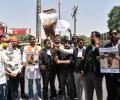
Kash Patel pledged full support to India, calling the act a reminder of the constant threats that the world faces from the evil of terrorism.
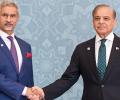
When searched for his account, YouTube displays an error message.

The opposition Peoples' Democratic Party and Peoples' Conference targeted the ruling National Conference over the meeting, and accused it of surrendering to the Bharatiya Janata Party without even a pretence over the passage of the Waqf act.
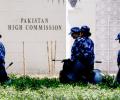
Pakistan has expressed condolences over the deaths of tourists in a terror attack in Pahalgam, Jammu and Kashmir, that killed 26 people. The Foreign Office spokesperson said Pakistan is concerned at the loss of tourists' lives and wished the injured a speedy recovery. The attack, claimed by The Resistance Front (TRF), a proxy of the banned Pakistan-based Lashkar-e-Taiba (LeT), is the deadliest in the Valley since the Pulwama strike in 2019.

Prime Minister Narendra Modi cut short his two-day visit to Saudi Arabia and returned to New Delhi on Tuesday night following a deadly terrorist attack in Jammu and Kashmir. Modi, who held bilateral talks with Saudi Crown Prince Mohammed bin Salman in Jeddah, skipped an official dinner hosted on Tuesday to address the crisis. He was originally scheduled to return to India on Wednesday night. The attack, claimed by The Resistance Front (TRF), a proxy of the Pakistan-based Lashkar-e-Taiba (LeT) terrorist group, prompted an urgent internal meeting at the Ritz Carlton hotel in Jeddah, attended by Modi, National Security Adviser Ajit Doval, and other senior officials.
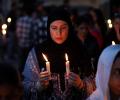
Tamil actor Ajith condemned the Pahalgam terror attack, expressing his heartbreak and offering prayers for the families of the victims.
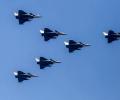
The exercise is taking place at a time when tensions between India and Pakistan have gone up after the Pahalgam attack.

Former spinner Danish Kaneria suggested that Pakistan has a role in the Pahalgam terror attack in India which led to 26 deaths.

Executives from India's leading airlines are conducting internal meetings to devise alternative routes for their international flights that currently pass through Pakistani airspace.

While the Prime Minister did not spell out the details of the three instances, his remarks are being widely interpreted as a reference to the 2016 surgical strikes following the Uri terror attack, the 2019 Balakot air strikes after the Pulwama bombing, and the recent cross-border strikes as part of 'Operation Sindoor'.
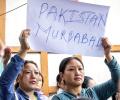
The Pakistani flag has been removed from the historic table at Raj Bhavan in Shimla where the Simla Accord was signed, a day after Pakistan suspended the 1972 agreement. The suspension came in response to India's retaliatory actions following a terrorist attack in Jammu and Kashmir. The Simla Accord, signed by Indira Gandhi and Zulfikar Ali Bhutto, aimed to settle issues bilaterally and maintain peace at the Line of Control. However, Pakistan's frequent violations of the agreement have led to its suspension, raising concerns about the future of India-Pakistan relations.

Batting great Sunil Gavaskar expressed solidarity with the families of those killed in the terrorist attack in Pahalgam.

Under Operation Sindoor, Indian armed forces not only struck Pakistani military bases near the border but their might was even felt in Rawalpindi where the headquarters of the Pakistani Army is located, Defence Minister Rajnath Singh said on Sunday.
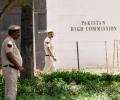
Pakistan is holding a high-level security meeting to formulate a response to India's suspension of the Indus Water Treaty and downgrading of diplomatic ties. The meeting, convened by Prime Minister Shehbaz Sharif, will include the National Security Committee, three services chiefs, and key ministers. The move comes after India blamed Pakistan for a terror attack in Pahalgam, which Pakistan has denied. Diplomatic observers warn that the escalation could further strain relations between the two countries.
India needs to be technologically and militarily prepared to defend itself from both Pakistan and China, alerts Ramesh Menon.
