
External Affairs Minister S Jaishankar stated that the stability of the Line of Actual Control (LAC) is essential for normalising India-China relations, asserting that border disturbances will have consequences. He connected trade and investment growth to border peace and highlighted significant economic issues, including a severe trade imbalance and lack of market access for India in China. Jaishankar also referenced the 2020 Galwan clashes as a critical turning point, underscoring the profound impact of border tranquillity on the overall bilateral relationship.

China has voiced strong opposition to India's recent decision to standardise names for 28 strategic locations and geographical features in Ladakh.

Prime Minister Narendra Modi, in bilateral talks with Chinese President Xi Jinping, emphasized that both nations must show sensitivity to each other's core issues and be guided by mutual respect, sensitivity, and interest. Modi highlighted the critical importance of peace and tranquillity along the Line of Actual Control for the development of India-China relations, while also addressing concerns regarding Taiwan and Tibet.

Chinese President Xi Jinping's first visit to India in seven years for the BRICS Summit and bilateral talks with Prime Minister Narendra Modi is set to address crucial aspects of India-China relations, including trade, investment, and persistent border tensions.

India has rejected China's objection to New Delhi's standardisation of names for 28 places and features in Ladakh, reiterating that Ladakh is an "integral and inalienable" part of India. China had strongly opposed the move, calling India's establishment of the Union Territory and the naming "illegal and void".
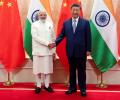
India has asserted that the state of its border with China directly impacts the broader bilateral relationship, emphasising the critical importance of maintaining peace and tranquillity along the Line of Actual Control (LAC). The Ministry of External Affairs also firmly rejected China's claims over Arunachal Pradesh, reiterating its status as an integral part of India. This stance was reiterated during a recent Working Mechanism for Consultation and Coordination meeting, where both sides agreed to continue using diplomatic and military channels to resolve outstanding issues.
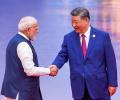
India and China held diplomatic talks to review the situation along the Line of Actual Control (LAC), discussing boundary delimitation, border management, and trans-border cooperation. Both nations stressed the importance of maintaining peace and tranquillity for bilateral relations and agreed to continue using existing channels to resolve outstanding issues.

Indian and Chinese military officials have held corps commander-level talks in Arunachal Pradesh to review the Line of Actual Control (LAC) situation, following recent Special Representative discussions aimed at de-escalating border tensions and fostering bilateral ties.

In July, tension emerged in Taksing, a remote village in the Upper Subansiri district of Arunachal Pradesh after locals sighted PLA soldiers.

Indian and Chinese armies held their first high-level commanders' flag talks in the Arunachal Pradesh sector, following Special Representatives dialogue. These talks, aimed at maintaining peace along the Line of Actual Control, occurred amidst reports of aggressive military posturing and just days before Chinese President Xi Jinping's visit to India for the BRICS summit.
Arunachal Pradesh MP Tapir Gao underscores the critical importance of heeding local warnings regarding alleged Chinese incursions along the Line of Actual Control, amidst ongoing border tensions and official denials.

I had found spending one night at 14,500 feet inside a cottage difficult to get by -- struggling to breathe in the cold, thin, mountain air. Here, our soldiers had fought a ferocious battle at much greater heights in bone-chilling weather, worse than I had encountered. 114 men were killed in action in a 16-hour epic battle against China in Rezang La, the farthest outpost along India's border with China.

At the border, places that you had just seen on a map, suddenly acquire a life. Looking at the vast expanse of quiet land, you realise an emotional connect, a sense of belonging binds you to a piece of land which is not merely territory, but a part of who you are.

Former CDS Anil Chauhan stated that China poses a long-term and comprehensive challenge to India, with the boundary issue remaining unresolved due to differing perceptions of the Line of Actual Control. However, he emphasised that India's ties with Beijing cannot be solely defined by border disputes, advocating for engagement through platforms like SCO and BRICS. He also highlighted the broader global geopolitical flux and instability in India's neighbourhood as significant security concerns, stressing the need for self-reliance.

West Indies all-rounder Shamar Springer discussed his team's "Plan B" to contain India's Abhishek Sharma, who scored a rapid 69 runs, leading India to a 14-run victory in the third T20I. Springer acknowledged Sharma's world-class performance and the difficulty of bowling on good wickets. He also reflected on the West Indies' chase, noting missed opportunities and the impact of the pitch conditions, while praising Roston Chase's underrated bowling.

West Indies bowling coach Ravi Rampaul urged his batters to "rotate the strike" and rely on their better players of spin to "counter" India's three-pronged spin-bowling attack.

India and China have agreed to advance discussions on an "Early and Substantial Harvest" of boundary delimitation and border management during the 25th round of Special Representatives talks between National Security Advisor Ajit Doval and Chinese Foreign Minister Wang Yi in Beijing. Both sides reached an eight-point consensus, committing to the 2005 Agreement on Political Parameters and Guiding Principles for Settlement. Key outcomes include enhancing border management, improving understanding of the Line of Actual Control, establishing new meeting points and hotlines, and continuing cooperation on trans-border rivers and pilgrimage.

Indian shooter Kynan Chenai secured a trap mixed team gold at the Asian Games, attributing his success to a 30-year-old gun barrel borrowed from his father, Darius. This vintage barrel, which helped his father win national championships, proved to be Kynan's lucky charm, and he has no plans of returning it. The article also details his performance alongside Neeru Dhanda and his father's continued mentorship.

'The larger lesson for India Inc is that promoter oversight and professional management are not inherently contradictory. The difficulty arises when the boundaries between the two are unclear.'

The Social Reckoning may lack the crackling energy of The Social Network, but Aaron Sorkin delivers a timely warning about what happens when a world-changing platform escapes the control of its creator.

Before protesting against the State, the citizen should not have to ask: Sir, may I protest, please?, asserts Prem Panicker.

Indian shooters Elavenil Valarivan and Parth Mane finished fourth in the 10m air rifle mixed team event at the Asian Games, missing out on a medal. Valarivan cited struggles with her position, while Mane focused on consistency. Both expressed determination to learn from the experience.

External Affairs Minister S Jaishankar met his Chinese counterpart Wang Yi in Manila, reiterating that peace and tranquillity in border areas are prerequisites for normal India-China relations. He stressed the importance of mutual respect, interest, and sensitivity, while also raising concerns about market access, trade imbalance, and supply chain uncertainties.

Some decades are worth remembering exactly as they were, unfiltered, because that's the only way the people who survived them get to be seen at all, points out Binu Alex.

Avengers: Endgame Encore adds four crucial scenes that connect the old MCU to Avengers: Doomsday, from Loki's shocking return to Doctor Doom's sinister plans for the multiverse.

The soil mingled with the blood of 114 soldiers, gathered from the battlefield, has been preserved in a glass bottle in Rezang La. When the frozen bodies of the were recovered, they had their rifles in hand, fingers on the trigger, pointed towards the enemy. The mountains they defended will never forget them. Neither should we.
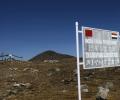
Arunachal Pradesh Chief Minister Pema Khandu has stated his government will verify reports of alleged Chinese incursions in the Taksing sector of Upper Subansiri district. The claims, made by the Nah Welfare Society, suggest Chinese PLA personnel entered areas near villages close to the Line of Actual Control. Khandu plans to consult with the Indian Army and local bodies before drawing conclusions, while the Army previously rejected similar allegations from the NWS.

India has formally identified 27 places and features in Arunachal Pradesh by their standard names on the official Indian map, a move aimed at countering China's repeated attempts to rename locations in the state. This action reinforces India's stance that Arunachal Pradesh is an integral part of the country, despite China's "fictitious names" for the region it calls Zangnan.

India on Tuesday conveyed to China the importance of maintaining peace and tranquility along the Line of Actual Control (LAC) for overall bilateral ties as national security advisor Ajit Doval held talks with Chinese Foreign Minister Wang Yi focusing on delimitation of the frontier and sustaining work on trans-boundary cooperation.

National Security Advisor Ajit Doval is in Beijing for the 25th round of Special Representatives talks on the India-China boundary issue with his Chinese counterpart Wang Yi. These crucial discussions precede Chinese President Xi Jinping's anticipated visit to India for the BRICS summit, offering a potential opportunity for a meeting with Prime Minister Narendra Modi. The talks aim to address the long-standing border dispute and recurring tensions, with both sides emphasising the importance of peace and tranquillity for bilateral relations amidst recent reports of aggressive Chinese posturing in Arunachal Pradesh.
National security advisor Ajit Doval arrived in Beijing on Monday for a two-day visit to take part in the Special Representatives talks on the India-China boundary question with his Chinese counterpart and Foreign Minister Wang Yi.

'The Chinese military cannot advance much in Ladakh, even if they want to.' 'Similarly, in Arunachal Pradesh, they can rename a village or two, intrude here or there, but cannot do much more realistically.'

India and China held constructive talks on the situation along the Line of Actual Control (LAC) in eastern Ladakh, emphasising that maintaining border peace and tranquillity enabled progress in normalising overall relations.

Toxic looks spectacular, but beneath its glossy, brutally violent exterior lies a hollow, confused film that mistakes style and swagger for substance, observes Sreeju Sudhakaran.

Zee founder Subhash Chandra has shifted his public statements from allegations against Mukesh Ambani to focusing on settling outstanding Essel Group debt, with borrowers reportedly agreeing to repay obligations.

'A balance had to be struck between the economic cost of taking action at this point against the need not to fall behind the curve in controlling inflation and anchoring inflation expectations.'

A rocket designed and developed by ISRO is being transferred to industry for production.
Nine ISRO associations want to know whether this is simply an effort to expand India's industrial capacity or part of a larger policy under which ISRO itself will eventually withdraw from rocket manufacturing.
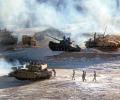
While tensions have eased at several friction points and mechanisms for managing the boundary have been reactivated, underlying differences persist. Disputes over naming practices in Arunachal Pradesh, continued infrastructure development on both sides, and unresolved questions regarding patrolling rights indicate that the structural gap remains, notes Dr Kumar.

Leading global technology companies OpenAI, Anthropic, and Google have introduced new AI models with enhanced capabilities, including advanced cybersecurity and coding. However, these releases have ignited significant debate among researchers regarding the transparency and monitorability of AI reasoning, particularly concerning OpenAI's Astra model and its "recurrent depth" architecture.
OpenAI, Anthropic, and Google have unveiled new AI models with enhanced capabilities, including advanced cybersecurity and coding. OpenAI's Astra model achieved a 'Critical' cybersecurity tier, but its novel architecture, using "recurrent depth," has sparked significant safety concerns among researchers who fear it makes monitoring the model's reasoning more difficult. Anthropic and Google also introduced new models and features, further advancing AI technology while the debate over responsible development intensifies.
