
Former Indian Army chief General Shankar Roychowdhury (Retd) has blamed "intelligence failure" for the recent terror attack in Pahalgam, Jammu and Kashmir, which claimed the lives of 26 civilians. He demanded accountability at the highest levels, stating that there must be someone responsible for the negligence and they must be held accountable for the consequences.
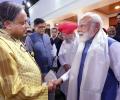
Prime Minister Narendra Modi's energy, dynamism and willingness to engage remains a 'prime asset' for India on the global stage but deserves greater backing, Congress MP Shashi Tharoor said on Monday, in remarks that are likely to irk his party and widen the growing cracks in his ties with its leadership.

India has carried out strikes against nine terrorist infrastructure in Pakistan and Pakistan-occupied Kashmir, Defence Minister Rajnath Singh said on Wednesday. The strikes were in retaliation to the Pahalgam terror attack in which 26 civilians were killed. Singh said the strikes were precise and destroyed the targets set under Operation Sindoor.

Former spinner Danish Kaneria suggested that Pakistan has a role in the Pahalgam terror attack in India which led to 26 deaths.

Police also announced a bounty of Rs 20 lakh for information leading to the neutralisation of terrorists involved in the gruesome killings.
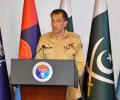
Lt Gen Ahmed Sharif Chaudhry, the spokesperson for the Pakistan Army, is the son of a nuclear scientist who was sanctioned by the United Nations and the US for providing information and expertise to al-Qaeda, according to Indian officials. Chaudhry's father, Sultan Bashiruddin Mahmood, allegedly provided insights into nuclear weapons infrastructure and raised funds for a fundamentalist organization linked to the Taliban. Mahmood was arrested in 2001 after admitting to meeting Osama bin Laden but was later released.

Jaishankar said that the Pahalgam attack "was an act of economic warfare. It was meant to destroy tourism in Kashmir, which was the mainstay of the economy. It was also meant to provoke religious violence because people were asked to identify their faith before they were killed."

The final report against a juvenile who was also apprehended in the case will be submitted to the Juvenile Justice Board in Rajouri, a spokesperson of the federal agency said.
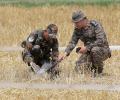
Metal debris was found scattered in three villages of Amritsar district, with some locals claiming them to be parts of missiles. Police are investigating the objects, while the Indian government claims to have foiled Pakistan military's attempts to attack 15 places in northern and western India using missiles and drones. Tensions between India and Pakistan have escalated after India launched missile strikes on terror targets in Pakistan and Pakistan-occupied Kashmir (PoK) in response to the April 22 killing of 26 people by terrorists in Kashmir's Pahalgam.

Vice President J D Vance has said that the United States hopes that India will respond to the Pahalgam terrorist attack in a way that does not lead to a 'broader regional conflict' and expects Pakistan to 'cooperate' with New Delhi to 'hunt down' militants sometimes operating from their soil.
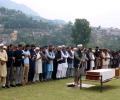
In trying to portray a globally sanctioned terrorist as a 'common man', Pakistan was exposed when its top official publically outed crucial details about Hafiz Abdul Rauf, including his national identity number which matched details in the database of the United States sanction list of terrorists.
'...and the country should be impoverished completely.' 'Once this is done, the political class would take over and then play a part in real democracy where the army is under the control of the government, not vice-versa.'

"Fearless in unity. Boundless in strength. India's shield is her people. There's no room for terrorism in this world. We're ONE TEAM! Jai Hind," Tendulkar posted

PBKS-DC game also uncertain, say BCCI Sources

It is learnt that China placed a hold on the proposal by India and the US to designate Mahmood as a global terrorist under the 1267 Al Qaeda Sanctions Committee of the UN Security Council.

Batting great Sunil Gavaskar expressed solidarity with the families of those killed in the terrorist attack in Pahalgam.
India needs to be technologically and militarily prepared to defend itself from both Pakistan and China, alerts Ramesh Menon.
PSL match between Karachi Kings and Peshawar Zalmi in Rawalpindi rescheduled
'Pakistan cannot sustain a war with India for more than four days. They are in such dire straits. At best they can sustain war for one week.'
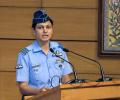
Wing Commander Vyomika Singh, an accomplished helicopter pilot in the Indian Air Force, was chosen to brief the nation about India's 'Operation Sindoor' strikes on Pakistan. She has flown a variety of aircraft and taken part in rescue operations in extreme conditions. Vyomika, who has logged over 2,500 flying hours, has operated helicopters across challenging terrains, from the high-altitude sectors in Jammu and Kashmir to the remote areas in the Northeast. She led a rescue operation in Arunachal Pradesh in 2020, flying in extreme conditions to evacuate civilians.

Former Pakistani Foreign Minister Bilawal Bhutto has acknowledged the country's tango with terror operatives, saying that Pakistan has a past.

Pakistan have sealed their spot in the ICC Women's Cricket World Cup 2025 after a flawless campaign in the Qualifiers - but their participation has already stirred controversy.
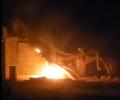
11, 13, 15 are not some random odd numbers but the number of days that Prime Minister Narendra Modi took to act against Pakistani terror strikes on Indian soil.
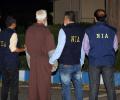
He was sent to judicial custody on May 9 and lodged in Tihar jail after his custodial interrogation by the NIA.
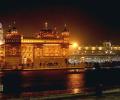
The Army on Monday showcased a demonstration of how Indian Air Defence systems, including AKASH missile system, L-70 Air Defence Guns, saved the Golden Temple in Amritsar and cities of Punjab from Pakistani missile and drone attacks.
'Pakistan's army has got a streak of democracy. It is more democratic than the country.'

This came after Pakistan People's Party chairman Bilawal Bhutto Zardari on Saturday stated that Pakistan's Prime Minister Shehbaz Sharif had tasked him to lead a delegation to present Pakistan's case on the recent escalations of tensions between the two nations.
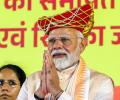
"In Pahalgam, terrorists not only shed the blood of Indians, but also attacked our culture. They tried to divide our society and the biggest thing is that the terrorists have challenged the women power of India," Modi said.
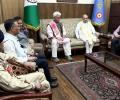
Union Home Minister Amit Shah arrived in Srinagar to review the security situation in Kashmir following a deadly terror attack in Pahalgam that killed 26 people, including tourists. Shah chaired a high-level meeting of security officials, including those from the Army, CRPF, and police. The attack, claimed by The Resistance Front (TRF), a shadow group of the banned Pakistan-based Lashkar-e-Taiba (LeT) terror group, is the deadliest in the valley since the 2019 Pulwama strike.
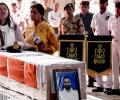
The family of Navy officer Vinay Narwal, killed in a terror attack in Pahalgam, expressed gratitude for "Operation Sindoor", the Indian military's retaliatory strikes against terror infrastructure in Pakistan and PoK. Vinay's wife, Himanshi, who was widowed during their honeymoon, called the operation a testament to her late husband's spirit and a strong message against terrorism. Vinay's father, Rajesh, said the strikes would make terrorists think twice before carrying out such attacks. The operation was lauded for its decisive response to the Pahalgam attack, which claimed the lives of 26 tourists.

From the 30-share Sensex firms, Tata Motors, Bajaj Finance, Eternal, Adani Ports, Tata Steel, Titan, Mahindra & Mahindra and Power Grid were among the gainers. Asian Paints, Sun Pharma, ITC, Nestle, Reliance Industries and HCL Tech were among the laggards.

Over 75 government employees with terror links have been dismissed so far by the LG administration.
Tahawwur Rana, a Canadian citizen and native of Pakistan, was extradited to India to face charges related to his alleged role in the 2008 Mumbai terror attacks. The US Department of Justice said Rana allegedly commended the LeT terrorists who carried out the attacks and suggested they should be awarded Pakistan's highest gallantry award. Rana is accused of facilitating a fraudulent cover for his childhood friend, David Headley, to conduct surveillance in Mumbai for the Lashkar-e-Taiba (LeT) terrorist group. He is also accused of helping Headley submit false visa applications to Indian authorities. This extradition follows a lengthy legal process that began in 2020 with India's request for Rana's surrender. Rana, who was previously convicted in the US for providing material support to LeT, will now face trial in India on 10 criminal charges related to the Mumbai attacks.
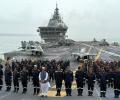
In an interaction with naval warriors on board aircraft carrier INS Vikrant off Goa, Singh sent a stern warning to Islamabad saying India will not hesitate to use the methods to deal with terrorism that Pakistan cannot even think of.

President Pezeshkian on Saturday said that Iran unequivocally denounces such "inhumane acts", Iran's embassy in New Delhi said in a post on X.
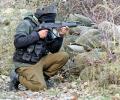
Security forces had launched a cordon-and-search operation in Nehama village of Kulgam following information about the presence of terrorists in the area on Thursday, the officials said.

Gangster-politician Atiq Ahmad, who was shot dead along with his brother at point-blank range, had admitted during questioning by police that he had links with Pakistan's Inter-Services Intelligence and militant outfit Lashkar-e-Tayiba, according to a first information report (FIR).

From the Sensex firms, Eternal, Mahindra & Mahindra, Maruti, Bajaj Finance, Tata Steel, Bharti Airtel, Bajaj Finserv, Asian Paints, Power Grid and State Bank of India were among the laggards. Kotak Mahindra Bank, Axis Bank, Titan, HCL Tech, Tata Motors, Infosys and Tata Consultancy Services were the gainers.
S&P Global Ratings on Thursday said the hostilities between India and Pakistan heighten risks to the credit metrics of both countries, and any escalation in clashes would put downward pressure on sovereign credit support.
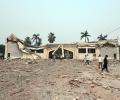
A former Pentagon official, Michael Rubin has said that India targeted terror infrastructure with precision, and it was able to blunt Pakistan's response following the recent strikes.
