
Tahawwur Hussain Rana, a jailed accused in the 2008 Mumbai terror attacks, has moved a court in New Delhi seeking permission to speak to his family. The 64-year-old Pakistani-origin Canadian businessman is currently in judicial custody and is accused of conspiring with David Coleman Headley and operatives of Lashkar-e-Taiba (LeT) and Harkat-ul-Jihadi Islami (HUJI) to carry out the terror attacks. Rana was brought to India after the American Supreme Court dismissed his review plea against his extradition.
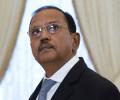
National Security Adviser Ajit Doval on Tuesday called for shunning double standards in combating terrorism and urged members of the Shanghai Cooperation Organisation (SCO) to hold accountable perpetrators, organisers and financers of cross-border terrorism, seen as reference to Pakistan.
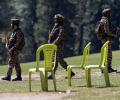
The officials said that intelligence agencies had been alerted about the possibility of a terror attack, but the inputs were utilised at another place, some 90 kilometres away from the site where the attack took place, resulting in a key security lapse.

The highlight of Tuesday's debate on Operation Sindoor was the speech by Prime Minister Narendra Modi, with the rebuttal by Congress's Wayanad MP Priyanka Gandhi coming a close second.
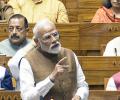
What was the aim of Operation Sindoor? Why was the operation halted so soon? asks Lieutenant General Prakash Katoch (retd).
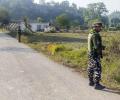
Two terrorists, including a top Lashkar-e-Tayiba (LeT) commander trained in Afghanistan, were killed in a gunfight with security forces on Thursday in Jammu and Kashmir's Rajouri district, officials said.
External Affairs Minister S Jaishankar says Operation Sindoor conveyed India's resolve to act against terrorism, following UN Security Council's call to bring Pahalgam attackers to justice.
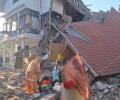
With this, the total number of houses of terrorists and their overground workers demolised since the Pahalgam attack has gone up to nine.
'It could be the Pakistan army's commercial interest, tactical or strategic interest or one of their leaders.' 'Even if you send a message that we have attempted to kill one of the Pakistani generals, that itself will serve the purpose.'
India's Permanent Representative to the UN Ambassador Parvathaneni Harish said that the Indian sub-continent offers a "stark contrast" in terms of progress, prosperity and development models.

BCCI secretary Devajit Saikia said that an invitation has been extended to chiefs of all three Armed forces, top-ranked officers and soldiers for the IPL 2025 final on June 3.
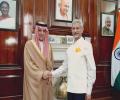
Saudi Arabia's Minister of State for Foreign Affairs Adel Aljubeir visited India on Thursday and held talks with External Affairs Minister S Jaishankar, focusing on de-escalating tensions between India and Pakistan. The visit comes as ties between India and Pakistan have further deteriorated following Indian military strikes on terror infrastructure in Pakistan. Iranian Foreign Minister Abbas Araghchi also arrived in New Delhi on a scheduled visit amidst the escalating tensions.
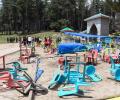
A team from India's National Investigation Agency (NIA) has reached Pahalgam in Jammu and Kashmir to assist local police in investigating a deadly terrorist attack that killed 26 people, mostly tourists, on Tuesday. The NIA team visited the site of the attack, Baisaran meadow, known for its scenic beauty. Security agencies have released sketches of three suspected Pakistani terrorists involved in the attack, identified as Asif Fauji, Suleman Shah, and Abu Talha. The Resistance Front (TRF), a shadow outfit of the Lashkar-e-Taiba terrorist group, claimed responsibility for the attack.

Investigations said the accused was engaged in sharing classified details, including troop deployments and strategic locations, posing a threat to national security.

Prime Minister Narendra Modi on Wednesday hailed the Indian armed forces for carrying out targeted strikes at terror camps in Pakistan and Pakistan-Occupied Kashmir. The strikes were carried out in retaliation for the Pahalgam terror attack, which killed 26 civilians. Modi also said that his government will have zero tolerance towards terror.
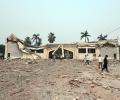
A total of nine terror sites in Pakistan, including five in Pojk, linked to Lashkar-e-Taiba (Let) and Jaish-e-Mohammed (Jem), were targeted with meticulous planning to avoid civilian casualties.
For Malegaon's Muslims, Rahul Gandhi's remarks were simply one more indication that the party they once supported no longer cares for them, notes Jyoti Punwani.

The Border Security Force (BSF) launched "Operation Sindoor" in retaliation to unprovoked firing and shelling by Pakistani Rangers along the International Border (IB) in Jammu. BSF troops destroyed three terrorist launch pads and targeted 76 Pakistani border outposts and 42 forward defence locations. The BSF action came after Pakistan launched heavy firing and shelling on 60 Indian posts and 49 forward positions, reportedly providing cover for an attempted infiltration by 40-50 terrorists.
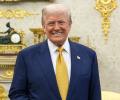
Trump, who has repeatedly said that he stopped the conflict between India and Pakistan through trade, last Friday said for the first time that "five jets were shot down" during the fighting.

The Bombay High Court acquitted all 12 accused in the 2006 Mumbai train blasts case, citing a failure by the prosecution to prove their guilt and raising serious concerns about the investigation and evidence presented.
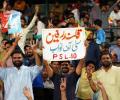
The Pakistan Cricket Board (PCB) has confirmed that the Pakistan Super League (PSL) will continue as scheduled despite escalating tensions with India.

Banks have tightened their cyber security network to ward off any cyber threat in the wake of India launching missile attacks on Pakistan and Pakistan-occupied Kashmir. Banks have also improved their security at the branches near border areas due to heightened threat of a counter attack.

Inspector Masroor Ahmad Wani was playing cricket with local boys at the Eidgah ground when he was shot by terrorists, the officials said.
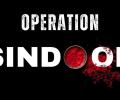
It was Prime Minister Narendra Modi who picked the evocative term 'Operation Sindoor' to codename the Indian armed forces' strikes on nine terror sites in Pakistan and Pakistan-occupied Kashmir, official sources said on Wednesday.
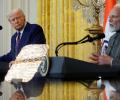
US President Donald Trump said on Friday that there has always been tension between India and Pakistan and the two countries will figure it out between themselves. Trump was asked about tensions between India and Pakistan in the wake of the Pahalgam terror attack, in which 26 civilians were killed, and if he would be talking to the leaders of the two nations. He said that he knows both leaders and that there is great tension between Pakistan and India, but there always has been.
India abstained from a UN General Assembly vote on a resolution regarding Afghanistan, citing the need for a balanced approach that combines incentives and disincentives, and calling for new initiatives to address the humanitarian crisis.
India expects Turkiye to strongly urge Pakistan to end its support to cross-border terrorism, said ministry of external affairs spokesperson, Randhir Jaiswal during the weekly briefing on Thursday.

Kashmir police chief Vijay Kumar has directed personnel to apprehend those responsible for the attack as soon as possible.
Kash Patel pledged full support to India, calling the act a reminder of the constant threats that the world faces from the evil of terrorism.
An Indian delegation met top officials of the United Nations Office of Counter-Terrorism (UNOCT) and Counter-Terrorism Committee Executive Directorate here even as New Delhi stepped up efforts to designate The Resistance Front, a Lashkar-e-Tayyaba proxy, as a UN-listed terror outfit for its alleged involvement in the Pahalgam attack.
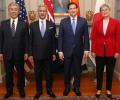
Increasing cooperation in critical minerals will top Prime Minister Modi's agenda during his discussions with leaders of Ghana, Argentinia, Brazil and Namibia.
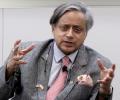
"I'm very glad you raised this, Ishaan. I didn't plant it. I promise you. This guy does this to his dad," Tharoor replied amid laughter from the audience.
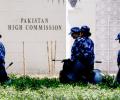
Pakistan has expressed condolences over the deaths of tourists in a terror attack in Pahalgam, Jammu and Kashmir, that killed 26 people. The Foreign Office spokesperson said Pakistan is concerned at the loss of tourists' lives and wished the injured a speedy recovery. The attack, claimed by The Resistance Front (TRF), a proxy of the banned Pakistan-based Lashkar-e-Taiba (LeT), is the deadliest in the Valley since the Pulwama strike in 2019.
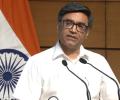
India carried out missile strikes on terror targets in Pakistan and Pakistan-Occupied Kashmir, including the Jaish-e-Mohammad stronghold of Bahawalpur and Lashkar-e-Taiba's base in Muridke, after the Pahalgam attack that killed 26 civilians. The Foreign Secretary said the actions were measured, non-escalatory, proportionate and responsible.

Prime Minister Narendra Modi cut short his two-day visit to Saudi Arabia and returned to New Delhi on Tuesday night following a deadly terrorist attack in Jammu and Kashmir. Modi, who held bilateral talks with Saudi Crown Prince Mohammed bin Salman in Jeddah, skipped an official dinner hosted on Tuesday to address the crisis. He was originally scheduled to return to India on Wednesday night. The attack, claimed by The Resistance Front (TRF), a proxy of the Pakistan-based Lashkar-e-Taiba (LeT) terrorist group, prompted an urgent internal meeting at the Ritz Carlton hotel in Jeddah, attended by Modi, National Security Adviser Ajit Doval, and other senior officials.
Pasha, who had earlier received training in making bombs in Bangladesh, provided training to the Mangaluru blast case accused during their stay in a jail in Karnataka.

Over 100 terrorists, including high-value targets such as Yusuf Azhar, Abdul Malik Rauf and Mudasir Ahmed, were eliminated during Operation Sindoor on May 7, the Indian military said on Sunday.
Prime Minister Narendra Modi hailed "Operation Sindoor" as a turning point in the global fight against terror, describing it as a symbol of India's growing strength and clarity of purpose. Addressing the nation through his monthly radio programme Mann Ki Baat, Modi said the operation reflects a changing and resolute India, and has inspired patriotism and self-reliance across the country.
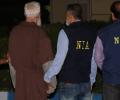
Tahawwur Hussain Rana, a Canadian national accused of involvement in the 2008 Mumbai terror attacks, has been extradited to India from the United States. Rana's interrogation is expected to shed light on the role of Pakistani state actors in the attacks, which claimed 166 lives. Indian authorities are particularly interested in his travels across India in the days leading up to the attacks, including visits to Hapur, Agra, Delhi, Kochi, Ahmedabad, and Mumbai. Rana's extradition follows a lengthy legal battle, with the US Supreme Court ultimately denying his application to challenge it. Rana is known to be associated with Pakistani-American terrorist David Coleman Headley, one of the main conspirators of the 26/11 attacks. The investigation into the Mumbai attacks has implicated senior members of terror outfits Lashkar-e-Taiba (LeT) and Harkat-ul Jihadi Islami (HuJI), as well as officials from Pakistan's Inter-Services Intelligence (ISI).

Official confirmation from the government is still awaited, and more details are expected soon.
