
India has invited all 10 Shanghai Cooperation Organisation (SCO) member nations, including Pakistan, to the inaugural Civilisational Dialogue Forum in New Delhi from November 20 to 22. Defence Minister Rajnath Singh had announced this initiative earlier, aiming to strengthen cultural ties and mutual understanding among SCO countries. The forum will also address the collective fight against terrorism, a key concern for India.

Sikkim has hosted the inaugural leg of the 2026 Zabarvan Extreme Legends Series, an international downhill mountain biking competition. The event, featuring riders from eight countries, aims to bolster the state's adventure tourism profile. Chief Minister Prem Singh Tamang flagged off the competition and highlighted plans for infrastructure development to support tourism in the region.

A controversy has erupted over the selection of the Indian polo team for the upcoming World Cup Zonal Playoffs, with a dropped player alleging irregularities and questioning the inclusion of an athlete who previously tested positive for cocaine. The coach defended the player's selection, stating his ban had ended, while an IPA executive committee member confirmed a panel had decided against allowing the player to represent India internationally for two years, making his inclusion puzzling.

Pakistan has welcomed an Indian delegation's visit to Islamabad for a Shanghai Cooperation Organisation (SCO) meeting, marking the first such visit after a significant gap. The visit is seen as a positive step towards regional peace and cooperation, with Pakistan also commenting on other international and domestic issues.

Prime Minister Narendra Modi hosted Iranian President Masoud Pezeshkian in New Delhi for talks focusing on the West Asia situation, bilateral relations, and BRICS cooperation. The meeting, Pezeshkian's first visit to India as president, comes amidst heightened tensions in West Asia due to new US sanctions on Iran and concerns over global oil supplies from the Strait of Hormuz. Both leaders emphasised regional stability and economic resilience.

It is an unusual choice to depute a retired general for the funeral of a revered religious figure but a thoughtful one in an attempt to inject verve into the bilateral relationship and restore the equilibrium in India's West Asian policies, notes Ambassador M K Bhadrakumar.

Indian women's kabaddi captain Pushpa Rana led her team to a record-extending fourth Asian Games gold medal, defeating a strong Iranian side 37-34. Rana highlighted the team's reliance on their raiders and the pressure of maintaining India's dominance in the sport.

Iranian President Masoud Pezeshkian concluded his visit to India for the 18th BRICS Summit, announcing that Iran and the UAE agreed to move past previous tensions. This diplomatic breakthrough occurred during talks with Abu Dhabi's Crown Prince on the summit sidelines. Pezeshkian also met with PM Modi to discuss bilateral ties and West Asia developments, with Modi emphasising dialogue for regional peace. The BRICS summit adopted the New Delhi Declaration 2026, calling for global governance reforms and de-escalation in West Asia.

US Secretary of State Marco Rubio stated he does not believe India and Iran are pursuing a trade deal, despite a recent meeting between their leaders. He acknowledged that many countries engage with the Iranian regime but reiterated President Trump's warning against helping Iran evade sanctions, threatening penalties for nations that do so.

India's total goods trade with BRICS nations more than doubled from FY21 to FY26, reaching USD 417.5 billion, but a significant surge in imports, particularly from China and Russia, has caused India's trade deficit with the bloc to more than triple, reaching USD 226.1 billion.

Prime Minister Narendra Modi met Iranian President Masoud Pezeshkian at the SCO summit, advocating for dialogue and diplomacy to resolve the West Asia conflict and expressing India's desire to expand and diversify trade with Iran. Pezeshkian, in turn, urged India to leverage its contacts to promote peace.

A top Iranian official has blamed the US and Israel for the disruption of global supply chains due to the West Asia conflict, stating that Tehran is not happy about the consequences faced by countries like India.

Iran has extended an invitation to Congress president Mallikarjun Kharge and other party leaders, including Salman Khurshid and Pawan Khera, to attend the burial ceremonies of its late supreme leader Ayatollah Ali Khamenei. The ceremonies are scheduled from July 5 to 9 across various Iranian cities. India will also be represented by Minister of State for External Affairs Pabitra Margherita and Bihar Governor Ata Hasnain.

Congress leader Shashi Tharoor is urging the Indian government to take a more proactive role in mediating the escalating conflict between the US-Israel alliance and Iran, emphasising the impact on India's energy security and regional stability.

India is navigating a complex diplomatic landscape, attempting to balance its 'forever honeymoon' with the Israel-UAE-Bahrain axis against its historical ties with Iran, as evidenced by recent high-level visits and evolving geopolitical realignments in the Middle East, observes Ambassador M K Bhadrakumar.

'We thought everything will be back to normal within one month. Now it's four months and still a final solution is miles away.'

'It will take a long time to recover from the impact of this war.'

India on Friday launched a highly coordinated, priority operation to safely guide 13 Indian-flagged commercial vessels out of the volatile Strait of Hormuz, the ministry of ports, shipping, and waterways announced on Friday.

'If the war continue for a longer period of time, it is just a matter of time before the government will pass on some of the price increases.'

Representative of Iran's Supreme Leader in India, Abdul Majid Hakeem Ilahi, expressed doubts about the United States' intentions regarding negotiations, citing conflicting actions and a desire to force Iran into accepting US demands.

The representative of Iran's Supreme Leader in India expressed gratitude towards Indians, calling India a land of 'loyalty and humanity'.

A US-sanctioned tanker carrying Iranian crude oil is heading to India, marking the resumption of oil imports from Iran after seven years.

Amid rising tensions, Iran reportedly launched ballistic missiles toward a US-UK military base, prompting concerns about regional stability and the potential for escalating conflict in the Middle East.

India has refuted claims of payment issues hindering crude oil imports from Iran, clarifying that refiners have the flexibility to source oil from various global suppliers. The Ministry of Petroleum and Natural Gas addressed reports of a tanker rerouting to China, emphasising standard industry practices and secured oil requirements.

Russia has expressed strong concern over a US-Israeli strike on the Iranian port of Bandar Anzali, a key transit hub on the INSTC, warning of the risk of drawing Caspian states into the ongoing conflict.

India's handling of the Iran crisis reflects a growing strain between strategic autonomy and geopolitical alignment, observes Ambassador M K Bhadrakumar.

Donald Trump is claiming he prevented a war between India and Pakistan, a statement that has been repeatedly made by the former US President despite denials from India.

India-based Iranian actresses Mandana Karimi and Elnaz Norouzi share their deep concerns and anxieties about the escalating crisis in Iran, and reveal the personal toll on their lives and the Iranian diaspora.

Trump said that the decision would be "immediately" in effect and that the "order is final and conclusive."

Amid escalating tensions, Iranian Deputy Foreign Minister Saeed Khatibzadeh declares Iran's unwavering commitment to a 'heroic nationalist defence' against perceived American and Israeli aggression, vowing to resist what he calls an 'invasion' to the very end.

'I suspect that Bangladesh being given permission stuck in India's official craw, and this story was an attempt to balance the scales by giving the impression that a similar waiver had been given to India as well.'

'Despite the large number of missiles and drones we have already launched, we still possess reserves and missile cities whose doors have not yet been opened,' says Iran's Consul-General Saeid Reza Mosayeb Motlagh.

'We need to give Pakistan something serious to think about on its eastern front -- that is the only way to actually help Afghanistan right now.'

Fight on toward goals that keep receding, or exit with most objectives unmet. Trump is agitated, his poll numbers falling below the Plimsoll line, his base fractured between those who back the war and those who remember that he campaigned on ending them.

What we are watching is something different: A fog manufactured and maintained by the people who started the war, so that the question of why it was started never has to be answered, observes Prem Panicker in his must read blog on the war in the Middle East.

External Affairs Minister S Jaishankar and US Secretary of State Marco Rubio discussed cooperation in trade, critical minerals, nuclear energy, and defence, reaffirming commitment to a free and open Indo-Pacific.

India is evaluating its involvement in the Chabahar port project in Iran due to potential US tariffs. The US had granted India a waiver for the project, but it expires soon. India is exploring options to continue supporting the port's development while minimizing exposure to US sanctions.
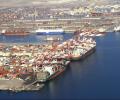
India and Iran on Monday signed a 10-year contract for the operation of a terminal at the strategically important Chabahar port in Iran, a move that will boost regional connectivity as well as trade ties. This is the first time India will take over the management of an overseas port that will also have a multiplier effect on trade among India, Iran and Afghanistan as efforts continue to directly tap the potential in Central Asia, bypassing neighbouring Pakistan.
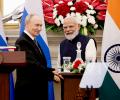
India and Russia have solidified a five-year plan to enhance their economic and trade partnership, while also addressing the ongoing conflict in Ukraine and the threat of terrorism.

Prime Minister Narendra Modi and Chinese President Xi Jinping are set to meet in Tianjin on Sunday, their first in about 10 months, for wide-ranging talks aimed at improving relations.
