
India and China held talks in New Delhi to discuss the lessons learned from the eastern Ladakh military standoff and prevent its recurrence. The two sides also prepared for the next meeting of the Special Representatives on the boundary question. The talks took place under the framework of the Working Mechanism for Consultation and Coordination on India-China Border Affairs (WMCC). Both sides highlighted the importance of regular exchanges and contacts at diplomatic and military level to maintain peace and tranquility in the border areas.

Jaishankar said that both sides also exchanged views on the next steps in the India-China bilateral ties.

'The war scenes in which Indian soldiers fight fearlessly and the powerful dialogues are meant to make the audience proud of the loyalty and valour of Indian soldiers,' observes Deepa Gahlot.
The bench of Chief Justice Sheel Nagu and Justice Sanjiv Berry disposed of the petition filed by the Sanyukt Ahir Regiment Morcha and others seeking a stay on the release of the movie, which is based on the 1962 Battle of Rezang La.
The Punjab and Haryana High Court has directed the Centre to decide on a representation challenging the certification and release of the film '120 Bahadur'. The petitioners allege historical inaccuracies in the movie's portrayal of the Battle of Rezang La.

India and China have agreed to work towards a "roadmap" for rebuilding mutual trust following the border standoff in eastern Ladakh, according to a statement from the Indian Defence Ministry. Defence Minister Rajnath Singh met with his Chinese counterpart Dong Jun in Vientiane, Laos, on the sidelines of a regional security conclave. Singh called for drawing lessons from the "unfortunate border clashes" of 2020 and emphasized the need for cooperation rather than conflict. Both sides agreed to work towards a roadmap for rebuilding mutual trust and understanding, and a meeting of the Special Representatives and Secretary-Vice Minister mechanism will also take place soon.

'The amount of respect we have for people who guard our borders and put the country first.' 'Why do they do this?' 'The chances of not coming back are so high. Still, they take that risk.' 'It's for the love of the country.'

'There are active terror modules across the country who will find new ways and new targets. From intelligence agencies to an alert citizenry, we all have to play our part.'

'If Washington has to balance Chinese power, she will have to turn to the third biggest power in the world which is India.' 'The United States and India will have to work together in order to keep Chinese ambitions in check.'

On August 5, 1953, Jawaharlal Nehru sent a strange note to the foreign secretary. It is worth mentioning because it was symptomatic of the lack of knowledge about Western Tibet in India and in South Block in particular, notes Claude Arpi.

India emerged from the war militarily bruised and strategically altered. The United States, under the guise of friendship, had succeeded in achieving what open alignment never could: The psychological and political repositioning of India within the Cold War order, points out Dr Kumar.

But there is a bigger issue that both of us have brought forces close up and in that sense there is a militarisation of the border, he said.
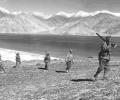
As India and China continue to face off across the Himalayas six decades later, the echoes of that earlier conflict remain unmistakable. The core of China's sensitivity lies not in maps or mountain passes, but in its perception of sovereignty over Tibet, points out Dr Kumar.
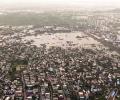
How the UN's flagship climate summit lost its direction and what's at stake.
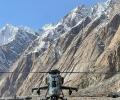
Defence sources stated that the disengagement involves removing infrastructure and withdrawing troops from both sides. The process is expected to be completed by Tuesday.

On November 18, 1962, 114 soldiers of the 13th Kumaon fought till the last man, and last bullet, in sub-zero temperatures, to beat back the huge Chinese army. We salute the Heroes of Rezang La.

India's External Affairs Minister S Jaishankar has stated that peace and tranquility in border areas are essential for the development of bilateral ties with China. He said India will be discussing de-escalation and effective management of activities in border areas with China in the coming days, following the completion of troop disengagement in eastern Ladakh. Jaishankar emphasized the importance of respecting the Line of Actual Control (LAC), maintaining the status quo, and adhering to past agreements. The disengagement phase allows for discussions on other aspects of bilateral engagement, with national security interests prioritized. However, the statement sparked an uproar in the Rajya Sabha, with Opposition MPs demanding clarifications that were disallowed by the Chair, leading to a walkout.

'There are times when India should stand up without hesitation and voice its indignation over the US' pressure tactic. This is one such moment,' asserts Ambassador M K Bhadrakumar.
'If the Trump administration could gain access to the nuclear weapons, they would be satisfied -- at least they could control them.'
'The strategic difference over technology and territory between India and China remain great and security interests on both sides will likely prevent a short-term rapprochement of any depth.'

India and China have held their first diplomatic talks since withdrawing troops from two face-off points in eastern Ladakh, reflecting on the lessons learned from the border row to prevent future incidents. The two sides agreed to maintain peace and tranquillity in border areas, prepare for the next meeting of Special Representatives on the boundary question, and highlighted the importance of regular exchanges and contacts at diplomatic and military levels. The talks come after the completion of the disengagement process from the last two friction points, following an agreement finalized in October 2022.
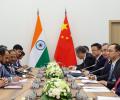
According to informed sources, Doval will arrive in Beijing on Tuesday to attend the crucial talks, which were expected to provide a way forward for the two countries to normalise the relations.

Stock markets will be driven by RBI's interest rate decision, tariff-related developments, global trends and trading activity of foreign investors in this holiday-shortened week, analysts said.
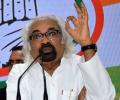
Pitroda was reported to have said that he does not understand the threat India faces from China, claiming that it is often blown out of proportion.

Chief Economic Adviser V Anantha Nageswaran on Wednesday said that the country is not pursuing any proposal to replace the US dollar as international currency for global trade. "No, certainly not. I think India is not part of any such initiative," he said in response to a question if India is looking at an alternative currency to the US dollar for global trade.
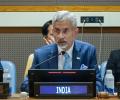
External Affairs Minister S Jaishankar has called on Brazil, Russia, India, China, South Africa (BRICS) to defend the multilateral trading system amid increasing protectionism and tariff volatility during a meeting of the bloc's foreign ministers in New York on the sidelines of the United Nations General Assembly session.
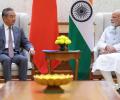
Former Army chief Gen M M Naravane (retd) said India-China ties are "on the mend" with initiatives announced at political, diplomatic and military levels. He expressed hope that China will reciprocate India's goodwill as they move forward in discussing the boundary question.
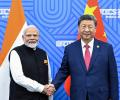
India and China celebrated the 75th anniversary of their diplomatic relations on Tuesday, with leaders from both countries exchanging congratulatory messages. The anniversary comes as the two countries are working to restore ties after a four-year freeze due to the military standoff in eastern Ladakh. Both countries have expressed a willingness to enhance strategic mutual trust and step up cooperation in various fields. The two sides are also exploring ways to rebuild ties and promote people-to-people exchanges.

The US has imposed the additional 25 per cent tariff on Indian goods for its purchases of Russian oil came into effect, bringing the total amount of levies imposed on New Delhi to 50 per cent.
India received FDI equity flows from China worth $2.67 million in FY25, which was 0.01 per cent of the total FDI equity receipts by India in FY25.
Chinese envoy Xu Feihong stated that China opposes the US imposing tariffs on India, amidst a thaw in Sino-India relations and concerns over global trade disruptions.
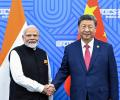
Prime Minister Narendra Modi has emphasized dialogue over discord in India's relationship with China, acknowledging natural differences between the two countries but stressing that stronger cooperation is essential for their mutual interests and global stability. In a podcast with Lex Fridman, Modi highlighted the ongoing efforts to restore normalcy along the border following the 2020 clashes, emphasizing the importance of a stable and cooperative relationship.

With the Asia Cup starting September 9 in the UAE, the team could play without a sponsor logo after the government passed the Online Gaming Bill.

'...it should not delude itself into thinking that India's security or its great-power ambitions will be advanced by those partnerships.'
'Instead, what India should focus on is on riding out the next three-and-a-half years of Trump's presidency with minimal damage to itself.'
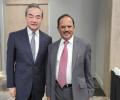
Doval is in Beijing for the 23rd round of the Special Representatives' talks being held after a gap of five years.

The BRICS nations have expressed concern over the proliferation of trade-restrictive actions in the form of 'indiscriminate rising' of tariffs, particularly measures used as a means of 'coercion', cautioning that such practices risk marginalising the Global South countries.

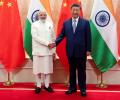
Prime Minister Narendra Modi and Chinese President Xi Jinping are expected to hold bilateral meetings on the sidelines of the SCO summit in Tianjin, as both nations look to strengthen ties amid global trade tensions.
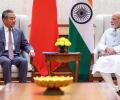
China's Foreign Minister Wang Yi expressed China's anticipation for Prime Minister Narendra Modi's visit to the Shanghai Cooperation Organisation (SCO) summit, emphasizing the importance of strong India-China relations and mutual cooperation.

India has cautioned against 'double standards' regarding its energy procurement from Russia, asserting that it is based on national interests and market dynamics, following a threat of secondary sanctions from NATO Secretary General Mark Rutte.
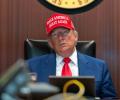
China defended the BRICS economic alliance, stating it is not a bloc for confrontation, after former US President Donald Trump threatened tariffs on countries aligning with its 'anti-American policies'.
