
The Supreme Court has deferred the hearing on the Krishna Janmabhoomi-Shahi Idgah mosque dispute in Mathura. The adjournment comes as Hindu parties involved in the case are reportedly engaged in off-the-record talks to determine which lawsuit will serve as the lead case. The court was hearing a plea challenging an Allahabad High Court order that designated one Hindu party as the representative for all Lord Krishna devotees.
The Allahabad High Court dismissed a plea seeking the use of 'disputed structure' instead of 'Shahi Eidgah Mosque' in Mathura case proceedings.

The Allahabad High Court has requested the Uttar Pradesh government to respond to a petition filed by Ashutosh Maharaj, challenging the opening of his history sheet by the police. Maharaj, who is also involved in the Shahi Idgah-Krishna Janmabhoomi dispute, claims his name should be removed from the police surveillance register.

Efforts to resolve three major religious site disputes in Uttar Pradesh - Gyanvapi, Sri Krishna Janmabhoomi-Shahi Eidgah, and Sambhal Shahi Jama Masjid - through out-of-court settlements have failed, with all parties insisting on judicial adjudication.

The Supreme Court of India has extended its stay on a court-monitored survey of the Shahi Idgah Mosque complex in Mathura, which is located adjacent to the Krishna Janmabhoomi temple. The court deferred the hearing on a plea against the survey to April 1, while the interim order staying the survey will continue to operate. The Hindu side claims that the mosque complex holds signs of a temple that once existed at the site, while the Muslim side contends that the lawsuits filed by the Hindu litigants violate the Places of Worship (Special Provisions) Act of 1991.
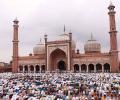
A space designated or reserved for communal Eid day prayers, year after year is called an Eidgah or an Idgah and many an Indian city has a landmark, historic Eidgah.
The Supreme Court of India will hear a plea from the mosque management committee challenging an order rejecting its petition in the Krishna Janmabhoomi-Shahi Idgah dispute in Mathura, Uttar Pradesh on January 15. The Allahabad High Court had rejected the mosque committee's plea, stating that the religious character of the Shahi Idgah mosque needed to be determined. The case involves claims that the mosque was built after the demolition of a temple, a claim disputed by the mosque committee. The Supreme Court will now decide on the maintainability of the mosque committee's plea.
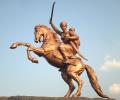
Maharani Lakshmi Bai of Jhansi is a "national hero" and history should not be divided on "communal politics", the Delhi high court said on Wednesday while pulling up the Shahi Idgah managing committee for making "scandalous pleadings" in its plea against installation of her statue inside the Shahi Idgah Park at Sadar Bazar in New Delhi.

Courts cannot be the only hope for those fighting hate speech. Countering its effects on the ground takes more effort. With our political parties unwilling to put in that amount of effort, it's left to citizens to do so, points out Jyoti Punwani.

'The real fault line in Assam is not Hindu versus Muslim. It is Assamese versus Bengali -- and within that, the specific anxiety about undocumented Bangladeshi settlers claiming land and altering the demographic balance of the state.'

Muslims in Uttam Nagar, West Delhi, offered Eid-ul-Fitr prayers under heavy security following recent tensions. Despite a subdued atmosphere, residents expressed gratitude for the police presence and emphasised the community's commitment to peace.

During this Ramzan, another religious practice was turned into an offence: Breaking the fast, or iftar.
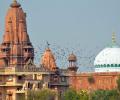
The Supreme Court refused to stay Allahabad high court's December 14 order which allowed the primary survey of the Shahi Idgah complex adjacent to the Shri Krishna Janmabhoomi Temple in Uttar Pradesh's Mathura by a court-monitored three-member team of advocate commissioners.
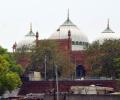
The court said the modalities of the survey will be discussed at the next hearing on December 18.

Eid al-Fitr was celebrated across India with prayers for peace and brotherhood, alongside protests condemning US-Israel actions in West Asia.

Amid chants of vedic hymns, Sriram Sena chief Pramod Muthalik along with his supporters installed the idol of Lord Ganesha and offered prayers on the occasion.

The Supreme Court on Friday refused to stay the proceedings before the Allahabad high court on suits related to the Sri Krishna Janambhoomi-Shahi Idgah dispute, saying it will not be fair to interfere with the high court order without hearing both the sides.

With this, the number of suits filed in the Krishna Janmabhoomi-Shahi Idgah case, in different courts of Mathura, has gone up to 15.
The objections against the suit were raised by the management committee of the mosque and the Uttar Pradesh Sunni Central Waqf Board.

The apex court rejected an appeal challenging a July 10 decision of the Allahabad high court which had also dismissed the plea finding no error or illegality in the order of a Mathura civil judge who had decided to first hear the issue of maintainability of the suit as raised by management committee of the mosque.
The petitioner submitted an application in the court of the Civil Judge on Monday seeking permission for 'purification' of the sanctum sanctorum of the Keshav Dev temple, which he claimed was inside the mosque, his counsel said.
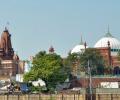
The "compromise" between Sri Krishna Janmasthan Seva Sansthan and Shahi Masjid Idgah made in 1968 was also challenged in the suit, according to lawyers.
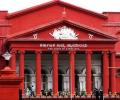
In a late-night hearing on Tuesday, the Karnataka high court upheld an order of the Dharwad municipal commissioner allowing the Ganesh Chaturthi festival to be held at the Hubballi Idgah Maidan.
The Allahabad high court Thursday directed the lower court concerned to decide within four months the temporary injunction application as well as a plea for bunching together the trial in all pending cases related to the Shri Krishna Janmabhoomi-Shahi Idgah mosque dispute.

Ganesh Chaturthi celebrations will not be held at Bengaluru's Idgah Maidan, the Supreme Court said on Tuesday while refusing to grant permission for the function and ordered status quo on the plot by both parties. Noting that no such function as Ganesh Chaturthi was organised at Idgah Maidan for the past 200 years, the top court asked the parties to approach the Karnataka high court for the resolution of the dispute.
The Allahabad High Court has rejected an application to implead goddess Radha Rani as a party in the Mathura Krishna Janmabhoomi-Shahi Idgah title dispute. The court ruled that puranic illustrations are considered hearsay evidence and the applicant failed to provide concrete evidence supporting the claim of joint ownership.

'Around 7 am, I was in my house when I heard a loud noise and there was dust all over. When I came down, I saw that our neighbour's home has collapsed'

The Hubballi-Dharwad Municipal Corporation (HDMC) has decided to allow the installation of Ganapati idol for three days at Idagh Maidan in Hubballi.
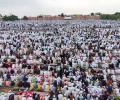
'We are not all Abduls, you know. Our community has any number of retired civil and defence officers, doctors, engineers, lawyers.'
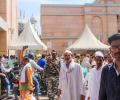
The Act prohibits conversion of any place of worship and provides for the maintenance of the religious character of any place of worship as it existed on August 15, 1947.
One of the longest and most controversial legal battles in Karnataka -- the Hubli Idgah Maidan case which led to several communal clashes -- has come to an end. The Supreme Court, in a recent judgment, ruled that the Idgah Maidan in Hubli was the sole property of the Hubli-Dharward Muncipal Corporation and no other organisation had any right over this property.

The police arrested four men on Tuesday after they chanted Hanuman Chalisa at an idgah, a day after namaaz offered on the premises of a temple in Mathura triggered a row.
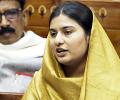
Samajwadi Party leader and Kairana MP Iqra Choudhary has moved the Supreme Court seeking effective implementation of the Places of Worship (Special Provisions) Act, 1991. This move comes amidst several petitions challenging the law's validity, including those filed by the Akhil Bhartiya Sant Samiti and lawyer Ashwini Upadhyay. The Supreme Court, in December 2022, had restrained all courts from examining fresh suits and passing interim orders in pending cases seeking to reclaim religious places. The Act aims to maintain the religious character of places of worship as they existed on August 15, 1947, but the dispute relating to Ram Janmabhoomi-Babri Masjid at Ayodhya was kept out of its purview. The court has listed Choudhary's plea with other pending pleas for February 17.
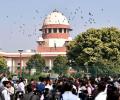
A bench comprising Chief Justice Sanjiv Khanna and Justice Sanjay Kumar also indicated that it may not take up the pending scheduled petitions, heard earlier by a three-judge bench, during the day as it was sitting in a combination of two judges.
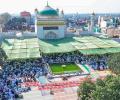
The law prohibits conversion of any place of worship and provides for the maintenance of the religious character of any place of worship as it existed on August 15, 1947.
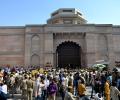
The Supreme Court of India is scheduled to hear a batch of petitions challenging the validity of certain provisions of the Places of Worship (Special Provisions) Act, 1991, which prohibits lawsuits to reclaim a place of worship or change its character from what prevailed on August 15, 1947. The pleas, including one filed by Ashwini Upadhyay, argue that these provisions violate the right to judicial remedy and create an arbitrary cut-off date. The matter will be heard in the backdrop of several ongoing cases related to places of worship, including the Gyanvapi Mosque in Varanasi and the Shahi Idgah Mosque in Mathura. The Muslim side has cited the 1991 law to argue that such suits are not maintainable. The Supreme Court had previously sought the Centre's response to Upadhyay's petition, which alleged that the law creates an "arbitrary and irrational retrospective cut-off date" for maintaining the character of places of worship.

Over one lakh Muslims gathered in Karnataka to protest the Waqf Amendment Act, 2025, which they say erodes the autonomy of Waqf institutions and threatens their rights. The protest, organized by the Karnataka State Ulema Coordination Committee, saw strong opposition to provisions in the amended law that they argue allow for coercive acquisition of Waqf properties. Leaders alleged that the amendment is part of a broader political agenda and urged the community to uphold their legal and constitutional rights.
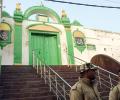
The Committee of Management, Shahi Jama Masjid, moved the high court challenging the suit and the Sambhal court order which directed the survey through an advocate commissioner.
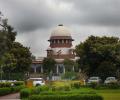
Commencing hearing on pleas challenging the constitutionality of the Places of Worship Act, 1991, the Supreme Court asked the Centre to reply to cross-pleas against or seeking implementation of statute.
The Mathura Shahi Masjid Eidgah Committee has approached the Supreme Court, requesting the court to prevent the central government from filing a response to a petition challenging the Places of Worship Act's constitutional validity. The committee accuses the BJP-led government of intentionally delaying its response. The court had previously issued a notice to the government in March 2021, but the government has yet to submit its reply despite numerous opportunities. The committee argues that the government's delay is intended to obstruct those opposing the challenge to the Places of Worship Act from filing their own responses. The petition also states that the pleas challenging the law's validity are scheduled for hearing on February 17, and closing the government's right to respond would serve justice. The Supreme Court previously issued a ruling in December 2022 that stopped courts from entertaining new lawsuits or issuing interim or final orders regarding the reclaiming of religious places, particularly mosques and dargahs. The ruling halted proceedings in 18 lawsuits filed by Hindu groups seeking surveys to confirm the original religious character of 10 mosques, including the Gyanvapi Masjid in Varanasi, the Shahi Idgah Masjid in Mathura, and the Shahi Jama Masjid in Sambhal. This decision was made in response to six petitions, including one filed by lawyer Ashwini Upadhyay, challenging various provisions of the Places of Worship Act. The 1991 law prohibits the conversion of places of worship and guarantees the preservation of their existing religious character as it stood on August 15, 1947. Notably, the dispute regarding the Ram Janmabhoomi-Babri Masjid in Ayodhya was excluded from this law. There are also several cross-petitions advocating for a strict enforcement of the 1991 law to uphold communal harmony and maintain the current status of mosques that Hindu groups seek to reclaim, claiming they were temples before being destroyed by invaders.
