
The analyst said since servicing of principal and interest on loans will beome challenging for mall operatos in the next couple of months.

Prime Minister Narendra Modi had announced a relief package of Rs 20 lakh crore or about 10 per cent or GDP last week. However, many of the measures unveiled have been in the form of moves like loan guarantees which do not entail an immediate fiscal cost.

The pre-owned vehicles arm of the Mahindra Group plans to add 30 outlets in a few days taking the total number to 1,000.

While players in the financial ecosystem are opening up to the idea of receivables funding for the sector, this market needs a regulator, which a Parliament panel feels only RBI can provide.

While discretionary spend by global enterprises is likely to negatively impact all Indian IT firms, more revenues from products and less exposure to financial services segment are likely to lessen the impact for HCL Technologies and Tech Mahindra.

Fabiflu sales have grown by 62 per cent in July. It was launched in June. This drug is being used by doctors for mild-to-moderate Covid patients even if they are in home isolation.

Diamond industry expects revenues to drop by 20-25% in the current financial year.

This is the lowest that the BCI has ever fallen in the history of 113 rounds of the NCAER Business Expectations Survey.

'Rising Covid cases and localised lockdowns are being closely monitored.'

Rs 1,000 now buys $13.5 against $14 a year ago.

Not just mid- and small-sized firms, even big ones will either sell group companies or stakes in their listed entities to tide over crisis; more sell-offs seen in coming months.

Foreign investment firms, especially private equity, are jittery about the Indian market as uncertainty continues to shroud the energy sector.

India's GDP may turn positive at 1.3 per cent in the third quarter of 2020-21, having witnessed contraction in the previous two quarters due to the coronavirus pandemic, as the number of cases is falling and public spending has started rising, according to a report. The government will release the GDP numbers for the October-December quarter of the current fiscal on Friday. Projecting that the gross domestic product (GDP) may have returned to the black in the last quarter of the calendar year 2020, DBS Bank in the report said the full-year growth in real terms may be at a negative 6.8 per cent.

As the second wave of the Covid-19 pandemic abates, India's automakers are hopeful of a quick recovery in sales volumes, led by better rural sentiment, low interest rates, improved availability of finance and a gradual uptick in business and economic activity. In fact, companies have started to ramp up production already, encouraged by high order books and the growing preference for private transport in both rural and urban areas as a means to avoid infections. In early April, the industry had been bullish as the sales trend for March showed that the effects of the Covid-19 pandemic had been left behind. The total vehicle sales had grown by 77 per cent, albeit on a lower base, and for the past few months, sales had consistently touched 300,000 units per month.

While the COVID-19 pandemic has completely halted production and new orders, exporters say that payments have also been delayed for the shipments sent before the lockdown. Exporters say some customers are not taking delivery of the shipments because they have shut shop. Ready-made garment players had been hoping for a revival in demand in China but with the virus spreading to Europe, the US and other major markets, there are no orders coming from the major retailers.

Though there have been no cancellations of contracts by invoking the force majeure clause, a number of clients - especially in the worst-affected sectors like travel and hospitality, oil and gas, as well as manufacturing - have started asking for reducing level of IT support.

Last year in January at Amazon's flagship event Smbhav, Infosys Co-founder N R Narayana Murthy had to shorten his keynote speech from 20 minutes to about five because the event was delayed by 1.5 hours. "I will try to finish it in five minutes, because I am not used to delays," said Murthy, while addressing hundreds of micro, small and medium enterprises (MSMEs) about building businesses that last. In the audience was Amazon founder Jeff Bezos. Murthy referred to Bezos' prediction that the 21st century will be the Indian century. "That confidence enhances our enthusiasm," said Murthy. The relationship between Murthy and Bezos dates to 2014, when Prione, a 49:51 joint venture (JV) between Amazon and Murthy's venture capital company Catamaran, was formed.

FY22 will be the year to rebuild with the IMF projecting output growth at 11.5 per cent, economic survey at 11.0 per cent and the RBI's Monetary Policy Committee at 10.5 per cent.

Most producers have put off plans to make capital investments in their wineries, and implemented cost-reduction measures to conserve cash.

We are adapting to the situation by innovating new delivery modelss, launching brand campaigns that are impactful in the current context and closely monitoring changes in consumer buying behaviour, he said.

According to a new report by international management consulting firm Arthur D Little, the worst of COVID-19's impact will be felt by India's most vulnerable in terms of job loss, poverty increase and reduced per-capita income, which in turn will result in a steep decline in the Gross Domestic Product (GDP). "Given the continued rise of COVID-19 cases, we believe that a W-shaped recovery is the most likely scenario for India. This implies a GDP contraction of 10.8 per cent in FY 2020-21 and GDP growth of 0.8 per cent in FY 2021-22," the report said.

According to experts in human resources, even joining of new graduates is likely to be staggered as companies are expected to onboard staffers after gauging the demand scenario.
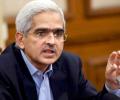
The rising COVID-19 infections across the country are a matter of concern, but it may not impact the ongoing economic revival as one does not foresee lockdowns, Reserve Bank Governor Shaktikanta Das said on Thursday. The economic revival will continue "unabated", Das said, asserting that there is no need for a downward revision of RBI's 10.5 per cent GDP growth forecast for FY22. Speaking at Times Network's India Economic Conclave, Das said, "We have 'insurance' to protect economic revival like a fast-paced vaccination drive, greater ability among people to follow COVID protocols", and one does not see lockdowns as well.

'The CEA suggested that could be as high as 19 per cent.'

If there is no third wave of the pandemic, the fiscal position of the Centre and the states will be much better than budgeted for FY22 and the states may garner Rs 60,000 crore more in tax collections at Rs 8.27 lakh crore this fiscal year than they have budgeted, a report said. The report by SBI Research on Monday bases its optimism on GST collection so far this fiscal, which has been the best ever in spite of the fact that the two months bore the maximum brunt of the second wave -- with April setting a record Rs 1.41 lakh crore and May collection a tad low at Rs 1.03 lakh crore. The report also said overall government finances do not look overstretched as GST collections have continued to maintain pace so far and the additional fiscal impact arising from free vaccination and more food supplies will only be around Rs 28,512 crore.

'In the short term, we may see some disruptions due to Covid, but in the medium-to-long term, we should keep an eye on US inflation and 10-year bond yields.'
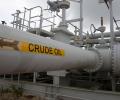
There is positive correlation between crude oil prices and Indian equities and investors can expect more upside after the recent rally in Brent crude price.

Outlay for infra is also expected to see a significant increase in view of the government's Rs 111-trillion investment plan under the national infrastructure pipeline to develop social and economic infrastructure over five years.

However, the number of renewals has grown by only 0.4 per cent, which means only high value and ticket size renewals are coming.

Instead of getting swayed by market gyrations, investors must stay invested for the long term, advises Sarbajeet K Sen.

'The growth drivers are mostly invisible, but the growth is undeniable at least for now,' notes Debashis Basu.

Tax department feels that the second quarter would be much better than the first quarter of the year as the economy has started improving.

With 262 planes, IndiGo operated over 1,500 daily flights prior to March 24 but is now operating around 350 scheduled flights a day, which is putting a pressure on its finances.

The bigger threat for DMart is that the Reliance-Future combine now has grocery revenues that are nearly 2.5 times of it, putting pressure on the former to improve stickiness of its consumers.

Portfolio returns, say analysts at Morgan Stanley, are more likely to be driven by bottom-up stock-picking rather than top-down macro forces.

This includes an infrastructure push which may lead to the government spending more than its budgeted capital expenditure for 2020-21. There are also discussions on increasing the scope and quantum of direct cash transfers to the beneficiaries who need it the most.

International brands such as Daikin, Hitachi and Samsung, which were largely present in the premium products range, are getting aggressive on expanding their mid-range portfolios to penetrate into smaller cities and towns. While competition isn't hurting Voltas just yet, which has managed to retain its market share at 24.4 per cent as of September 30 (Q2), the main question is whether the company can defend its market share without compromising on profitability.
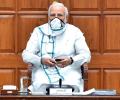
Since its launch in late March after India went into a lockdown, concerns about transparency have been expressed about the PM-CARES Fund

The liquidity-fuelled rally will continue for some time, however, fundamentals are getting stretched.

Investment in market leaders with a safety-first approach could yield reasonable returns across sectors.
