
India's industrial production contracted by 3.6 per cent in February, official data showed on Monday. According to the Index of Industrial Production (IIP) data released by the National Statistical Office (NSO), manufacturing sector output declined by 3.7 per cent in February 2021. Retail inflation rose to 5.52 per cent in March, mainly on account of higher food prices, government data showed on Monday. The consumer price index (CPI) based retail inflation stood at 5.03 per cent in February.

Economic growth is likely to plummet to a multi-decade low of 1.6 per cent in fiscal year 2020-21 due to the Covid-19 pandemic and ensuing measures like lockdowns and social distancing, an American brokerage said on Wednesday in one of the bleakest forecasts on GDP yet. Indian policymakers have not been aggressive enough in their response till now to the crisis, and will need to eventually intensify their efforts, economists at Goldman Sachs said.

The RBI had on August 7 announced a five-member expert panel under former ICICI Bank chairman Kamath to make recommendations on the required financial parameters for recasting corporate loans.

This year, the combined net profit of 24 index companies, which have declared their June-20 numbers, has declined by 37 per cent year on year, while their revenues, including other income, is down by 21 per cent YoY so far.

Even when large businesses said they were flying blind in mid-2020, the markets rallied and an incredible business boom followed. This is not to say that the markets will continue to rally and there is nothing to worry about, observes Debashis Basu.

The stimulus measures include extension of the 90-day moratorium on recognition of impaired loans to 180 days, in addition to several relaxations in bank lending limits, including allowing banks to fund interest on working capital loans.

Since April, India has seen multiple strains of the coronanavirus sweep the nation, upending life and businesses alike. Out-of-home retail and discretionary categories such as durables, auto, fashion, lifestyle, hospitality, food services, travel, and tourism have been the worst-hit as Covid cases remain high, leaving state governments with no option but to curtail mobility and economic activity.
Experts disagree with the idea and the Reserve Bank of India (RBI), which has the sole right to print money, is not comfortable with it as well.
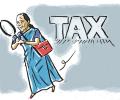
Experts pointed out the move will only help taxpayers temporarily, as the tax liability remained the same and the date for advance tax has not been extended.

At $37 per dose, the Pfizer vaccine is much more expensive compared to $3 per dose for the Covishield.

Currently, the investor and his family's net worth in listed firms stands at Rs 8,517 crore, compared to Rs 8,388 crore as of March 31, 2020.

To attract bidders, the government had decided to hive of around Rs 35,000 crore of the company's debt into a separate subsidiary, leaving around Rs 23,286 crore to be absorbed by the new bidder.

Reliance Industries on Friday reported more than doubling of its March quarter net profit to Rs 13,227 crore as improvement in petrochemical and consumer business countered continued weakness in refining business.

Existing trade deals, especially the 2009 pact with the Asean bloc, have been panned by the Centre for not boosting exports but flooding the domestic market with cheap imports. Subsequently, New Delhi has called for reviewing FTAs with Japan and South Korea. Going by that, a trade deal with the US is unlikely to be beneficial, say experts.

With the farmers' protest against the three new laws and in support of legalising the minimum support price (MSP) going strong, state governments have announced a slew of measures in their annual Budgets to placate farmers. The Centre kicked things off in the Union Budget by assuring farmers that the MSP would continue and coming out with a report card to demonstrate its commitment. However, these efforts don't seem to have yielded tangible results. In their respective Budgets, states chose to go a step further by announcing a variety of measures.

'It has the potential to add half a trillion dollars to the economy over the next five years.'
Direct tax collections missed the revised target for 2019-20 by Rs 1.42 trillion at Rs 10.27 trillion, an 8 per cent fall over the previous year.

'Companies are threatening to terminate them or putting them on unpaid leave.'

Ehile the Centre had projected tax revenues to touch 12.1 per cent of GDP in FY19, Revised Estimates peg the collections at 11.9 per cent, owing to a shortfall in the goods and service tax (GST) collections, reports Ishan Bakshi.

While the overall loan disbursements stood strong at 15 per cent YoY in Q2, pockets such as vehicle finance, loans to NBFCs, and business banking showed some weakness. A continued fall in these numbers may make it tough for AU SFB to defend its valuations under the current circumstances.

It bounced back from the historic low of 41 recorded in the April-June quarter, during the initial days of the pandemic and lockdown.

With the lockdown being eased gradually, providing more and more digital solutions, for service delivery and procurement of new policies, is what the corporation is focussing on.

To meet the revised estimates for 2019-20, the central government will have to garner Rs 5.03 trillion in total revenues in March, which has seen the worst phase of the coronavirus pandemic so far and the resultant lockdown.

Employees of some top Indian companies were in for a pleasant surprise when they received a mail from their HR team announcing a hike in salaries and bonuses. Led by IT firms and start-ups, HR managers say that while some have offered cash and stock options, others are in a wait-and-watch mode and add the trend will pick up in other sectors. For example, IT giant Cognizant - which had an attrition rate of 19 per cent in the December quarter - has established a $30-million employee retention fund in order to bring down the high attrition rate.

India's factory output climbed 22.4 per cent in March, benefiting from the base effect of the lockdown-marred month a year back as well as a turnaround in the manufacturing sector, while retail inflation slipped to a three-month low of 4.29 per cent in April. The high positive annual growth in the index of industrial production (IIP) in March 2021 came on back of a contraction of (-)0.9 per cent and (-)3.4 per cent in January and February 2021 respectively, according to the data released by the National Statistical Office (NSO) on Wednesday. This turnaround was led by recovery in the mining, manufacturing and electricity sectors.

The county's largest IT company TCS on Friday reported a 7.2 per cent jump in December quarter net to Rs 8,701 crore on a consolidated basis, and seemed to suggest the worst is behind by projecting double-digit revenue growth for FY22. The company, a cash cow for Tata Sons, saw a 5.4 per cent growth in revenue at Rs 42,015 crore for the quarter. Operating profit margin came in at 26.6 per cent despite implementing wage hikes, after consistently missing the 26-28 per cent aspirational band for many quarters.

About 50,000 truckers, most of whom are single-truck owners, could be thrown off their businesses due to the recent fuel price hike. "Already the vehicle supply on the road is higher than the requirement. "With the fuel price hike, fleet owners will look to cut down fleet size wherever needed and due to this, small single-truck owners could be at the receiving end," Ashok Goyal, managing director at BLR Logistiks (I) Ltd said. The company has a fleet of 500 vehicles of all types-small, medium and large with pan-India presence.

The BSE Midcap and the Small-cap Index have run up 25.3 per cent and 31.3 per cent respectively over the past year. Valuations are no longer cheap, notes Sanjay Kumar Singh.

Analysts expect Colgate's overall volume growth to remain in single digits (around 5-6 per cent) for the next two years.

If a salaried employee does not possess Form 16, he can still file the I-T Return with the help of his salary slips and Form 26 AS.

'The competition between the two is definitely going to be of great interest to the Indian market.'

While there has been a rash of growth estimate cuts, including a 0.70 percentage point reduction by the RBI last month to 6.1 per cent, the Japanese brokerage's estimate is so far the lowest.

Excluding the pension outgo, the allocation in the Union Budget for the armed forces stands at Rs 3.62 lakh crore.

This comes at a time when the COVID-19 crisis is expected to derail the government's revenue maths for 2020-21, hitting the mop-up from sources such as taxes and divestment.

Record liquidity infusion by the central bank in the banking system during the financial year 2020-21 amid sluggish economic activity resulted in banks investing more in safe government papers than in extending loans, data from Reserve Bank of India (RBI) showed. This trend has not been seen in nearly two decades, barring 2016 - the year of demonetisation.

Among other segments, home broadband subscriptions have picked up and the virtual private network service, too, increased by around 15 per cent.

Education technology, grocery, fashion, food delivery and UPI payments surpassed volumes or revenues of February, in the September-October period.

The quarter also saw exits worth $1.9 billion across 37 deals, 59 per cent higher YoY. This was driven by one of India's largest PE-backed IPO exit, the $1-billion partial exit by Carlyle in the SBI Cards IPO.
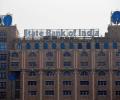
SBI chief Rajnish Kumar said the focus going forward will be on cost reduction, rationalisation and reskilling of workforce, improving staff productivity and redeployment of workforce from admin offices to sales roles.

There are concerns in the industry around budget cuts by clients and layoffs, as enterprises grapple with reduced earnings amid lockdowns across various parts of the globe.
