
Foreign Secretary Vikram Misri on Monday called on Chinese Foreign Minister Wang Yi and discussed issues of bilateral interest.
China's Foreign Minister Qin Gang has not been seen in public since June 25. Is he unwell, or has he been purged?
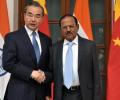
Wang also condemned the April 22 terror attack in Jammu and Kashmir's Pahalgam, which had cross-border linkages and triggered the worst fighting between India and Pakistan in years.
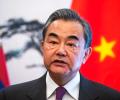
The Ministry of External Affairs (MEA) said China and other countries have no locus standi to comment on Jammu and Kashmir and they should note that India refrains from public judgment of their internal issues, in what is seen as a strong reaction and message to Beijing.

Against the backdrop of Beijing's negative role at the Nuclear Suppliers Group meeting in Vienna, Chinese Foreign Minister Yang Jeichi on Monday met Prime Minister Manmohan Singh and held talks with External Affairs Minister Pranab Mukherjee. Dr Singh told Yang that India was pleased to get the NSG waiver last week, official sources said.
Closer cooperation between China, India and Russia is "conducive" for the creation of a multi-polar world and democratisation of international relations, Chinese Foreign Minister Yang Jiechi said in Harbin on Wednesday.

Chinese Foreign Minister Qin Gang will travel to India to attend the meeting of G20 foreign ministers on March 2, during which he is expected to hold his first bilateral meeting with External Affairs Minister S Jaishankar.

'Wang Yi said the border issue is important and we should stay committed to peacefully addressing it through consultation and coordination.'
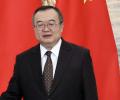
The 61-year-old senior diplomat was taken away for questioning in late July after returning to Beijing from an overseas work trip, the paper reported, quoting people familiar with the matter.
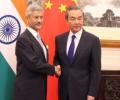
Wang said the two sides should follow the important consensus reached by the leaders of the two countries and strengthen the communication and coordination on the proper handling of the border situation through the existing channels so as to jointly maintain peace and tranquility in the border area, the Chinese foreign ministry said in a statement.

Chinese Foreign Minister Wang Yi will attend a two-day trilateral meeting of the foreign ministers of Russia, India and China in New Delhi from November 10 to discuss regional and international issues.

Chinese Foreign Minister Qin Gang will travel to India to attend the Shanghai Cooperation Organisation (SCO) foreign ministers' meeting being held in Goa on May 4 and 5, the foreign ministry in Beijing announced on Tuesday.

Chinese Foreign Minister Wang Yi will be visiting New Delhi on Sunday as a special envoy of President Xi Jinping to establish political contacts with the new Indian government amid hopes here of an upswing in bilateral ties due to Prime Minister Narendra Modi's familiarity with China.

National Security Advisor Ajit Doval engaged in Special Representatives talks with Chinese Foreign Minister Wang Yi in Beijing, focusing on the India-China boundary question and enhancing bilateral relations. These crucial discussions precede Chinese President Xi Jinping's anticipated visit to New Delhi for the BRICS summit, aiming to address persistent border differences and stabilise ties strained by past conflicts like the Galwan Valley clash.

Beijing has strongly criticised new US export controls on advanced semiconductor chips to five countries, viewing them as an attempt to prevent diversion to China. This condemnation comes just before US President Donald Trump's visit to Shenzhen for the APEC summit, where geopolitical tensions, including China's opposition to the Quad, are also in focus.

Sources said Wang is primarily visiting India to hold boundary talks with National Security Advisor Ajit Doval.
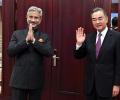
If the visit takes place, it will be the first trip by a senior Chinese leader to India after the eastern Ladakh standoff between the two countries began in May 2020.

Donald Trump had a busy Thursday on the sidelines of the APEC Leaders' Summit in Shenzhen, China. Trump met Chinese President Xi Jinping for talks before holding a separate meeting with Russian President Vladimir Putin.

Chinese Foreign Minister Wang Yi is set to attend the BRICS National Security Advisors meeting in New Delhi on June 22-23. The high-level gathering will address international security challenges, regional issues, and prepare for the upcoming BRICS Summit in India. Wang Yi is also expected to hold bilateral talks with India's NSA Ajit Doval, focusing on India-China border issues.

Chinese President Xi Jinping's upcoming visit to India for the BRICS summit is a pivotal diplomatic event poised to significantly impact bilateral ties and global cooperation amidst ongoing international instability.
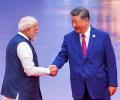
Ahead of Xi Jinping's visit, National Security Advisor Ajit Doval and Chinese Foreign Minister Wang Yi held extensive talks in Beijing on August 25 on the boundary issue and reached an eight-point consensus.

Chinese Foreign Minister Wang Yi met with National Security Advisor Ajit Doval in New Delhi, stressing the importance of respecting each other's "core interests" and implementing leaders' consensus for stable bilateral relations. Wang highlighted that India and China should view each other as partners, not rivals, and properly handle sensitive issues like the border dispute to foster cooperation and accelerate the modernisation of the Global South.

US President Donald Trump, Chinese President Xi Jinping and Russian President Vladimir Putin held a closely watched trilateral meeting on the sidelines of the APEC Economic Leaders' Summit in Shenzhen, China. These photographs capture key moments from the high-profile gathering, including diplomatic talks, ceremonial meetings and interactions between the three leaders during one of the year's most significant geopolitical events.

China announced a "ground-breaking" trilateral meeting between the presidents of China, the US, and Russia, scheduled for November 19 in Shenzhen during the APEC summit. This first-ever face-to-face meeting aims to discuss safeguarding world peace, strategic stability, and global challenges like nuclear arms reduction and artificial intelligence. Beijing has shown reluctance on trilateral nuclear arms control due to its smaller arsenal, while the war in Ukraine will not be a discussion point. The APEC summit will also see Japanese Prime Minister Sanae Takaichi's participation, drawing attention due to recent Sino-Japanese tensions over Taiwan.

Chinese President Xi Jinping's first visit to India in seven years for the BRICS Summit and bilateral talks with Prime Minister Narendra Modi is set to address crucial aspects of India-China relations, including trade, investment, and persistent border tensions.

Foreign Secretary Vikram Misri held extensive discussions with China's Vice Foreign Minister Hua Chunying and other senior officials in Beijing, reviewing bilateral relations, trade, cultural exchanges, and emphasising peace and tranquillity in border areas. His visit aims to advance the vision of both nations as development partners.

The Pakistani government has once again found itself embarrassed on the world stage, now acknowledging the impact of India's strategic and precision strikes on its military installation during the escalation in May, following Operation Sindoor, which came in retaliation for the April 22 Pahalgam terror attack that killed 26 civilians.

Indian and Chinese military officials have held corps commander-level talks in Arunachal Pradesh to review the Line of Actual Control (LAC) situation, following recent Special Representative discussions aimed at de-escalating border tensions and fostering bilateral ties.

Prime Minister Narendra Modi, in bilateral talks with Chinese President Xi Jinping, emphasized that both nations must show sensitivity to each other's core issues and be guided by mutual respect, sensitivity, and interest. Modi highlighted the critical importance of peace and tranquillity along the Line of Actual Control for the development of India-China relations, while also addressing concerns regarding Taiwan and Tibet.

Japan's military will use Indian firing ranges for live-fire training, with drills scheduled to begin next year. The exercises will include surface-to-ship missiles for the first time, marking a significant expansion of bilateral defence cooperation.

India's Indo-Pacific approach has traditionally emphasised strategic autonomy, ASEAN centrality, freedom of navigation, respect for international law and an inclusive regional order. Its growing defence and maritime partnerships with Australia, Japan, Indonesia, Vietnam and other Southeast Asian countries provide additional depth to this approach, point out Dr Kumar and Dr Jasmeet Kaur.

US President Donald Trump, Chinese President Xi Jinping, and Russian President Vladimir Putin held an unprecedented trilateral meeting at the APEC Economic Leaders' Meeting in Shenzhen, discussing global conflicts, nuclear arms reduction, and artificial intelligence.

This was the first round of talks for Wang after he succeeded State Councillor Yang Jiechi earlier this year.

US President Donald Trump received a grand welcome from Chinese President Xi Jinping in Shenzhen for the APEC Economic Leaders' Meeting, culminating in an unprecedented trilateral meeting with Russian President Vladimir Putin. The leaders discussed critical global issues including the Ukraine conflict, Iran, artificial intelligence, and nuclear arms reduction, marking significant political gains for each leader on the international stage.

India and China have agreed to advance discussions on an "Early and Substantial Harvest" of boundary delimitation and border management during the 25th round of Special Representatives talks between National Security Advisor Ajit Doval and Chinese Foreign Minister Wang Yi in Beijing. Both sides reached an eight-point consensus, committing to the 2005 Agreement on Political Parameters and Guiding Principles for Settlement. Key outcomes include enhancing border management, improving understanding of the Line of Actual Control, establishing new meeting points and hotlines, and continuing cooperation on trans-border rivers and pilgrimage.

Chinese Foreign Minister Wang Yi stated that President Xi Jinping and Prime Minister Narendra Modi reached a crucial consensus during the BRICS summit, agreeing that China and India should be partners, not rivals. The leaders pledged to maintain peace and tranquility in border areas, deepen cooperation, and support each other in multilateral forums, aiming to strengthen the Global South and promote a multipolar world order.

India and China on discussed the recent intrusion by Chinese troops at the Depsang Valley during External Affairs Minister Salman Khurshid's two-hour-long meeting with his Chinese counterpart Wang Yi.
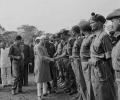
The conversations on July 22 and 23, 1962, meetings in Geneva between V K Krishna Menon, India's defence minister at the time, and Chinese vice premier Chen Yi are important because, had they been followed up, the subsequent border war may perhaps have been avoided, notes former foreign secretary Shyam Saran.

The BJP has strongly criticised Congress leader Rahul Gandhi for his comments regarding India's global standing and a trilateral meeting involving Trump, Xi, and Putin. The ruling party accused Gandhi of being "clueless on geopolitics" and promoting "pro-Pakistan propaganda," while highlighting India's robust engagement with various international forums. BJP leaders also questioned Gandhi's understanding of diplomacy and contrasted the Modi government's foreign policy achievements with alleged past failures.

In response to the Quad ministers' joint statement, China on Tuesday said it opposes the creation of exclusive 'small cliques' and 'bloc confrontation'.
