
A new study published in The Journal of Neuroscience reveals a precise connection between individual breath patterns and neural activity in the brain. Researchers found that subtle variations in each breath, such as longer inhales or slower exhales, are directly reflected in corresponding brain activity patterns. This goes beyond traditional measures of breathing rate, offering a richer understanding of how respiration influences cognition, emotion, and memory, and could have implications for conditions like SUDEP and SIDS.
A new study by MIT and Boston University found that the brain region responsible for language remains active and similar in older adults compared to younger adults. However, the brain system for decision-making, known as the 'multiple demand network', shows significant differences with age. This suggests that specialised brain functions like language processing may be more resilient to ageing than general-purpose cognitive functions.
A new study provides the first evidence for the existence of flexible neuron modules in the brain, particularly in the prefrontal cortex. These clusters of neurons can perform the same computations across varied tasks, allowing the brain to store different types of information, such as sensory input or action plans, with remarkable adaptability. This discovery suggests that reusable circuits enable the brain to generate a wide range of behaviours efficiently.

IIT Guwahati researchers have developed SH²RFSSM, a model inspired by how biological neurons communicate.
Researchers have identified the extracellular matrix, a scaffold-like structure around brain cells, as a key physical mechanism explaining why individuals experience rapid progress in learning new skills followed by plateaus. This matrix loosens and rebuilds during initial learning, then stabilises as skills are mastered, protecting acquired knowledge.
Researchers have developed an AI-based approach to generate detailed maps highlighting differences in how distinct parts of the brain age. This new model reveals that not all brain regions age at the same rate, with frontal and temporal lobes appearing biologically older. The study also links these regional ageing patterns to cognitive function and neurodegeneration, particularly in Alzheimer's disease.
Researchers have analysed reports of medical procedures involving electrical stimulation of awake patients' brains, identifying distinct brain regions responsible for spontaneous and voluntary laughter. This study sheds light on the complex neural mechanisms underlying human laughter, distinguishing between uncontrollable, emotionally charged laughter and controlled, conversational laughter.
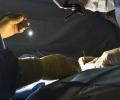
An Indian-American US Army surgeon in an innovative procedure removed a golf ball-sized tumour developed at the base of the brain by sending an endoscopic device through the patient's nose. Major Jagatkumar Patel, an anterior surgeon at the Walter Reed National Military Medical Centre near Washington, DC, along with neurosurgeon Army Lt Col Charles Miller, carried out the surgical procedure on Marine Corps Staff Sergeant Andy Archer, who lived with the tumour for 15 years.
A new study reveals that a copper-containing compound, Cu(ATSM), can repair vital waste-clearing pumps in the brain, significantly reducing toxic amyloid-beta proteins associated with Alzheimer's disease and improving long-term spatial memory in mouse models. This discovery offers a promising new therapeutic avenue for neurovascular dysfunction in Alzheimer's.

On World Brain Tumour Day, Consultant Brain and Spine Surgeon Dr Keval Shukla explains why you should not ignore symptoms like persistent headache, blurred vision and a loss of balance.
Researchers have identified a new process, 'chronoferroptosis', where excess iron in neurons reduces their resilience to stress, increasing vulnerability to neurodegenerative diseases. This discovery highlights iron accumulation as a critical target for predicting, preventing, and treating conditions like Alzheimer's.
A study conducted on older adults in India suggests that the health of the brain's white matter wiring can help mitigate the cognitive effects of gray matter loss, supporting overall cognitive health. Researchers found that healthier superficial white matter is linked to stronger language skills and may act as a source of resilience against cognitive decline.

A new study suggests that newer oral weight loss drugs may do more than suppress appetite, potentially altering brain circuits that control motivation and reward, impacting how one experiences pleasure.
A new study reveals that lower abdominal fat accumulation in midlife is associated with slower brain atrophy, better preservation of brain structures, and improved cognitive performance later in life.
A new study suggests that physical activity can trigger the movement of cerebrospinal fluid, aiding in the removal of waste from the brain and potentially reducing the risk of neurodegenerative diseases.
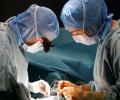
An 85-year-old retired MCD official, declared brain-dead after a severe stroke, became an organ donor, saving multiple lives. His family's compassionate decision highlights the critical need for increased organ donation awareness in India, where deceased donor rates remain low despite high demand for transplants.
A new study reveals that obesity-related changes in body fat can disrupt brain signals and immune function, potentially worsening Alzheimer's disease.

'Think of the brain like a machine, and Alzheimer's is like rust.'
'Like a rusty machine breaks down, a rusty brain also breaks down. And when it breaks down, you have memory loss, cognitive issues and so on.'
Researchers at IIT Kanpur are studying alpha waves in the brain to understand how stress affects cognitive functions. The study aims to build automated models of stress dimensions using EEG and correlating them with factors like loss of control, helplessness, and anxiety.

Former Australian cricketer Will Pucovski has initiated legal proceedings against his former school, Brighton Grammar, alleging that the institution failed to adhere to proper concussion protocols after he sustained a head injury during a football training session in 2014. His lawyers claim this incident led to a traumatic brain injury, making him vulnerable to subsequent concussions and ultimately forcing his early retirement from professional cricket at age 27.
Researchers at BRIC-RGCB in Thiruvananthapuram have developed a novel nanopore-based sensing technology. This innovation allows for the early and highly sensitive detection of biomarkers associated with neurodegenerative diseases like Parkinson's and ALS, addressing a critical challenge in current diagnostic methods. The technology, published in Nature Nanotechnology, uses self-assembling dual-diameter nanopore sensors to identify disease-specific biomarkers even at low concentrations.

'Children are not learning how to handle conflict, communicate effectively or build deeper connections. That's why we see this loneliness paradox -- they are constantly connected yet emotionally disconnected,' says psychiatrist and therapist Dr Ruhi Satija.

The family of an Indian seafarer, Rakesh Chauhan, who died in Venezuela, has called for a high-level investigation after a post-mortem in Uttar Pradesh revealed several internal organs were missing from his repatriated body. The Federation of Seafarers' Unions of India has also demanded accountability from Venezuelan authorities and intervention from the Indian Embassy, citing a lack of transparency and official documents regarding his death.
A new study reveals that neuron networks in the brain's hippocampus, the memory centre, become sparser but more structured and refined as animals mature.

Karnataka batter Devdutt Padikkal discusses his approach to cementing a place in the Indian Test XI, acknowledging limited opportunities despite his recent back-to-back hundreds in Sri Lanka. He emphasises the importance of consistent performance and his readiness to seize opportunities, drawing insights from conversations with Rahul Dravid.

Ferrari is set to commemorate Michael Schumacher's first Italian Grand Prix win and his decade with the team (1996-2006) at this weekend's Monza GP.

This week's OTT releases offer a diverse range of entertainment, from a violent spin on the Devdas story in DC to the return of the Dhamaal gang in Dhamaal 4, and the latest intergalactic adventures of The Mandalorian and Grogu.

Mammootty has played the family man through all its shades, and these 10 films prove just how devastatingly good he can be when he brings the tears along with the warmth.

'God has incredible plans for me and we'll see where that takes me.'

Creatine has become one of the most talked-about supplements in fitness circles. While many swear by it for improving strength and performance, others worry it could damage their kidneys, cause hair loss or lead to unhealthy weight gain.

A new study has found that high calcium levels in microglia, a specialised group of immune cells in the brain, could be linked to anxiety, potentially paving the way for new treatments for neuropsychiatric disorders.

Manchester United's Bruno Fernandes has been named the Professional Footballers' Association (PFA) Player of the Year for the 2025-26 season, having set a Premier League record with 21 assists and scored nine goals. Manchester City's Khadija Shaw secured the Women's Player of the Year award, while Nico O'Reilly and Olivia Smith were recognised as Young Players of the Year.

The cast, once again, remains the biggest reason to invest in this world, notes Mayur Sanap.

India has launched its first repository of data on major psychiatric disorders, CALM-Brain, in Bengaluru. This initiative aims to systematically document details of patients with mental illness to improve diagnosis and treatment.

'Wages have not risen. Rural wages have stagnated. The growth was 0.7 per cent last year. For casual and irregular labour, the wage growth is negative.'

H1N1 influenza cases have seen a recent increase in Delhi and parts of North India. Experts confirm it's a known strain, not more virulent, and advise precautions, especially for high-risk individuals like the elderly, children, and those with chronic illnesses. They stress the importance of rest, hydration, and medical consultation for severe symptoms, while also noting that most cases are mild and self-limiting.

Former India spinner Harbhajan Singh has expressed his bewilderment at the continuous criticism directed towards Gautam Gambhir since he assumed the role of national head coach, acknowledging that Gambhir's direct approach might not appeal to everyone.

Purely relying on Yash's aura to the point of draining him dry, Toxic doesn't have an smidgen of storytelling in its body rolling in sex, shock and sounds of bullets fired at anyone and everyone.

Umashankar Singh, the Bahujan Samaj Party's sole MLA in the Uttar Pradesh Assembly from the Rasra constituency, has passed away at the age of 55 after a prolonged illness. Political leaders, including Chief Minister Yogi Adityanath, BSP president Mayawati, and Samajwadi Party president Akhilesh Yadav, have expressed their condolences.

Fifteen-year-old Delhi chess prodigy Vandan Alankar Sawai stuns World No. 1 Magnus Carlsen in an online blitz tournament.
