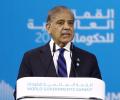
Sharif said that the US president had shown beyond any doubt that "he is a man for peace... and beneficial business deals".

Pakistan Muslim League-Nawaz (PML-N) president Sharif, 70, and Pakistan Tehreek-i-Insaf (PTI) vice-chairman and former foreign minister Shah Mahmood Qureshi on Sunday filed their nomination papers for the post.
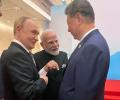
'One Chinese interlocutor said India should realise that "China can do without India, but India could not do without China", pointing to its inability to do without Chinese intermediates and components,' former foreign secretary Shyam Saran discovers on a visit to China.
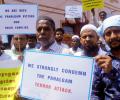
Pakistan Prime Minister Shehbaz Sharif has called on "brotherly" countries, including Saudi Arabia, to urge India to de-escalate tensions after the Pahalgam terror attack that killed 26 people. Sharif met with ambassadors from Saudi Arabia, the UAE, and Kuwait, reiterating Pakistan's commitment to peace in South Asia. He rejected India's accusations linking Pakistan to the attack, emphasizing Pakistan's own history as a victim of terrorism. The meeting comes amidst heightened tensions between the two countries.
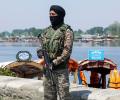
The United Nations Secretary-General, Antonio Guterres, has called for de-escalation between India and Pakistan, expressing deep concern over rising tensions following a terrorist attack in Jammu and Kashmir. Guterres reiterated his condemnation of the attack and urged both sides to avoid a confrontation, which he described as catastrophic. The Secretary-General has also offered his good offices to support de-escalation efforts. The President of the UN General Assembly, Philemon Yang, has also expressed concern over the escalating violence and called for a resolution through diplomatic means. Meanwhile, Pakistan has denied any involvement in the attack and reiterated its commitment to fighting terrorism.
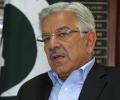
Regarding the possibility of talks, the minister said he was not aware of any such potential engagements.
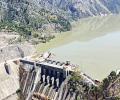
Pakistan has halted the construction of contentious canals in Punjab province after India suspended the Indus Waters Treaty following a deadly terrorist attack in Kashmir. The decision to suspend the canals project was made after Prime Minister Shehbaz Sharif met with PPP chairman Bilawal Bhutto-Zardari and agreed to address the concerns of Sindh province, where the project had sparked protests. The canals project, aimed at irrigating the desert region in Punjab, was seen as a threat to water resources in Sindh. Both sides have agreed to seek consensus on the issue in the Council of Common Interests (CCI), a high-powered inter-provincial body. Meanwhile, Pakistan has reiterated the importance of the Indus Water Treaty for its water security and economy, and condemned India's move to suspend it.

A senior leader of the ruling Pakistan Muslim League-Nawaz (PML-N) on Wednesday claimed that the military operation against India was designed under the supervision of the party president Nawaz Sharif.
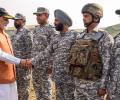
With United States President Donald Trump reiterating his claims of brokering a ceasefire between India and Pakistan, the Congress on Wednesday asked what do the 'typically loquacious' Prime Minister Narendra Modi and External Affairs Minister S Jaishankar have to say about this revelation and did they 'mortgage' India's security interests in the face of US 'pressure'.
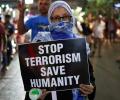
Pakistan has offered to join any neutral and transparent probe into the Pahalgam terrorist attack that killed 26 people. Prime Minister Shehbaz Sharif also warned India against any attempt to stop, reduce or divert the flow of water belonging to Pakistan, saying any such action would be responded to with full force and might. Sharif said Pakistan has always condemned terrorism in all its forms and manifestations and has endured immense loss of over 90,000 casualties and economic losses exceeding USD 600 billion. He also reiterated Pakistan's support for the right of self-determination of the Kashmiri people.

Shehbaz Sharif, the joint opposition's candidate for the post of prime minister, on Sunday vowed that the new government in Pakistan want to 'move forward' and not indulge in 'politics of revenge'.
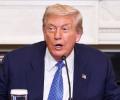
If the US' renewed closeness with Pakistan ends up strengthening Pakistan's military, it will clearly show that Washington no longer wants a strong India and could be ready to let China dominate Asia, notes Colonel Anil A Athale (retd).

The recent conflict between India and Pakistan was among the issues figured during a phone call between Russian President Vladimir Putin and US President Donald Trump, according to a Kremlin aide.
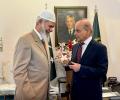
Naik arrived in Pakistan at the invitation of the government on a month-long visit during which he will deliver lectures in major cities, including Karachi, Islamabad and Lahore.
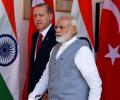
India-Turkiye ties are strained over Ankara's Islamabad tilt, its arms links with Pakistan, and fallout from the Pahalgam terror attack.
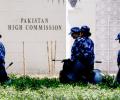
Pakistan has expressed condolences over the deaths of tourists in a terror attack in Pahalgam, Jammu and Kashmir, that killed 26 people. The Foreign Office spokesperson said Pakistan is concerned at the loss of tourists' lives and wished the injured a speedy recovery. The attack, claimed by The Resistance Front (TRF), a proxy of the banned Pakistan-based Lashkar-e-Taiba (LeT), is the deadliest in the Valley since the Pulwama strike in 2019.
Speculation swirls in Pakistan regarding potential changes in the political landscape, fueled by rumors of the army chief's possible presidential aspirations and discussions between top civilian and military leaders.
US Secretary of State Marco Rubio spoke separately with External Affairs Minister S Jaishankar and Pakistani Deputy Prime Minister and Foreign Minister Ishaq Dar, State Department Spokesperson Tammy Bruce said in a statement early Saturday.

US Secretary of State Marco Rubio on Thursday spoke separately with External Affairs Minister S Jaishankar and Pakistani Prime Minister Muhammad Shehbaz Sharif, emphasising the need for de-escalation and reiterated his calls for Pakistan to take concrete steps to end any support for terrorist groups.
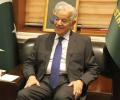
Last week, Information Minister Atta Tarar had said that 24-36 hours were important, fearing a possible strike by India. However, the time passed and there was no action by India.

Former spinner Danish Kaneria suggested that Pakistan has a role in the Pahalgam terror attack in India which led to 26 deaths.
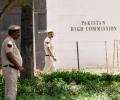
Pakistan is holding a high-level security meeting to formulate a response to India's suspension of the Indus Water Treaty and downgrading of diplomatic ties. The meeting, convened by Prime Minister Shehbaz Sharif, will include the National Security Committee, three services chiefs, and key ministers. The move comes after India blamed Pakistan for a terror attack in Pahalgam, which Pakistan has denied. Diplomatic observers warn that the escalation could further strain relations between the two countries.
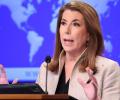
The United States stands strong with India against terrorism and Prime Minister Narendra Modi 'has our full support', the State Department said underlining that Secretary of State Marco Rubio urges India and Pakistan to work towards a responsible resolution that maintains long-term peace and regional stability in South Asia.

Trump's method are more destabilising than his policy. So, a good idea these couple of years is to sip Kool-Aid, and savour the joys of Trumplomacy, asserts Shekhar Gupta.
Since the Pahalgam terrorist attack, China, Pakistan's "ironclad ally", while condemning it, has called for restraint, besides a fair and swift investigation into the attack.
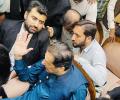
The Islamabad high court is set to hear the petitions requesting the suspension of sentences to Khan and his wife Bushra Bibi in the 190 million Pound Al-Qadir Trust case on June 11.
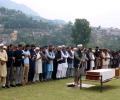
In trying to portray a globally sanctioned terrorist as a 'common man', Pakistan was exposed when its top official publically outed crucial details about Hafiz Abdul Rauf, including his national identity number which matched details in the database of the United States sanction list of terrorists.

Iranian Foreign Minister Abbas Araghchi visited Pakistan and called on both India and Pakistan to "exercise restraint" amid rising tensions between the two countries following the Pahalgam terror attack. Araghchi, who is scheduled to travel to India on Thursday, emphasized the importance of easing tensions and preventing further escalation. During his talks with Pakistani officials, Araghchi and Pakistani Foreign Minister Bilawal Bhutto Zardari reaffirmed their commitment to strong Pakistan-Iran ties and agreed to boost cooperation in trade, energy, and connectivity. Both sides also exchanged views on the situation in South Asia and the US-Iran talks, while agreeing that complex regional issues could be resolved through diplomacy and negotiations.
Prime Minister Shehbaz Sharif thanked US President Donald Trump for acknowledging Pakistan's role in counter-terrorism efforts after the country arrested a wanted terrorist. Trump thanked the Pakistani government for helping arrest "Mohammad Shareefullah", also known as Jafar, who supported and conducted activities on behalf of ISIS-K in support of multiple lethal attacks, including the Abbey Gate attack in 2021. Sharif said the terrorist, an Afghan national, had been apprehended in an operation along the border with Afghanistan.
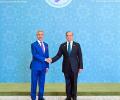
Pakistan Prime Minister Shehbaz Sharif said his country wants to resolve all issues, including Kashmir, with India through talks. He reiterated his "unwavering " support for the Kashmiri people during a speech in Muzaffarabad on the occasion of "Kashmir Solidarity Day. "

Jailed former Pakistani Prime Minister Imran Khan has called for a dialogue with the military establishment, saying the country is currently governed by "jungle law." Khan, who has been in jail since August 2023, also said that rumors of a deal being made with him are entirely false. He criticized the government's handling of the economy, terrorism, and India's alleged attacks, and warned that Pakistan's moral and constitutional framework has been destroyed.
Pakistan's Foreign Minister Ishaq Dar has called for a 'composite dialogue' with India to address the contentious issues between the two sides.
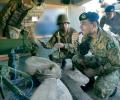
'It could take the form of sporadic LoC violation through heavy artillery and mortar fire, focusing on border villages where the Hindu Dogra population is predominant.'
Sources have revealed that at least five hardcore terrorists affiliated with banned terror outfits Lashkar-e-Taiba (LeT) and Jaish-e-Mohammed (JeM) were killed in Indian strikes in Pakistan on May 7th. The strikes targeted nine terror sites in Pakistan and Pakistan-occupied Kashmir. Among the dead were Mudassar Khadian Khas, a LeT leader, and Hafiz Muhammed Jameel, the brother of JeM founder Maulana Masood Azhar. Other notable casualties included Mohammad Yusuf Azhar, a brother-in-law of Masood Azhar, and Khalid alias Abu Akasha, a LeT operative. The Pakistani military and government officials were present at the funerals of the slain terrorists.
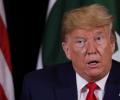
Pakistan's Ambassador to the US, Rizwan Saeed Sheikh, has urged President Donald Trump to help ease tensions with India, highlighting the Kashmir issue as a "flash point" in nuclear terms. He believes that the US should take a more comprehensive and sustained approach to address the situation rather than just immediate de-escalatory measures.

'I am pleased to announce the Governments of India and Pakistan have agreed to an immediate ceasefire and to start talks on a broad set of issues at a neutral site.'
S&P Global Ratings on Thursday said the hostilities between India and Pakistan heighten risks to the credit metrics of both countries, and any escalation in clashes would put downward pressure on sovereign credit support.
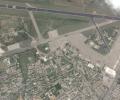
Pakistan's Prime Minister Shehbaz Sharif admitted that India's ballistic missiles hit Nur Khan Airbase and other sites on May 10, a rare acknowledgement that contradicts Pakistan's usual stance of denial when it comes to Indian military action.
'Pakistan's army has got a streak of democracy. It is more democratic than the country.'
India needs to be technologically and militarily prepared to defend itself from both Pakistan and China, alerts Ramesh Menon.
 © 2026 Rediff.com - Investor Information - Advertise with us - Disclaimer - Privacy Policy - Sitemap - Feedback - About us - Terms of use - Grievances