
'Prime minister is expected to hold some bilateral meetings on the sidelines of the SCO summit.'
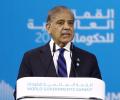
Pakistan Prime Minister Shehbaz Sharif said on Tuesday that his country respects Russia's relations with India, as he called for strengthening Islamabad's ties with Moscow during his talks with Russian President Vladimir Putin in Beijing.
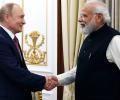
Russian President Vladimir Putin is expected to visit India around December 5 to hold annual summit talks with Prime Minister Narendra Modi to further solidify bilateral strategic ties.
The US State Department has expressed concerns over India's trade imbalance with Washington and its purchase of Russian oil, emphasizing that President Trump has been clear with New Delhi on these issues.

Prime Minister Narendra Modi raised concerns about cross-border terrorism with Chinese President Xi Jinping, advocating for India-China cooperation to combat the threat. The discussion occurred during the SCO Summit amidst efforts to rebuild bilateral relations after a border standoff.
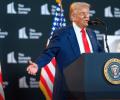
Former White House official John Bolton suggests that tariffs imposed on India by the US for purchasing Russian oil may have unintended consequences, potentially driving New Delhi closer to Beijing and Moscow.
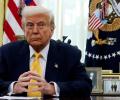
Trump also said he is "very disappointed" that India would be buying "so much oil" from Russia.

Democratic Senator Jeanne Shaheen's comments came amid a major downturn between New Delhi and Washington after US President Donald Trump doubled tariffs on Indian goods to a whopping 50 percent, including a 25 percent additional duties for India's purchase of Russian crude oil.

India has announced the resumption of tourist visas for Chinese nationals, signaling an effort to improve bilateral relations following border tensions.

Describing the visit as "productive" in a post on X, the PM said he emphasised India's position on key global issues during his engagements.

Prime Minister Narendra Modi and French President Emmanuel Macron discussed the Ukraine conflict and bilateral relations, reaffirming their commitment to global peace and stability.

Modi was received at the venue by Chinese President Xi Jinping and First Lady Peng Liyuan. On arrival, the Prime Minister exchanged greetings with the Chinese President before joining other leaders for the customary family photo session.

The Congress party has criticized the Modi government's approach to China following Prime Minister Narendra Modi's meeting with Chinese President Xi Jinping, questioning whether the government is legitimizing Chinese aggression.

Kremlin spokesman Dmitry Peskov said the two leaders had a tete-a-tete in the car for about an hour.

Pakistan's Army Chief Field Marshal Asim Munir met with Chinese President Xi Jinping, along with Pakistani Prime Minister Shehbaz Sharif, to discuss bilateral and regional cooperation. The meeting occurred during Sharif's visit to China for the Shanghai Cooperation Organisation (SCO) summit.

Ukrainian President Volodymyr Zelenskyy has backed the imposition of tariffs on countries maintaining economic ties with Russia, saying it is the 'right idea' in the face of continued aggression by Moscow.
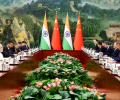
Chinese President Xi Jinping told Prime Minister Narendra Modi that India and China should approach their relations from a "strategic" and "long-term perspective" during their talks in Tianjin. Xi also emphasized upholding multilateralism and working towards a multipolar world.

Prime Minister Narendra Modi is visiting Japan and China to further national interests and build cooperation for regional and global peace.
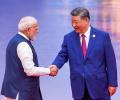
'When the Galwan incident took place, that was a big break in the trust factor between India and China.'

Lavrov, who addressed the UN General Assembly shortly before External Affairs Minister S Jaishankar's speech at the high-level General Debate, said India and Russia share a "particularly privileged strategic partnership".
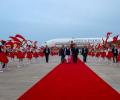
Prime Minister Narendra Modi arrived in China for the Shanghai Cooperation Organisation (SCO) summit. His meeting with President Xi Jinping is significant given global economic concerns.
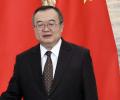
The 61-year-old senior diplomat was taken away for questioning in late July after returning to Beijing from an overseas work trip, the paper reported, quoting people familiar with the matter.
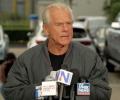
Ahead of trade talks between Indian and United States officials in Delhi, White House trade advisor Peter Navarro said India, which has the 'highest tariffs' of any major country, is 'coming to the table'.
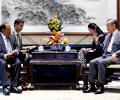
Chinese Foreign Minister Wang Yi will visit India for border talks with NSA Ajit Doval, ahead of PM Modi's visit to China for the SCO summit. The visit aims to improve bilateral ties after recent tensions.

China on Friday said the Shanghai Cooperation Organisation (SCO) summit to be held in Tianjin later this month will be the largest in the bloc's history, with 20 world leaders, including Prime Minister Narendra Modi, attending it.

India and China have reached new common understandings agreeing to conduct normalised management and control of the boundary during Foreign Minister Wang Yi's visit to New Delhi, Beijing said.
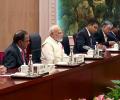
India is committed to taking forward its ties with China based on mutual trust, respect and sensitivity, Prime Minister Narendra Modi told Chinese President Xi Jinping as the two leaders held wide-ranging talks to reset the bilateral relations.
India has voiced regret over the Ukraine conflict's 'collateral consequences', including prices of fuel, saying countries of the Global South have been left to fend for themselves, as Delhi underscored that diplomatic efforts hold the promise to end the war and bring lasting peace.
External Affairs Minister S Jaishankar is scheduled to visit China for an SCO conclave, marking a significant step in easing tensions after the 2020 border standoff. Discussions on the boundary dispute are also anticipated.

Prime Minister Narendra Modi on Monday presented India's strong stance against terrorism, calling out the 'some countries' for their open support of terrorism and reaffirming that such 'double standards' are not acceptable.
Chinese envoy Xu Feihong stated that China opposes the US imposing tariffs on India, amidst a thaw in Sino-India relations and concerns over global trade disruptions.

National Security Advisor Ajit Doval stated that India-China relations have shown an "upward trend" in the past nine months, with peace prevailing along the Line of Actual Control (LAC). This statement was made during talks with Chinese Foreign Minister Wang Yi on the boundary issue, ahead of Prime Minister Modi's visit to China for the SCO summit.
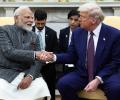
Prime Minister Narendra Modi on Saturday 'deeply' appreciated United States President Donald Trump's 'positive assessment' of the India-US partnership after the American leader hailed the 'special' relationship between the two nations -- remarks seen as an attempt to check the downturn in the ties.
Industry leaders urge India to pursue diplomatic talks with the US, strengthen manufacturing, and consider China ties to gain leverage against tariff pressures.

Chinese Foreign Minister Wang Yi said that it is imperative for the two sides to view each other as partners and opportunities rather than rivals or threats, and invest their valuable resources in development and revitalisation.

The Bloomberg report suggests that this backchannel communication from President Xi has laid the groundwork for a broader thaw in relations. This overture has since translated into a series of tangible diplomatic actions leading up to the upcoming Shanghai Cooperation Organisation (SCO) summit.

Prime Minister Narendra Modi is expected to visit Japan and China starting around August 29. The visit to China would be his first after the Ladakh border standoff.
India and China are expected to discuss new confidence-building measures for durable peace and tranquillity along their contested border during Chinese Foreign Minister Wang Yi's two-day visit to India. The visit is seen as an effort to rebuild relations after the Galwan Valley clashes.
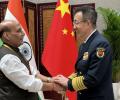
China has called Tibet-related issues a 'thorn' in India-China bilateral relations and a 'burden' for New Delhi, ahead of External Affairs Minister S Jaishankar's visit to China.

Prime Minister Narendra Modi condemned the violation of Qatar's sovereignty following Israeli air strikes on Doha, targeting Hamas leaders. He conveyed India's deep concern to the Emir of Qatar and reiterated support for peace and stability in the region.
