

'When the Galwan incident took place, that was a big break in the trust factor between India and China.'
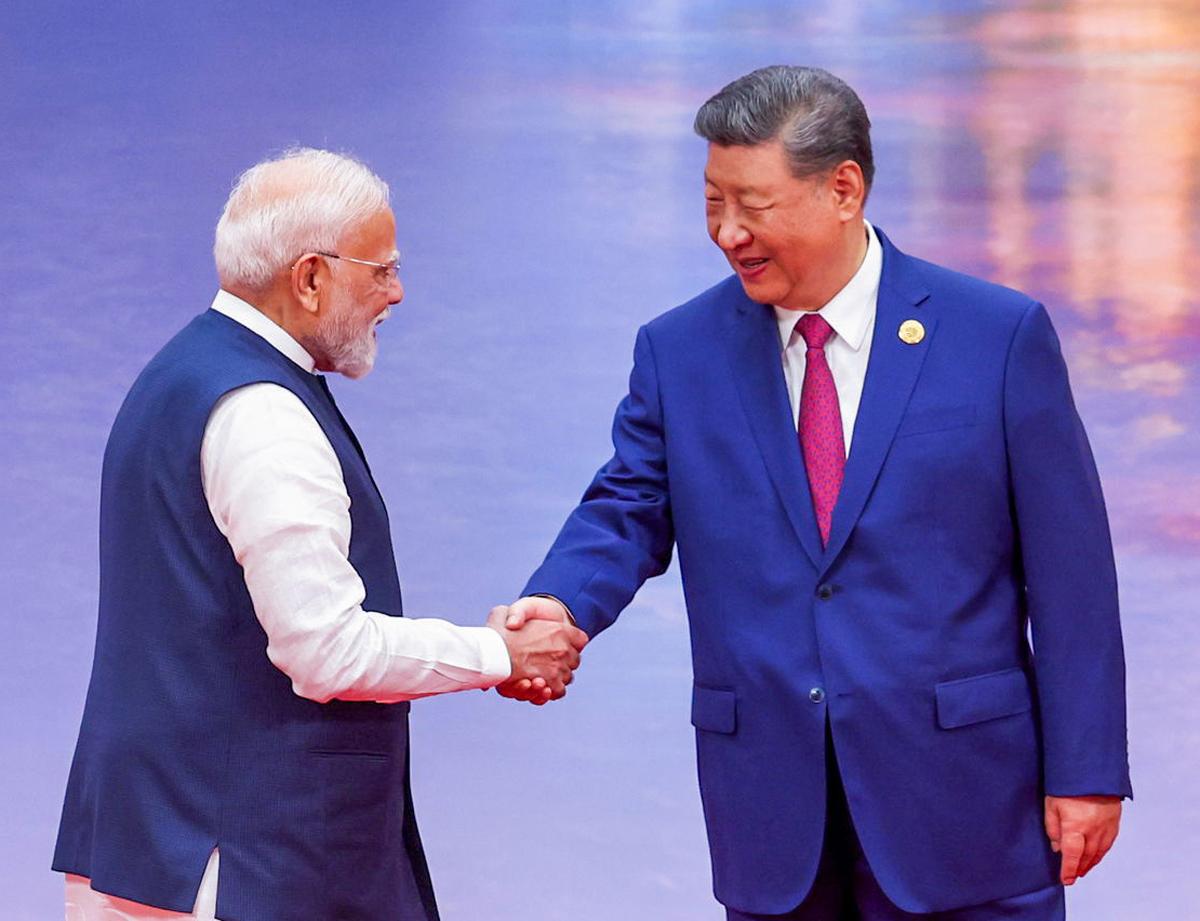
Former Indian diplomat Veena Sikri has emphasised that peace and tranquillity along the India-China border remain fundamental to any meaningful progress in bilateral relations between the two nations, asserting that the trust deficit created by the 2020 Galwan incident has cast a long shadow over the diplomatic engagement.
Speaking to ANI, Ambassador Sikri noted that unless there is concrete progress in restoring stability at the border, other aspects of the bilateral relationship, including trade, regional cooperation, and people-to-people ties, cannot move forward.
"After 2020, when the Galwan incident took place, that was a big break in the trust factor between India and China, because China, by the action they took in Galwan, have broken the trust..." Ambassador Sikri pointed out.
"And after that, there's been a complete break in the trust factor... The peace and tranquillity at the border is important. Without that, no other aspect of the relationship can progress," she stated.
Her remarks come in the context of Prime Minister Narendra Modi's meeting with Chinese President Xi Jinping on the sidelines of the Shanghai Cooperation Organisation summit in Tianjin on Sunday, where Modi underlined the importance of peace and tranquillity in the border areas for the continued development of bilateral relations.
"If indeed the disengagement process is agreed upon and is successful, then I think it is a good sign. Then certainly other aspects of the relationship can develop," Ambassador Sikri said, adding that the Tianjin meeting between the two leaders is "very important and significant" and holds the potential to pave the way for further progress, but only if followed by concrete actions.
"But again, we have to remember that for us, peace and tranquillity at the border are very important. So, there have to be concrete steps, concrete decisions, and concrete agreements on that -- peace and tranquillity at the border," she added.
She also cautioned that the Chinese president should not be involved in the third-party mediation in India's bilateral issues with Pakistan, referring to earlier claims by US President Donald Trump.
"President Xi Jinping needs to realise that between India and Pakistan, at least for us, it is absolutely vital to understand that we do not accept any third-party mediation. And if at all China is going to start saying the same thing that President Trump has been saying, that I can mediate between Pakistan and India, then that will be a real problem," she said.
Speaking on the broader geopolitical context, Ambassador Sikri remarked that "the elephant and the dragon can dance" referring to India and China, but only if mutual sensitivities are acknowledged and respected.
On the trilateral Russia-India-China equation, the former diplomat noted that Moscow seems to have a deeper understanding of India's core concerns, especially in relation to Pakistan.
"About Russia, India, and China, Russia has a greater understanding of India's sensitivities, particularly as regards Pakistan and other issues."









 © 2026