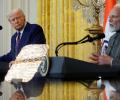
India responds to US President Trump's claim that PM Modi assured him of halting Russian oil imports, stating it is diversifying energy sources to meet market conditions and safeguard consumer interests.

United States President Donald Trump on Wednesday said Prime Minister Narendra Modi had assured him that India would stop purchasing oil from Russia, describing it as "a big step" in efforts to increase global pressure on Moscow.

India has expressed its expectations for Saudi Arabia to consider 'mutual interests and sensitivities' in their bilateral strategic partnership, following Riyadh's strategic defence pact with Pakistan.
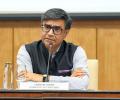
Foreign Secretary Vikram Misri, who faced trolling on social media in the wake of India and Pakistan reaching an understanding on May 10 to halt all military actions, has received support from veteran diplomat Nirupama Menon Rao, a body of Indian diplomats and a host of politicians from several parties.

President Putin and Prime Minister Modi greeted each other with a warm hug, after which they walked towards the stage for a family photo of the SCO members.
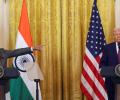
Prime Minister Narendra Modi spoke with President Donald Trump and set the record straight that India had paused strikes on Pakistan during Operation Sindoor following a request from Islamabad and not due to mediation or offer of a trade deal by the United States.
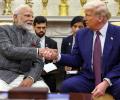
Amid trade tensions between Delhi and Washington, the NYT article gives an account of how relations between Trump and Modi "unraveled" after Trump's repeated claims of solving the four-day conflict in May between India and Pakistan, an assertion denied by India.
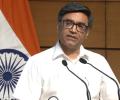
India carried out missile strikes on terror targets in Pakistan and Pakistan-Occupied Kashmir, including the Jaish-e-Mohammad stronghold of Bahawalpur and Lashkar-e-Taiba's base in Muridke, after the Pahalgam attack that killed 26 civilians. The Foreign Secretary said the actions were measured, non-escalatory, proportionate and responsible.

India and Pakistan have agreed to a ceasefire on all fronts with effect from 5 pm on Saturday, following talks mediated by the US. The agreement was announced by Foreign Secretary Vikram Misri, who said that the DGMOs of both countries will speak again on May 12 at 1200 hours.

India's Foreign Secretary Vikram Misri said on Thursday that the choice of de-escalation is with Pakistan, as India only responded to the April 22 Pahalgam terror attack, which killed 26 people. He added that Pakistan has been escalating the situation with cross-border terrorism against India for decades.

Officials said the government-to-government engagement between the two countries on all other issues remains normal, but conceded rough spots over trade that need ironing out.
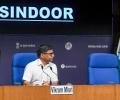
Shiv Sena (UBT) leader Priyanka Chaturvedi on Wednesday alluded to private companies promoting patriotism on one side while profiting off the India-Pakistan cricket matches, as the Army's Colonel Sofiya Qureshi and Air Force's Wing Commander Vyomika Singh are set to appear on an episode of Kaun Banega Crorepati (KBC).
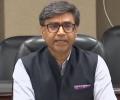
India has accused Pakistan of breaching an understanding reached earlier on Saturday to stop military actions. Foreign Secretary Vikram Misri said there have been repeated violations of the understanding since the evening, and that the Indian armed forces are giving an appropriate response.

Japan is expected to increase its investment target in India from the earlier 5 trillion yen ($34 billion) to almost 10 trillion yen.

The Indian and Pakistani militaries targeted each other's installations using missiles in the last over 12 hours, further escalating the already tense conflict situation.
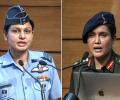
India conducted precision strikes on nine terror targets in Pakistan and Pakistan-Occupied Kashmir, targeting terrorist infrastructure to deter further attacks. The operation, codenamed 'Operation Sindoor', was detailed by two women military officers, Col Sofiya Qureshi and Wing Commander Vyomika Singh, at a press briefing in New Delhi. The officers highlighted the precise nature of the strikes, emphasizing the use of "niche technology weapons" to ensure no collateral damage. The briefing showcased India's military prowess and the growing role of women in the armed forces.
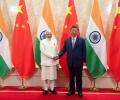
Prime Minister Narendra Modi and Chinese President Xi Jinping held bilateral talks focusing on economic ties and global stability amid trade tensions and the aftermath of the Ladakh border row.
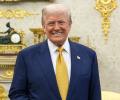
Trump, who has repeatedly said that he stopped the conflict between India and Pakistan through trade, last Friday said for the first time that "five jets were shot down" during the fighting.

Earlier, at 4:39 am, the district collector had also advised residents to keep lights off and avoid going near windows, roads, balconies, or terraces.
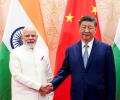
'What's currently underway is not a 'reset'.' 'What needs to be arrived at is a new balance.'
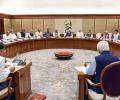
India has reached out to key global powers, including members of the UN Security Council, and apprised them about the reasons behind its military strikes on nine terror targets in Pakistan and Pakistan-occupied-Kashmir in retaliation for the Pahalgam terror attack. New Delhi also conveyed to the countries that it will retaliate if Islamabad escalates the already tense situation.
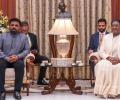
The two sides are also likely to firm up a currency swap framework and seal several other agreements including one on debt restructuring following talks between Modi and Sri Lankan President Anura Kumara Disanayaka on April 5, people familiar with the matter said.

India and China reviewed the situation along the Line of Actual Control (LAC) in eastern Ladakh and prepared for the next Special Representatives' dialogue on the boundary question.
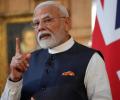
Prime Minister Narendra Modi and his British counterpart Keir Starmer discussed the need to prevent the misuse of democratic freedoms by extremist ideologies. They also addressed terrorism and trade ties.
This came after a media report claimed that Col Qureshi and Wing Commander Singh, who led India's press briefings on Operation Sindoor, will be the faces of an ambitious women-centric campaign to be rolled out by the BJP on the completion of 11 years of the Modi government on June 9.

India on Thursday said it expects the United States to consider visa applications of Indian students on merit amid growing concerns over the Trump administration halting new student visa interviews.

The MEA said that Pakistan had been stonewalling India's requests for a government-to-government negotiation over the treaty due to changes in the ground situation since it was signed.

'If Washington has to balance Chinese power, she will have to turn to the third biggest power in the world which is India.' 'The United States and India will have to work together in order to keep Chinese ambitions in check.'

Prime Minister Narendra Modi on Saturday graced the 60th Independence Day celebrations of the Maldives as the guest of honour, signalling a renewed warmth in bilateral ties after a spell of unease.
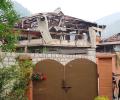
Markaz Taiba of Lashkar-e-Taiba (LeT) in Pakistan's Muridke, one of the nine terror camps struck by the Indian armed forces on Wednesday, is a site where terrorists including Ajmal Kasab involved in the 2008 Mumbai attack were trained, a senior military official said.
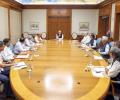
The Cabinet Committee on Security (CCS) met on Wednesday under the chairmanship of Prime Minister Narendra Modi and firmed up the responses to the terror attack.
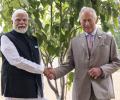
Prime Minister Narendra Modi presented a tree sapling to King Charles III as part of his 'Ek Ped Maa Ke Naam' environmental initiative during their meeting at Sandringham Estate.

Escalating its tensions with India, Pakistan on Thursday targeted Jammu with loitering munitions and the Indian air defence guns are firing back. A complete blackout has been enforced in Jammu city.

India has carried out strikes against nine terrorist infrastructure in Pakistan and Pakistan-occupied Kashmir, Defence Minister Rajnath Singh said on Wednesday. The strikes were in retaliation to the Pahalgam terror attack in which 26 civilians were killed. Singh said the strikes were precise and destroyed the targets set under Operation Sindoor.
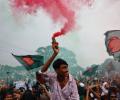
'Militants are taking over the administration. Fundamentalists have been released from jail.'
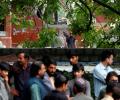
A top American military commander has said that the US is watching the situation very closely after Indian military strikes on terror targets in PoK and Pakistan's Punjab province. The United States Indo-Pacific Command (USINDOPACOM) is one of six geographic Unified Combatant Commands of the United States Armed Forces, headquartered in Hawaii. Earlier on Wednesday, US President Donald Trump said he wants India and Pakistan to stop the conflict, saying if he can do anything to help, he will be there. Foreign Secretary Vikram Misri told reporters in New Delhi on Wednesday that the Indian military carried out a measured, non-escalatory, proportionate, and responsible strike to dismantle terrorist infrastructure in Pakistan to deter and to pre-empt any further terrorist strikes.
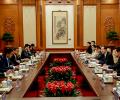
'We remain in touch with the Chinese side, in Beijing as well as in Delhi, to bring predictability in the supply chain.'

The closed-door luncheon meeting came amid escalating tensions between Israel and Iran with Trump exploring Washington's possible involvement.
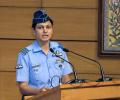
Wing Commander Vyomika Singh, an accomplished helicopter pilot in the Indian Air Force, was chosen to brief the nation about India's 'Operation Sindoor' strikes on Pakistan. She has flown a variety of aircraft and taken part in rescue operations in extreme conditions. Vyomika, who has logged over 2,500 flying hours, has operated helicopters across challenging terrains, from the high-altitude sectors in Jammu and Kashmir to the remote areas in the Northeast. She led a rescue operation in Arunachal Pradesh in 2020, flying in extreme conditions to evacuate civilians.
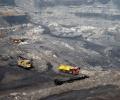
The 17 rare earth elements that are at the centre of the current crisis are critical components of everyday products -- from cars to jet engines to electronics like smartphones and flat-screen TVs.
 © 2026 Rediff.com - Advertise with us - Disclaimer - Privacy Policy - Sitemap - Feedback - About us - Terms of use - Grievances