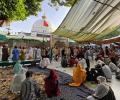
A local court in Ajmer has ordered notices to be issued to three parties in a civil suit claiming the existence of a Shiva temple within the dargah of Sufi saint Moinuddin Chishti. The suit, filed in September, seeks directions to resume worship at the alleged temple. The court has issued notices to the Ajmer Dargah Committee, Ministry of Minority Affairs, and the Archaeological Survey of India. The next hearing is scheduled for December 20.
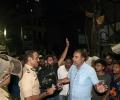
Before the violence and rioting that erupted in Nagpur on Monday, March 17, over Mughal emperor Aurangzeb's tomb came provocative statements from various political leaders.

On Friday, a four-member team of the ASI surveyed the recently-discovered Shri Kartik Mahadev temple, five pilgrimage sites and 19 'koops' (wells).
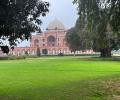
The cultural richness that began from a narrow bank of the Yamuna has continued for over 7 centuries. And you literally go underground for as little at Rs 50 to see it!
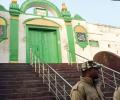
The Uttar Pradesh government has informed the Supreme Court that the disputed "private well" near the Mughal-era Jama Masjid mosque in Sambhal was situated on public land. The state government said the petitioner failed to disclose there was a well within the boundary walls of the mosque known locally as "yagna koop". The committee, in a spot inspection, found that the well was situated outside the mosque boundary wall, the report said. The report said the state was committed to ensuring peace and harmony in the region and any restraint on the use of such public wells by the community at large may not help in achieving that goal.
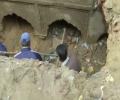
A stepwell, approximately 125 to 150 years old and covering an area of 400 square metres, was unearthed during excavation in the Laxman Ganj area of Chandausi in Sambhal, an official said.
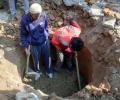
Two damaged idols were found inside the well of the Bhasma Shankar temple in Sambhal, Uttar Pradesh, India, which was reopened last week after being shut for 46 years. The temple, which houses an idol of Lord Hanuman and a Shivling, was reopened on December 13 after authorities stumbled upon the covered structure during an anti-encroachment drive. The idols, a Lakshmi idol and a Parvati idol, were found in the well, which authorities had planned to reopen. The district administration has written to the Archaeological Survey of India for carbon dating of the temple, including the well.

'The irony of this country is that the party in Opposition and the party in power both depend on Muslims.'
A host of weapons, possibly used during the rebellion of 1857, was found by a farmer while working in his field in the district, an official said on Friday.

Hindus consider Bhojshala, an Archaeological Survey of India-protected 11th century monument, to be a temple dedicated to Vagdevi (Goddess Saraswati), while the Muslim community call it Kamal Maula Mosque.
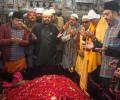
Be it a Hindu, Muslim, Sikh, Christian, Parsi, Buddhist or Jain, everyone is welcome at the dargah, Rijiju said.

The Archaeological Survey of India (ASI) has sought control and management of the Shahi Jama Masjid in Sambhal, Uttar Pradesh, citing its status as a protected heritage structure. The request comes after violence erupted during a court-ordered survey of the mosque, which was linked to a petition claiming that a Harihar temple once stood at the site. The ASI has argued that unauthorized changes to the mosque's structure by the management committee are unlawful and should be restricted. A three-member judicial commission has been formed to probe the violence and is expected to visit Sambhal on Sunday.
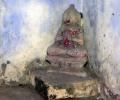
Devotees thronged the Khaggu Sarai area in Sambhal on Tuesday to offer prayers to an idol of Lord Hanuman that was discovered in the Bhasma Shankar temple, reopened last week after being shut for 46 years.
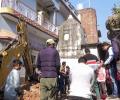
The Bhasma Shankar temple in Sambhal, Uttar Pradesh, has reopened after being locked for 45 years following communal riots. The district administration has requested the Archaeological Survey of India (ASI) to conduct carbon dating of the temple, including a well on the premises. The temple is being guarded round the clock and worshippers have started visiting. The reopening of the temple has been met with gratitude from local residents, who have expressed their desire to reconnect with their heritage.
'While suppression of information is acceptable for the government, the Opposition's efforts at pinning the government and its leaders is labeled anti-national,' points out Nilanjan Mukhopadhyay.
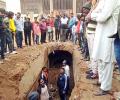
The Supreme Court of India has ordered a status quo on a private well located near the entrance of the Sambhal Jama Masjid, prohibiting any action regarding the well without its permission. The order came in response to a plea by the mosque's management committee, which challenged a lower court order that allowed a survey of the mosque, citing concerns over violence and loss of life during previous surveys. The court also instructed the authorities to file a status report within two weeks.

Hindus offered prayers at the contentious Bhojshala/Kamal Maula Mosque complex in Madhya Pradesh's Dhar district on Tuesday, with a team from the Archaeological Survey of India (ASI) continuing its court-mandated survey.
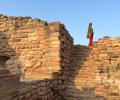
Standing at the edge of Dholavira is witnessing history textbooks crammed in school coming to life. One is suddenly standing face to face with a 4,000-year-old civilisational site that is now but a ruin.
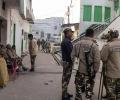
A four-member team from the Archaeological Survey of India (ASI) conducted a survey of the recently-discovered Shri Kartik Mahadev temple, five pilgrimage sites, and 19 wells in Sambhal, Uttar Pradesh, India. The survey followed the discovery of three damaged idols inside a well of the Bhasma Shankar temple, which was reopened after being shut for 46 years. The Shri Kartik Mahadev temple, also known as the Bhasma Shankar temple, was reopened on December 13 after authorities found the covered structure during an anti-encroachment drive. The temple houses an idol of Lord Hanuman and a Shivling and had remained locked since 1978. The district administration has requested carbon dating of the temple, including the well, from the ASI. Meanwhile, the Supreme Court has restrained courts across India from entertaining new lawsuits or passing any orders in pending ones seeking to reclaim religious places, especially mosques and dargahs, until further notice. This action halts proceedings in approximately 18 lawsuits filed by Hindu parties seeking surveys to determine the original religious character of 10 mosques, including the Gyanvapi at Varanasi, the Shahi Idgah Masjid at Mathura, and the Shahi Jama Masjid at Sambhal, where four individuals died in clashes. The Supreme Court will examine the legality, scope, and boundaries of the Places of Worship (Special Provisions) Act, 1991, which prohibits the conversion of places of worship and ensures the preservation of their religious character as it existed on August 15, 1947.

The toll in the clashes between police and protesters opposing a court-ordered survey of a Mughal-era mosque in Sambhal, Uttar Pradesh, rose to four following the death of one more injured person, officials said on Monday.
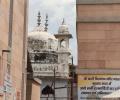
The Supreme Court's 2023 order refusing to stay a scientific survey at the Gyanvapi Mosque complex has sparked claims over several other disputed places of worship across India. This has led to several court cases, including one in Mathura where a survey of the Shahi Idgah Mosque complex was ordered, and another in Ajmer where a claim was made that a Shiva temple existed within the dargah of Sufi saint Moinuddin Chishti. The article also highlights a dispute over the Bhojshala in Madhya Pradesh, which Hindus consider a temple and Muslims consider a mosque. The Supreme Court's order has reignited debates about the Places of Worship (Special Provisions) Act, 1991, which prohibits the change of character of religious places as they existed on August 15, 1947.

A body representing the 'Khadims' of the Ajmer dargah has condemned a plea in a local court that seeks to declare the shrine of Khawaja Gharib Nawaz as a temple, saying right-wing forces were trying to "isolate" Muslims and "disrupt" communal harmony in the country.
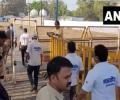
The Archaeological Survey of India (ASI) on Monday submitted its scientific survey report of the disputed Bhojshala-Kamal-Maula mosque complex to the Indore bench of the Madhya Pradesh high court.

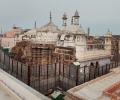
The ASI is carrying out a scientific survey of the Gyanvapi mosque premises, next to Kashi Vishwanath temple here, to determine whether the 17th-century mosque was constructed over a pre-existing structure of a Hindu temple.

Seven FIRs have been lodged in connection with the violence over a court-ordered survey of a Mughal-era mosque in Sambhal, Uttar Pradesh, naming Samajwadi Party MP Zia-ur-Rehman Barq and local SP MLA Iqbal Mehmood's son Sohail Iqbal as accused. Three people were killed and scores of others injured on Sunday as protesters opposing the survey of the Shahi Jama Masjid clashed with police. The district administration has imposed prohibitory orders and barred the entry of outsiders into Sambhal till November 30.

The Anjuman Intezamia Committee Thursday filed a counter-affidavit before the Allahabad HC in the matter seeking a survey of the Wazukhana (or ablution area) by the ASI.

Three people were killed and scores of others, including around 20 security personnel and four personnel of the administration, were injured as protesters opposing a court-ordered survey of a Mughal-era mosque in Sambhal, Uttar Pradesh clashed with police on Sunday.
Jain told reporters that copies of the survey report consisting of 839 pages were made available to the parties concerned by the court late Thursday evening.

A local court in Ajmer has issued notices to the dargah committee, the Ministry of Minority Affairs, and the Archaeological Survey of India on a plea seeking to declare the shrine of Sufi saint Khwaja Moinuddin Chishti a temple. The petition, filed in September, has sparked a heated debate, with politicians and community leaders weighing in on the potentially volatile issue. The dargah committee has declined to comment, but the Anjuman Syed Zadgan, a body representing the caretakers of the dargah, described the petition as a deliberate attempt to fracture society along communal lines. The petition comes just days after four people were killed in Sambhal, Uttar Pradesh, following a local court ordering survey of a Mughal-era shrine. The Places of Worship (Special Provisions) Act, 1991, which fixed August 15, 1947, as the cut-off date for status quo on the character of religious places, is at the centre of much of the debate. Several politicians, including Union minister Giriraj Singh and PDP chief Mehbooba Mufti, have weighed in on the issue. The Communist Party of India (Marxist) has called the civil court's decision to entertain the petition unwarranted and has asked the Supreme Court to immediately intervene.

The United States has handed over to India 297 antiquities, which were smuggled out of the country, during the ongoing visit of Prime Minister Narendra Modi, an official statement said on Sunday.
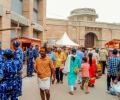
The Archaeological Survey of India (ASI) team surveyed the northern wall, the dome and basements of the Gyanvapi complex here on Tuesday, the fourth day of the court-mandated exercise to determine if the mosque was built over a temple.
The court fixed December 11 as the next date of hearing in the matter, Yadav said.
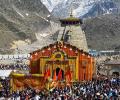
The Badrinath-Kedarnath Temple Committee on Wednesday dismissed Jyotirmath Shankaracharya Swami Avimukteshwaranand's allegations that 228 kg gold bought for lining the Kedarnath temple's internal walls is missing, and asked him to approach authorities if he had any evidence.
The ASI, which was to submit the report of the survey by October 6, now has time till November 6 to do so.

The ASI told the court on November 2 that it might take some more time to compile the report, along with the details of the equipment used in the survey work, following which additional time till November 17 was granted for the submission of the document.

Days after the district court ruled that a priest can perform prayers in a cellar of the Gyanvapi mosque in Varanasi, a petitioner on Monday filled a plea seeking an ASI survey of all other closed basements in the complex.

The Archaeological Survey of India on Sunday conducted scientific tests of the area under the three domes of Gyanvapi mosque in Varanasi on the third day of the scientific survey to determine if the mosque was built over a temple.
However, a division bench of Justices SA Dharmadhikari and Gajendra Singh made it clear the ASI won't be given any more time at the end of this 8-week period.
A bench of Chief Justice DY Chandrachud and Justices JB Pardiwala and Manoj Misra will hear the plea of Anjuman Intezamia Masajid Committee.
The security has been stepped up in view of the Friday prayers to be offered by the Muslim community members at the site, a police official said.
 © 2026 Rediff.com - Investor Information - Advertise with us - Disclaimer - Privacy Policy - Sitemap - Feedback - About us - Terms of use - Grievances