
Talks between the Union home ministry and Ladakh leaders ended without a breakthrough in Leh, with the two sides expressing differences over a draft proposal on constitutional safeguards and a legislature for the Union Territory.

The Supreme Court has directed the Centre to explore a statutory framework to ensure social media intermediaries comply with Indian laws regarding minors, particularly concerning their inability to independently enter into contracts. The court highlighted the need for safeguards to protect children from potential harms on digital platforms, including exploitation and misuse of data, and asked the Solicitor General to examine incorporating these requirements into intermediary rules.

The Supreme Court has expressed concern to the Election Commission regarding the "almost mechanical" issuance of notices under the Special Intensive Revision (SIR) exercise in Delhi, urging additional safeguards and clarification on "logical discrepancy" criteria. The court is hearing a petition challenging the EC's process, which has seen millions of voters receive notices, raising practical difficulties and concerns about potential disenfranchisement.

The Union Cabinet has approved the establishment of a High Court bench in Ladakh, a move lauded by Home Minister Amit Shah and Lt Governor Vinai Kumar Saxena as a significant step towards improving access to justice and ensuring the all-round development of the Union Territory.

The Supreme Court has sought responses from the Centre and others regarding a plea challenging the validity of 'Talaq-e-Hasan' and other forms of unilateral divorce under Muslim personal law. The petition also seeks uniform procedural safeguards, economic protection for divorced women, and questions the constitutionality of Section 2 of the Muslim Personal Law (Shariat) Application Act, 1937, as well as the lack of safeguards against polygamy.

Climate activist Sonam Wangchuk has demanded the resignation of Union Home Minister Amit Shah, holding him responsible for the deaths of four people during protests in Leh last year. Speaking on the first anniversary of the violence, Wangchuk expressed fear for his life, alleging threats, and called for the judicial inquiry report into the incident to be made public. He criticised the use of automatic weapons against protesters and questioned the branding of local youth as "anti-national," linking the violence to unfulfilled promises regarding Ladakh's constitutional safeguards.
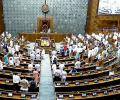
The dramatic postponement came while members were voting on the committee's five principal recommendations, making it an unprecedented moment in the functioning of a parliamentary committee.

The Punjab and Haryana High Court has directed the suspended Boxing Federation of India (BFI) secretary general, Pramod Kumar, to postpone a General Body meeting until November 13. This decision follows a petition by BFI president Ajay Singh, who challenged a no-confidence motion against him, arguing the meeting was unlawfully convened as per the BFI constitution.

The Supreme Court-appointed High Powered Enquiry Committee (HPEC) will hold a sitting on October 29 to hear affected persons and record evidence regarding alleged violence, including pellet gun use and harassment of female protesters, during the July Jantar Mantar protests. The five-member panel, chaired by Justice R Subhash Reddy, was formed after petitions alleged police excesses and counter-allegations of violence against police. An online portal is also available for submissions.

The Supreme Court has questioned the amended constitution of the Shiv Sena, observing that it appeared to have made the party 'virtually a one-person structure' and raising concerns about democratic functioning within political parties.

Supreme Court Justice Vikram Nath stated that eligibility and merit, not personal identity, should be the sole criteria for selection in public service. Speaking at the UPPSC premises, he highlighted the constitutional safeguards for impartiality in public service commissions and the far-reaching impact of their selections. His visit marked a historic first for the commission.

Shiv Sena (UBT) leader Sanjay Raut stated on Friday that he is prepared to apologise to the Supreme Court if his remarks were deemed inappropriate, emphasising his party's respect for the judiciary. His comments followed observations by Chief Justice of India Surya Kant regarding attempts to browbeat the judiciary. Raut also linked his apology to demands for justice concerning alleged electoral roll irregularities and the delayed hearing on the Shiv Sena name and symbol dispute.

Congress leader Rahul Gandhi has urged people to join the opposition INDIA bloc's 'Chalo Dilli' march on November 1, aimed at saving democracy and protecting the Constitution. He assured participants not to fear police action. Other Congress leaders also highlighted alleged electoral irregularities and announced a "public impeachment" of Chief Election Commissioner Gyanesh Kumar.

CPI(M) leader John Brittas was allegedly manhandled and injured by Delhi Police personnel during a protest against Chief Election Commissioner Gyanesh Kumar. The Rajya Sabha MP was taken to RML Hospital for examination. Brittas has written to the President, Rajya Sabha chairman, and CJI seeking an independent investigation into the alleged assault, claiming he was dragged, assaulted, and abandoned. Congress MP Shashi Tharoor condemned the incident, and other political leaders like M A Baby and Manoj Jha visited Brittas, criticising the police action and alleging brutality against protesters. The protest was organised to demand Kumar's resignation over alleged electoral roll irregularities.

The Supreme Court has declared that children have a fundamental right to access and use the internet, directing the Centre to establish a national database for detecting and removing child sexually explicit visual content. The ruling, stemming from a plea by NGO Just Rights for Children Alliance, emphasises the internet's value for learning and expression while acknowledging the need for safeguards like parental consent and a "child mode" for accounts, rather than blanket restrictions.

The Union finance ministry has constituted a high-level committee, chaired by former Central Vigilance Commissioner Suresh N Patel, to recommend structural, regulatory, and legislative reforms for India's banking sector, aiming to make banks globally competitive and support the financing needs of a developed economy.

India firmly dismissed the concerns raised by the United Nations human rights body on Sunday regarding the security measures implemented ahead of the proposed Cockroach Janta Party demonstration in Delhi, branding the remarks as "unwarranted" and an "unacceptable interference" in domestic matters.

Office-bearers of the Punjab State Lawn Tennis Association (PSLTA) are seeking the removal of honorary secretary Dinesh Arora due to financial and administrative concerns. An Extraordinary General Meeting (EGM) is scheduled for October 31 to address these issues, which include questions over fund transactions, third-party routing of receipts, and incomplete financial records. A police complaint has also been filed, and an independent forensic audit is being considered.

Former Supreme Court Justice Abhay Oka warned that major cities might be forced to adopt mandatory face mask usage within 20-25 years due to environmental degradation. He stressed that protecting the environment is a fundamental constitutional duty, countering the misconception that humans own the Earth. Justice Oka also encouraged students to study law and use AI responsibly.

The Digital News Publishers Association (DNPA) has informed the Supreme Court that newsrooms will be forced to shut down if journalists are required to seek permission before publishing information under the Digital Personal Data Protection (DPDP) Act and its accompanying Rules. The Supreme Court has issued notices to the Union ministries of Law and Justice, and Electronics and Information Technology (MeitY) on the DNPA's petition.

Supreme Court Justice Ujjal Bhuyan has unequivocally stated that any process disenfranchising Indian citizens is arbitrary and violates the Constitution.

India is proposing the Data Empowerment and Protection Architecture (DEPA) for AI Training, a national framework designed to enable startups, researchers, and companies to train AI models using data from hospitals, banks, and public agencies while ensuring privacy and security. This initiative aims to unlock significant AI-driven value for India's GDP by 2030.

"I was thinking I would not be required to sit on a protest. I am sad I have to sit on a fast again. I am not doing it happily; it is not easy either. I may even die, but even if I die, I will not step back," said Sonam Wangchuk, climate activist and educator, regarding his indefinite fast for Ladakh's constitutional safeguards.

The controversy surrounding actor Imran Khan's participation in a Mumbai protest, and BJP leader Kirit Somaiya's demand for his deportation, raises critical questions about the legal rights of Overseas Citizen of India cardholders to engage in political dissent and the grounds for their expulsion from India.

The Centre has informed the Delhi High Court that adults, including those in non-heterosexual relationships, should be allowed to nominate partners for medical decision-making in cases of incapacity. This submission comes in response to a petition seeking recognition of same-sex partners as medical representatives, with the government stating this approach aligns with existing legal and ethical frameworks, respecting patient autonomy and ensuring continuity of care.

Former Supreme Court judge Sanjay Kishan Kaul has criticised former Chief Justice of India D Y Chandrachud's approach to judicial appointments, alleging that he was "too deferential to the government". Kaul, in his forthcoming memoir, details instances where Chandrachud sought government "pre-approval" for appointments, raising concerns about judicial independence and executive pressure.

The Supreme Court has sought responses from the Union ministries of electronics and information technology and law and justice regarding a plea for safeguards for minors on social media. The NGO 'Just Rights for Children Alliance' filed the plea, arguing that social media platforms should not enter into contracts with children under 18, citing their statutory incapacity to contract and the risks of online harm.

Former bureaucrat Ashish Joshi has claimed that Delhi Police questioned him for nearly nine hours over social media posts concerning the Election Commission of India, and did not allow him to inform his wife about his whereabouts for several hours, alleging a "blatant violation" of Supreme Court guidelines.

A Public Interest Litigation has been filed in the Supreme Court challenging the Centre's decision to impose a 0.4 per cent Merchant Discount Rate (MDR) on UPI person-to-merchant transactions exceeding Rs 2,000. The plea argues that the levy was introduced without adequate statutory safeguards, transparency, or public consultation, and questions its constitutional validity and potential adverse effects on merchants and consumers.

Former Supreme Court judge Justice Rohinton Fali Nariman has voiced serious concerns regarding the Election Commission's functioning, stating that the right to vote is 'at great peril'. He called for the Supreme Court's intervention to address 'disturbing developments' within the poll panel, particularly citing issues like voter disenfranchisement during electoral roll revisions and the controversial appointment process of Election Commissioners.

The Supreme Court has refused to grant an interim stay on the imposition of Merchant Discount Rate (MDR) on UPI person-to-merchant transactions exceeding Rs 2,000, which is set to take effect from October 15. The court has agreed to examine the challenge to this new fee and has issued notices to the Centre, RBI, and NPCI, seeking their responses within four weeks. A Public Interest Litigation (PIL) argues that the levy lacks statutory safeguards, transparency, and public consultation, and could adversely affect merchants and consumers.
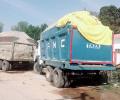
The Supreme Court has directed the Central Empowered Committee (CEC) to submit a report on sand mining from riverbeds, highlighting its disastrous impact on river ecosystems. The court also ordered Rajasthan, Madhya Pradesh, and Uttar Pradesh to file compliance affidavits regarding measures against illegal sand mining in and around the National Chambal Gharial Sanctuary, following concerns over environmental damage and a forest ranger's death.

The Supreme Court of India has dismissed a petition seeking to abolish execution by hanging, affirming its legality while strongly emphasising that the State must carry out capital punishment in a manner that minimises suffering and preserves human dignity, even for condemned prisoners.

The Supreme Court has directed the Centre to ensure all roads have properly demarcated, encroachment-free spaces for pedestrians, emphasising that the right to walk on a footpath is a fundamental right.

The Election Commission of India has defended its Special Intensive Revision (SIR) of voters' lists, asserting that differing views among Commissioners are a normal part of deliberations and all orders carry full legal sanction, following reports of two Commissioners red-flagging issues.

The UN human rights office expressed concern over mass detentions during protests in Delhi on Saturday, urging India to respect peaceful assembly rights and release detainees. India rejected these concerns as "misplaced" and "unwarranted interference." The protests, organised by the Gen Z-led Cockroach Janta Party (CJP), demanded electoral reforms and the resignation of CEC Gyanesh Kumar over alleged voter list manipulation, which the Election Commission and BJP deny.
The Supreme Court has dismissed a Public Interest Litigation challenging the constitutional validity of the 2018 amendment to the Scheduled Castes and Scheduled Tribes (Prevention of Atrocities) Act. The amendment had restored restrictions on anticipatory bail and removed requirements for preliminary inquiry and prior approval before arrest. The court cited its 2020 verdict which had already upheld these amended provisions, rejecting arguments about potential misuse and "reverse discrimination."

The Ministry of Home Affairs has instructed all states and Union Territories to coordinate with Delhi Police to prevent Cockroach Janta Party (CJP) supporters from mobilising towards Jantar Mantar for a protest on Saturday, October 10. The MHA cited potential public peace disturbances and the CJP's history of non-compliance, noting that the protest request has been rejected.

'They allow people to enter and exit. And there is transparency. There is market infrastructure. There is technology. There is cyber security. And then there are enough enablers.'
The Supreme Court has ruled that an investigating agency must seek a magistrate's approval for re-arresting an individual if they were previously released due to a breach of constitutional rights, such as not being informed of arrest grounds or being detained beyond 24 hours. This judgment reinforces the importance of Articles 22(1) and 22(2) and introduces stricter accountability measures for police officers.
