
S Mahendra Dev, chairman of the Economic Advisory Council to the Prime Minister (EAC-PM), stated that India needs to increase the manufacturing sector's share in its GDP from the current 16-17 per cent to 25 per cent by 2047 to achieve developed economy status. This goal requires an average real GDP growth of around 8 per cent annually over the next 21 years, supported by a 34-35 per cent investment rate and diversified long-term financing.

Addressing a fireside chat in New York's Columbia University, Rahul Gandhi issued a stark warning about India's economic future, declaring the nation is on the brink of an "economic disaster" due to rampant unemployment, a failing manufacturing sector, and systemic issues within its education system.

The Enforcement Directorate has filed a charge sheet against real estate firm Raheja Developers, its promoter Navin Raheja, and family members on money laundering charges. The case involves an alleged multi-crore fraud where homebuyers did not receive possession or refunds for flats and commercial units. The ED claims Rs 1,353.26 crore was diverted from construction funds, and seeks confiscation of assets worth Rs 2,399.65 crore.

The climate finance battle once again exposes the deep divide between rich and developing nations.

Preeti Lobana, Google India VP, stated on Wednesday that Google views AI as an "economic equaliser" and a democratic technology. Speaking at Google Cloud Day, she highlighted AI's potential to empower businesses, especially SMEs, in India's journey towards Viksit Bharat 2047. Google has committed USD 15 billion to scale India's digital and AI infrastructure, including an AI hub in Visakhapatnam, to support the IndiaAI Mission.

Researchers at NIT Rourkela have devised an electrochemical method to extract struvite, a phosphate mineral fertiliser, from human urine. This innovative process addresses waste disposal and resource conservation challenges by offering a sustainable, chemical-free alternative to traditional energy-intensive fertiliser production.

Nepal Prime Minister Balendra Shah is on a two-day visit to India, focusing on energy, economic cooperation, and infrastructure development. This marks his first official bilateral foreign visit since taking office. Discussions will cover expanding connectivity, trade, and investment, with several MoUs expected to be exchanged. The visit aims to strengthen the deep-rooted ties between the two nations.

Union Finance Minister Nirmala Sitharaman expressed strong confidence in India achieving over 10 per cent economic growth, advocating for increased technology adoption and innovation. She urged overcoming scepticism and highlighted technology's transformative role in agriculture and public sector reforms, while also launching a new fund and book at an IIT Madras event.

Prime Minister Narendra Modi has announced a significant 24,000 crore Nepalese rupees development package for Nepal, further solidifying bilateral ties and launching key India-assisted projects, including a new cross-border passenger rail link between Ayodhya and Janakpur Dham. This move signals a major reset in relations after a period of strain over border disputes, with both leaders emphasising deep kinship and mutual support.
BRICS leaders, in their New Delhi Declaration 2026, have called for wider access to Artificial Intelligence resources and stronger international cooperation to ensure the technology is safe, secure, inclusive, and reliable. The declaration outlines a broad technology agenda covering AI, cybersecurity, digital public infrastructure, telecom, quantum technologies, and advanced manufacturing, committing to implement the grouping's statement on 'Global Governance of Artificial Intelligence'.

A joint report by OPPI and EY reveals that India's pharma Global Capability Centres (GCCs) contribute an estimated USD 10.5 billion in GVA and employ 120,000 professionals. These centres, operated by 80% of top biopharma companies, are expanding beyond delivery to global mandates in science, technology, and business, leveraging India's talent, cost advantage, and digital strength. The report highlights their role in India's transition to a global pharma powerhouse driven by research and innovation, with AI becoming central to operations.

A new study reveals significant disparities in the return on investment (ROI) of COVID-19 vaccines across countries, with high-income nations reaping far greater economic and health benefits than low- and middle-income countries. While the global investment in vaccine development and delivery was USD 79.4 billion, the benefits ranged from USD 6.43 trillion to USD 64.3 trillion, showing a massive overall ROI. However, early access and faster rollouts in wealthier nations led to disproportionate gains.

India's Chief Economic Advisor V Anantha Nageswaran stated that the country's balance of payments (BoP) pressure is expected to remain a continuous challenge due to rising imports, commodity dependence, high global interest rates, and intense competition for capital.

Prime Minister Narendra Modi inaugurated the 'Nitish Setu', a six-lane bridge over the Ganga connecting Vaishali and Patna in Bihar. Built at a cost of Rs 4,280 crore, the bridge is expected to significantly reduce traffic congestion on the Mahatma Gandhi Setu, improve connectivity for residents of Raghopur Diara, and boost trade and economic development in the region.

In several parts of the world, access to proper sanitation remains a serious challenge. Many communities still lack household toilets or safe waste disposal systems, often due to water shortages, economic hardship or limited infrastructure.

External Affairs Minister S Jaishankar stated that India's border with China has become "more alive," necessitating a greater and sustained commitment of Indian troops. He highlighted India's enhanced military capabilities along the LAC since the 2020 Galwan Valley clashes and the significant infrastructure development in border areas over the last decade. Jaishankar also discussed the economic asymmetry between India and China, attributing it to India missing industrialisation opportunities in the 1980s and outlining India's current strategy to address this imbalance.

A special MPID court in Mumbai has framed charges against developer Vijay Machhindar, his wife, and their company Ornate Spaces Pvt Ltd for allegedly cheating homebuyers and investors of Rs 28 crore. The charges relate to failing to deliver flats in an Oshiwara residential project and not returning the invested money, leading to a trial under IPC, MPID, and MOFA provisions.

India's Indo-Pacific approach has traditionally emphasised strategic autonomy, ASEAN centrality, freedom of navigation, respect for international law and an inclusive regional order. Its growing defence and maritime partnerships with Australia, Japan, Indonesia, Vietnam and other Southeast Asian countries provide additional depth to this approach, point out Dr Kumar and Dr Jasmeet Kaur.

Reports claiming that India has proposed allowing military aircraft to use Nepal's Bagdogra entry point are false, sources said on Sunday, dismissing media reports suggesting any such move.

Union Home Minister Amit Shah has assured residents of Siang Valley that their concerns regarding the proposed 11,200-MW Siang Upper Multipurpose Project (SUMP) will be addressed through dialogue. Shah emphasised the project's national importance for Arunachal Pradesh's development and strategic interests, promising attractive rehabilitation packages and no compromise on local culture. This assurance comes amidst sustained opposition from indigenous communities worried about environmental, livelihood, and cultural impacts.

Chief of Defence Staff General NS Raja Subramani highlighted on Monday how artificial intelligence, satellite-based intelligence, and mass-produced drones are fundamentally altering modern warfare. He warned that the entire geographical expanse of a nation is now a potential battlefield, making everyone vulnerable. The CDS emphasised the changing economics of warfare, the growing contest for technological superiority, and the expansion of the battle space as key determinants of future conflicts.
Defence Minister Rajnath Singh advised students at Babu Banarasi Das University to not be confined by their academic degrees, encouraging them to follow their interests and adapt to emerging technologies like AI. He emphasised the importance of skills over qualifications, drawing examples from successful individuals who ventured beyond their initial fields. Singh also touched upon spirituality, India's cultural heritage, and the true essence of politics, urging students to contribute to national progress and secure borders.

The United Arab Emirates (UAE) has expressed intent to invest an additional $25 billion in India, with an ultimate goal of reaching $100 billion in investments, Union Minister Piyush Goyal announced. This comes as both nations plan to enhance cooperation in shipping, ports, energy, and emerging technologies, against a backdrop of expanding bilateral trade.

Prime Minister Narendra Modi creatively used the popular video game Grand Theft Auto (GTA) to illustrate India's remarkable transformation from a "fragile five" economy to the world's fastest-growing nation, highlighting significant advancements in various sectors over the last 12 years.

IG Defence is establishing a 200-acre missile development and manufacturing complex in Nellore, Andhra Pradesh, focusing on indigenous micro-missile systems, propulsion technologies, and precision-strike capabilities, including the JWALA surface-to-air micro-missile system.

Japan's military will use Indian firing ranges for live-fire training, with drills scheduled to begin next year. The exercises will include surface-to-ship missiles for the first time, marking a significant expansion of bilateral defence cooperation.

Chintan Parikh, a presidential candidate for the All India Tennis Association (AITA), has unveiled an ambitious plan to professionalise the body and make it financially sustainable. His vision includes increasing AITA's corpus from Rs 25 crore to Rs 250 crore within four years, bringing four major international tournaments featuring top-50 players to India, and reforming the AITA Trust. Parikh also advocates for a Kazakhstan-inspired development model, greater corporate involvement, and independent audits for state associations.
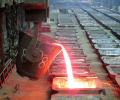
The Indian government has approved a Rs 2,814 crore capital expenditure support scheme to promote domestic processing of critical minerals like lithium and nickel. This five-year scheme, running until 2030-31, aims to reduce import dependence, develop value chains, and enhance India's self-reliance in essential materials for clean energy and modern technologies. It includes a 30% capital subsidy for setting up processing plants.

'India will become number one. There is no doubt about it. Andhra Pradesh will be number one in India.'

Prime Minister Narendra Modi highlighted the impact of his public appeals on economic trends, linking reduced gold purchases to falling prices and asserting the future dominance of skills over traditional qualifications.

UBS analysts indicate that Indian stocks' valuation premium over emerging markets remains high, despite concerns over crude oil prices and tighter monetary policy impacting India's growth outlook. They suggest a potential slowdown in AI capital expenditure and moderation in oil prices could alleviate these pressures.

The Securities and Exchange Board of India (Sebi) is developing a market-making framework with mandatory continuous quoting and repo liquidity support to deepen corporate bond liquidity and offer an alternative to bank credit, according to KVR Murty, its whole-time member.

Actors Carrie Coon and Morgan Spector, stars of "The Gilded Age", draw parallels between the rapid technological advancements of the late 19th century, the setting of their show, and the current rise of Artificial Intelligence. They express concerns about AI's unforeseen societal impacts, comparing it to the industrial revolution's exploitation of labour and the chaotic expansion of railroads that led to the displacement of indigenous communities.

US Treasury Secretary Scott Bessent has confirmed that he relocated from his Washington residence to a military base on Secret Service instructions following Iranian death threats, delivering a blunt rebuke to Tehran's leadership and criticising The Wall Street Journal for publishing a geolocatable image of his home.

India's upcoming wedding season, from November 21 to December 15, is projected to see 52 lakh marriages, generating an estimated Rs 7.5 lakh crore in business. This boom is expected to significantly impact various sectors including retail, hospitality, and jewellery, creating 1.25 crore temporary jobs.

Reserve Bank of India (RBI) Governor Sanjay Malhotra has urged non-banking financial companies (NBFCs) to strengthen their cybersecurity infrastructure, adopt responsible and sustainable credit growth, and enhance customer protection practices amidst expanding businesses and rising cyberattacks.
IBM Chairman and CEO Arvind Krishna details the company's substantial annual investment in India and its global USD 10 billion commitment to quantum computing over the next five years. He addresses the potential for AI to displace 10-20 per cent of jobs, particularly in the BPO sector, while also highlighting India's significant opportunity in the AI ecosystem. Krishna urges India to accelerate AI adoption, scale existing tech initiatives, and build its semiconductor manufacturing, advocating for a light-touch approach to AI regulation and emphasizing critical thinking in an AI-driven economy.

US President Donald Trump has announced that Washington will end approximately $4 billion in annual assistance to Israel by the end of this year, saying that the country no longer requires American financial support, while Israel's Democratic Party Chairman Yair Golan, belonging to the Anti-Netanyahu bloc, criticised the proposed move, calling it a severe blow to the country's security.

Three major public sector bank unions, representing 2.5 lakh employees and officers, have called for a nationwide strike on December 3 to protest the proposed sale of a 60 per cent stake in IDBI Bank to Canada's Fairfax Financial Holdings. The unions argue that the transaction would turn an Indian bank into a foreign-owned lender and jeopardise public savings.

A new study reveals that achieving net-zero emissions involves more than just reducing greenhouse gases; it necessitates considering the broader environmental consequences of the technologies and resources employed. Different clean energy pathways exert varying pressures on mineral, land, and water resources, highlighting the need for a balanced approach to decarbonisation that addresses overall environmental sustainability.
