
A special MP-MLA court acquitted all six accused, including Ayodhya MLA Abhay Singh, in a 24-year-old Nadesar shootout case involving former Jaunpur MP Dhananjay Singh due to insufficient evidence.

Delhi Police have arrested a life convict in a murder case who had been absconding for 24 years after jumping parole in 2002. The accused, Rakesh Patel, had allegedly changed his identity and was living under the name 'Nandlal Verma' in Prayagraj to evade arrest.

The Punjab and Haryana High Court has acquitted Dera Sacha Sauda chief Gurmeet Ram Rahim Singh in the 2002 murder case of a journalist, overturning a previous conviction by a special CBI court.

A new study has found evidence of a thin atmosphere around a small trans-Neptunian object, challenging existing theories about how such objects retain atmospheres.
'98 lakhs in Bengal, 97 lakhs in Tamil Nadu, 2.83 crores in Uttar Pradesh.'

With less than a month to go, football fans have all fingers -- and toes -- crossed, notes Kanika Datta.

Veteran Indian golfer Vijay Kumar, winner of the 2002 Indian Open, has died at the age of 57 due to a heart attack in Lucknow.

Elon Musk, already the world's richest person, may soon become the first trillionaire as his space and AI company, SpaceX, prepares for a public listing. The IPO is expected to be the largest ever, surpassing Aramco's 2020 listing, but recent filings reveal a challenging financial picture for SpaceX.
Delhi Police have detained six people, including the husband, in connection with the double murder of a woman and her son in Govindpuri. Investigators are exploring all angles, including whether a robbery was staged to mislead the investigation.

Brazilian football star Neymar Jr. shares his emotional response to being included in the FIFA World Cup squad, expressing gratitude for the support he received during his journey.

A botany lecturer from Pune's Modern College of Arts, Science and Commerce has been suspended following her arrest by the CBI in connection with the NEET-2026 paper leak case.

Jason Collins died brain cancer 'after a valiant fight with glioblastoma'.

With Carlos Alcaraz out, the French Open men's singles draw is wide open. Clay-court specialists and rising stars are vying for the title at Roland Garros.

Maharashtra has completed 66.42 per cent of its pre-Special Intensive Revision (SIR) mapping work, with significant variations in progress across different districts, according to officials.
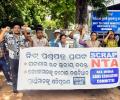
A Pune-based college has announced disciplinary action against a biology lecturer arrested by the CBI for her alleged involvement in the NEET-UG 2026 paper leak case. The lecturer, part of the NTA's paper-setting committee, is accused of leaking questions to students for a fee.
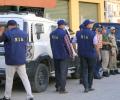
A special court has granted the Enforcement Directorate (ED) permission to record statements of 19 alleged ISIS members and sympathizers held in various prisons across India.
The Supreme Court has disposed of Teesta Setalvad's plea for passport release, advising her to reapply with a travel itinerary. The case relates to alleged fabrication of documents in the 2002 Gujarat riots.

FIFA's Technical Study Group believes set-pieces are unlikely to dominate the 2026 FIFA World Cup, with Gilberto Silva predicting tighter, transition-based football due to limited preparation time for national teams.

Discover the inspiring journey of Komal Prabhu, called the Queen of GSB Cuisine, that saw her switch professions -- a Bharata Natyam dancer became a celebrated chef devoted to preserving traditional Gaud Saraswat Brahmin food traditions.
FIFA has announced that the 2026 World Cup, co-hosted by Mexico, Canada, and the United States, will feature separate opening ceremonies in each of the three countries. The ceremonies will feature a diverse lineup of musical performers and cultural showcases.

Shah Rukh Khan's generosity resurfaces as the actor returned a Rs 94 lakh cheque to the producer of Hum Tumhare Hain Sanam to alleviate financial strain during the film's production.

The Enforcement Directorate (ED) has attached properties worth Rs 1.06 crore in connection with the 'Global Media App' fraud, an online earning platform that allegedly generated over Rs 45 crore through illicit means.

'In all these years of rupee depreciation, of rising oil prices, of inflation caused by import dependence, not one leader had the courage to look the people in the eye and say: Please do this for your country.'

Ben Shelton said he had laid down a claycourt marker for US men with his Munich Open win on Sunday after the World No. 6 became the first American to claim an event above the ATP 250 level since Andre Agassi's 2002 Rome Masters triumph.

NBA legend Vlade Divac expresses optimism about the growth of basketball in India, acknowledging cricket's dominance but highlighting the potential for Indian talent in the NBA.

The Election Commission has issued instructions to district election officials in West Bengal regarding voters marked as 'unmapped' due to technical issues during the digitisation of the 2002 electoral rolls.

Ashok Lahiri, a distinguished economist with experience in government, the private sector, and electoral politics, has been appointed as the new Vice-Chairman of NITI Aayog, tasked with strengthening India's reform trajectory and policy-making.

The Supreme Court has referred activist Teesta Setalvad's application for the release of her passport to a three-judge bench, in a case related to alleged fabrication of documents in the 2002 Gujarat riots.

Riddhima Kapoor Sahni, Neetu Singh and Rishi Kapoor's daughter, is making her acting debut at 46, joining a list of actors who took their sweet time to be bitten by the acting bug.
The Enforcement Directorate (ED) reports a decline in traditional financial crimes due to sustained investigative actions and government initiatives, while highlighting emerging challenges like cryptocurrency fraud and terror financing.

The Enforcement Directorate (ED) conducted raids at the residences of a senior Kolkata Police officer and a businessman in connection with a money laundering case.

The final teams have qualified for the 2026 FIFA World Cup, which will be hosted by the United States, Canada, and Mexico. Find out which teams have qualified and their group stage assignments.

Turkey has qualified for the 2026 World Cup after a 24-year absence, defeating Kosovo in their playoff final. Kerem Akturkoglu's goal secured the victory, sparking celebrations across Turkey.

'The nepotism, corruption, bad governance and 15 years of rampant crime that has happened across West Bengal under her rule led to her ouster.'
A special court in Thane, Maharashtra, has sentenced the mastermind of an investment fraud to rigorous imprisonment and ordered the auction of his properties to repay duped investors.

As Nicole Kidman delivers yet another impressive performance in the OTT series Scarpetta, we explore some of her other compelling movies and shows.

Major champion Justin Rose is set to make his professional debut in India at the DP World India Championship. The tournament, co-sanctioned with the PGTI, boasts a significant prize fund and underscores India's growing importance in elite golf.

The Army paid a solemn tribute to Fazal, who died on Thursday after a brief illness. They remembered him as a "valiant son of the soil" who stood shoulder to shoulder with troops during Operation Sarp Vinash, which successfully dismantled terrorists' operational hub in Hill Kaka.

Sanjay Dutt, known for his 'Khalnayak' image, is set to return to the big screen as a historical antagonist in Raja Shivaji' and a rugged gangster in 'KD - The Devil'. This article ranks his most compelling villainous performances in Hindi cinema, highlighting his versatility in embracing darker roles.

Nationalist Congress Party (SP) MLC Eknath Khadse and his daughter have been booked for allegedly cheating an elderly woman out of her land in Maharashtra's Jalgaon district.
 © 2026 Rediff.com - Advertise with us - Disclaimer - Privacy Policy - Sitemap - Feedback - About us - Terms of use - Grievances