
Hindustan Unilever, the FMCG major, has posted disappointing numbers for the December quarter on weak consumer sentiment, specially in discretionary categories.

Net sales were 12.48 per cent at Rs 6,367.14 crore.
The country's top FMCG stocks, such as Hindustan Unilever, ITC, Nestl, Britannia, Godrej Consumer Products, and Dabur, among others, are currently trading at around 41x their trailing 12-month earnings, down from their peak P/E multiple of around 48x at the end of December 2018.

ICICI Bank's valuation tumbled Rs 6,883.44 crore to Rs 3,48,532.24 crore, taking the worst hit among the top-10 firms.

Markets

60-65 per cent of the FMCG industry's overall sales come from urban areas; 35-40 per cent from rural areas.

The fast moving consumer goods major Hindustan Unilever on Monday said it exited from BPO firm Capgemini Business Services India by selling its remaining 49 per cent stake to IT consultancy firm Cap Gemini SA for an undisclosed sum.

I have a number of wonderful opportunities where I can leverage my global experience, says Manvinder Singh Banga, President, Unilever Plc.
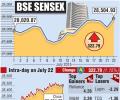
The BSE Sensex ended at 28,504, stronger by 322 points or 1%.

Will the warning shots from giants like Unilever and P&G break digital growth?

TCS, HDFC Bank, Infosys and Kotak Mahindra Bank were the other firms in the top-10 list which witnessed a rise in their market capitalisation. On the other hand, HUL, HDFC, Bharti Airtel, ITC and ICICI Bank finished with losses.
In spite of a severe second wave of the coronavirus pandemic, and a widespread disruption in public life therefore, India's fast-moving consumer goods (FMGC) sector seems to have emerged as one of the most resilient segments of the economy. The early numbers and estimates for the April-June quarter indicate a steady recovery in FMCG players' business, which is now set to exceed the pre-pandemic level. Amid nationwide lockdowns because of the first Covid wave, FMCG revenues had been severely affected in mid-2020.

Ajit Mishra, vice president, research, Religare Broking, answers your queries.

Nilanjan Roy spent 13 years with Bharti Airtel, prior to which he worked for 15 years with Unilever across their global operations.

The board meeting also saw Mehta, 57, being re-appointed as MD & CEO for a period of five years after the completion of his term in October

After the hit of the pandemic, India Inc is now worried about the adverse impact of inflation and higher commodity prices on their revenues and margins. The inflation scare is the strongest among manufacturers of consumer goods such as automobiles, consumer durables, and fast-moving capital goods (FMCG). Companies across sectors fear they will not be able to pass on the hike in input costs to their consumers due to weak demand, which, in turn, would lead to a hit on margins and profitability in the forthcoming quarters.

The list includes Hindustan Unilever, Asian Paints and Bharti Airtel - firms that investors feel are most likely to come up with the next big innovation.

Ajit Mishra, vice president, Research, Religare Broking, answers your queries.

'We ask Bollywood to see the writing on the wall, acknowledge their responsibility, and get on the right side of history.'

One of the oldest living brands in the country, Horlicks has been innovative in its approach, which helped it survive intense competition

Sebamed's campaign for its cleansing bar of the same name, released across print, television, digital and outdoor, has also named Santoor, a popular soap brand from Wipro Consumer Care.
India now has three companies in the global top 100 list in terms of market value: Reliance Industries (RIL) ranks 72, Tata Consultancy Services (TCS) is at 86 and HDFC Bank at 99.

While HUL's Fair & Lovely was launched in 1975, Emami's Fair & Handsome was unveiled in 2005. Both companies now straddle both the men's and women's fairness categories in the country.

This stupendous success of Indian talent for Unilever globally is in no small measure on account of the strong foundations that were laid in the early years of the organisation, which is celebrating its 75th year in India.

Equity investors grew richer by Rs 32.49 lakh crore in 2020 on the back of smart returns in the stock market which had a roller-coaster ride during the year hit by the coronavirus pandemic. The COVID-19 outbreak ravaged lives and livelihoods on a global scale, shuttering businesses and jolting world equities. But amid all the gloom, Indian stock indices gave hope of returning to winning ways towards the latter part of the year.

The one-minute-long ad features a young Hindu girl, dressed in a white t-shirt, who chooses to get stained in Holi colours in order to protect her young Muslim friend who has to go to the nearby mosque to pray. The advertisement ends with its classic tagline, 'Daag achche hain' (stains are good).

Investors became richer by over Rs 6.34 lakh crore on Monday as markets gave a big shout-out to the Budget 2021-22, which analysts termed as 'unprecedented' against the backdrop of the pandemic-induced slowdown. Cheering the Budget proposals, the BSE benchmark Sensex zoomed 2,314.84 points or 5 per cent to close at 48,600.61. During the day, it jumped 2,478.63 points to 48,764.40. This was the best Budget-day gain for the markets since 1997, analysts said. Following the extremely positive market sentiment, the market capitalisation of BSE-listed companies rallied Rs 6,34,069.67 crore to Rs 1,92,46,713.70 crore.
Experts point to the higher contribution of rural from the north for the growth reported by the region, a point endorsed by companies who've been pushing their presence aggressively there.

Stock markets squandered early gains but managed to end in the green on Friday, propped up by heavyweight Reliance Industries which announced another stake sale deal for its digital platform. A strengthening rupee and firm global cues also supported the domestic bourses, traders said.

The industry began to upgrade its practices even before the NGO alleged Indian tea contained harmful pesticides.

The market valuation of Reliance Industries, the country's most valued firm, is fast nearing the Rs 10 lakh crore mark, surpassing British energy major BP Plc.

Wrapped in blue and orange wax paper, it's a familiar sight on the shelves of kirana stores across the country. Given how well travelled and mobile it is - starting its journey in Chennai, then turning to Singapore and now landing in Mexico - you could say it lives up to its name: Modern. Modern Food Enterprises, the company that manufactures and sells the bread in question as well as other bakery products under the "Modern" brand name, has recently been sold to the world's largest baking company, Grupo Bimbo, for an undisclosed amount. This latest transaction is the second change of guard at Modern within five years and third since the government divested the company at the turn of the century. At a time, when the National Democratic Alliance government has decided to privatise, or shut down, public sector enterprises except for those deemed strategic, Modern makes for a promising case study of how divestment led to the brand's growth, both in revenue and reach.

Tata Steel (then Tata Iron and Steel), the most valuable index company in 1991, is now the least valuable.

FMCG major Hindustan Unilever on Friday reported 23.43 per cent decline in net profit at Rs 1,019.25 crore (Rs 10.19 billion) for the first quarter ended June 30, 2013.
The liquidity-fuelled rally will continue for some time, however, fundamentals are getting stretched.
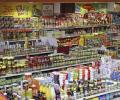
While sales momentum from rural areas may last another three to six months, sales growth in urban areas could stage a comeback by next year's June quarter as people learn to live with the coronavirus and economic activity gradually improves in the cities.

An interview with HUL's managing director and CEO Sanjiv Mehta.
Employees of some top Indian companies were in for a pleasant surprise when they received a mail from their HR team announcing a hike in salaries and bonuses. Led by IT firms and start-ups, HR managers say that while some have offered cash and stock options, others are in a wait-and-watch mode and add the trend will pick up in other sectors. For example, IT giant Cognizant - which had an attrition rate of 19 per cent in the December quarter - has established a $30-million employee retention fund in order to bring down the high attrition rate.

About 50,000 truckers, most of whom are single-truck owners, could be thrown off their businesses due to the recent fuel price hike. "Already the vehicle supply on the road is higher than the requirement. "With the fuel price hike, fleet owners will look to cut down fleet size wherever needed and due to this, small single-truck owners could be at the receiving end," Ashok Goyal, managing director at BLR Logistiks (I) Ltd said. The company has a fleet of 500 vehicles of all types-small, medium and large with pan-India presence.

HUL global CEO, Paul Polman, on his third visit to India in little over a year, said his company's 170,000 employees across the globe and he were fast learning "how to climb mountains, as the market place was no longer a smooth surface".
 © 2026 Rediff.com - Advertise with us - Disclaimer - Privacy Policy - Sitemap - Feedback - About us - Terms of use - Grievances