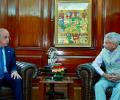
As tensions escalated between India and Pakistan following the deadly Pahalgam terror attack, Iran reached out to both countries, urging de-escalation. Saudi Arabia also expressed concern, with its foreign minister engaging in phone conversations with his Indian and Pakistani counterparts. Iran's foreign minister, Seyed Abbas Araghchi, emphasized the importance of bilateral relations, stating Tehran's willingness to "forge greater understanding" at this critical time. Saudi Arabia's foreign minister, Faisal bin Farhan Al Saud, spoke with both India's External Affairs Minister S Jaishankar and Pakistan's Foreign Minister Mohammad Ishaq Dar. Amidst heightened tensions, India has taken a series of punitive measures against Pakistan, including suspending the Indus Waters Treaty and downgrading diplomatic ties. Pakistan responded by shutting its airspace to Indian airliners and suspending all trade. Both countries exchanged warnings, with Pakistan emphasizing its commitment to "respond firmly to any aggression."
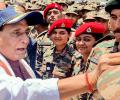
'You can be sure that the Pakistanis knew when the Indian Air Force aircraft took off, which type these were, and what their likely targets were.' 'The question was: How would they determine that the IAF wanted to fire, and when to bounce them?', notes Shekhar Gupta.

'There's a lot of sense in what Prime Minister Modi did, but the Indian government has to be really prepared for a really sharp escalation spiral.'

Targets should avoid panicking and hang up. 'Disconnecting stops the scammers from building psychological pressure.'

Hours after being dismissed from service for 'concealing' his marriage with a Pakistani woman, Central Reserve Police Force trooper Munir Ahmed said he solemnised his marriage nearly a month after getting permission from the force's headquarters last year.
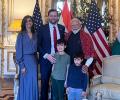
US Vice President JD Vance and his wife Usha, the first Indian-American Second Lady, are set to visit India early next week. Vance will hold talks with Prime Minister Narendra Modi during his visit. The visit comes amid global concerns over President Donald Trump's policy on tariffs. Vance's visit is likely to be more of a private trip though it will have official components.
The United Nations Security Council (UNSC) has strongly condemned the terrorist attack in Jammu and Kashmir, urging that those responsible be held accountable and brought to justice. The Council issued a press statement expressing its deepest sympathy to the victims' families and calling for all states to cooperate in combating terrorism. UN Secretary-General Antonio Guterres also expressed concern about the situation, urging India and Pakistan to exercise restraint.
'The Pakistanis called the US state department and said we agree with India on peace.' 'It was then that US President Donald Trump jumped in and took credit for the ceasefire.'
'Surgical strikes or air strikes, or both, are likely on the table.'

US President Donald Trump has signed an executive order extending the operations of TikTok, the Chinese-controlled video-sharing platform, by 75 days. Trump intends to pursue a resolution that protects national security while preserving the platform used by 170 million Americans. The order instructs the attorney general to refrain from enforcing a law that would have forced TikTok's parent company ByteDance to divest from the app or face a ban from US app stores. Trump cited the national security concerns posed by TikTok and the need to review sensitive intelligence related to these concerns. He also emphasized the importance of finding a resolution that protects national security without abruptly shutting down the platform.
President Trump with his MAWA has unwittingly provided us this opportunity. Will PM Modi grasp this and leave a legacy of an ushered in scientific and technological revolution in India, asks Colonel Anil A Athale (retd).
Opposition parties in India, including the Congress, Left parties, Samajwadi Party, Bahujan Samaj Party, Trinamool Congress, Dravida Munnetra Kazhagam, Rashtriya Janata Dal, Shiv Sena (UBT), and NCP (SP), have unanimously hailed the armed forces' "Operation Sindoor", a retaliatory strike against terrorist infrastructure in Pakistan and Pakistan-occupied Kashmir (PoK). The operation, which involved missile and drone strikes, was conducted in response to the April 22 Pahalgam terror attack. Despite political differences, all parties expressed support for the government and the armed forces, stressing the importance of national unity and integrity in the face of terrorism. While emphasizing the need for diplomatic avenues to prevent further escalation, some parties also called for caution in attributing political credit for the strikes.

India on Thursday night swiftly foiled Pakistan's attempts to hit various key Indian installations including military stations at Jammu, Pathankot and Udhampur with drones and missiles, the defence ministry said.

'Even known names and social media handles went berserk by stating that Karachi has been attacked and an F-16 was shot down.'

Meanwhile, a precautionary blackout has been enforfced in the multiple areas amid the esclating tensions between India and Pakistan.
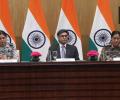
Colonel Sofiya Qureshi revealed that 300 to 400 drones were deployed across 36 locations, with several being shot down by Indian forces using both kinetic and non-kinetic methods.
How to conduct the mock exercise with active public participation of people was discussed threadbare at a high-level meeting chaired by Union Home Secretary Govind Mohan. Top civil and police officers of the country participated in the meeting, official sources said.
'It is typical of China's strategic deception of making virtue out of necessity,' observes Rup Narayan Das.
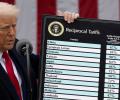
US President Donald Trump has proposed a deal to China that would see the sale of TikTok's US operations to an American buyer in exchange for a reduction in tariffs on Chinese exports to the US. The proposal comes amid a trade war between the two countries and follows China's retaliation of Trump's tariffs on Chinese goods. Trump has also said that tariffs are a powerful economic tool and that he is determined to ensure fair trade between the US and China.
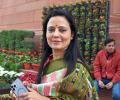
The Lok Sabha ethics committee has cited the threats India faces from State and non-State cyber actors to indict Trinamool Congress MP Mahua Moitra for sharing her log-in credentials with businessman Darshan Hiranandani, noting that he has residency rights in Dubai and has close relatives who are foreign nationals.
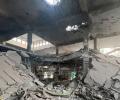
In a strong retaliation to the Pahalgam massacre, India's armed forces early Wednesday destroyed nine terror sites including that of Jaish-e-Mohammad and Lashkar-e-Taiba in Pakistan and Pakistan-occupied Kashmir (PoK) using deep strike missiles in a 25-minute-long 'measured and non-escalatory' mission.

China on Wednesday hit back at United States President Donald Trump's tariffs on Chinese exports with 84 per cent levies on its imports from America, intensifying the trade war between the top two economies of the world.
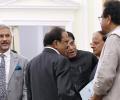
India's National Security Advisor Ajit Doval held bilateral talks with US Director of National Intelligence Tulsi Gabbard, and chaired a conclave of top global intelligence chiefs focusing on strengthening cooperation in confronting various security challenges including terrorism and threats posed by emerging technologies. The meeting also focused on security in the Indo-Pacific region, cooperation to counter terror funding and money laundering, and issues relating to extradition and immigration.
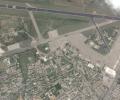
'We do not want to fall into a trap of uncontrolled escalation or all out conflict.' 'When the need arises we will do that.'
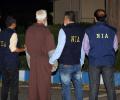
A court in New Delhi has sent Tahawwur Hussain Rana, the mastermind behind the 2008 Mumbai terror attacks, to 18 days of National Investigation Agency (NIA) custody. The court cited the need for sustained interrogation to uncover the extent of the conspiracy and the involvement of multiple targets across India, including New Delhi. Rana, a Pakistani-origin Canadian businessman and close associate of 26/11 conspirator David Coleman Headley, was extradited to India after the US Supreme Court dismissed his review plea against his extradition.
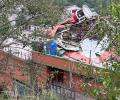
'Right now, we have no relationship with Pakistan. And the relationship with China is not great.'

Prime Minister Narendra Modi held a meeting with National Security Advisor Ajit Doval and External Affairs Minister S Jaishankar upon his arrival from Saudi Arabia to take stock of the situation following the terror attack in Pahalgam, Kashmir. The meeting also included Foreign Secretary Vikram Misri. The attack, which killed at least 26 people, including tourists from the UAE and Nepal, has sparked nationwide shock and outrage.

Union Home Minister Amit Shah has stated that Naxalism, currently confined to just four districts in India, will be completely eradicated by March 31, 2026. He emphasized the crucial role of the Central Reserve Police Force (CRPF), particularly its CoBRA battalion, in achieving this goal. Shah lauded the CRPF's contributions to national security, highlighting their efforts in combating terrorism in Kashmir, maintaining peace in the Northeast, and significantly reducing Naxal violence. He also paid tribute to the CRPF's sacrifices, acknowledging the loss of 2,264 personnel in the line of duty.
'There's something called deterrence by punishment.' 'That means you hit in a manner calculated to raise costs and consequences for Pakistan, so that the next time it attempts a Pahalgam-like attack, it has to think ten times.'
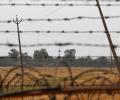
The UN Security Council could meet soon to discuss the situation between India and Pakistan, with the UNSC President expressing concern over rising tensions between the nuclear-armed neighbors. The President, Ambassador Evangelos Sekeris of Greece, said a meeting would provide an opportunity to express views and help diffuse tensions. Sekeris also condemned terrorism in all its forms, including the recent attack in Pahalgam, and called for de-escalation and dialogue between India and Pakistan.
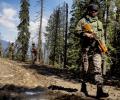
Pakistan has warned the international community that any military moves by India shall be 'responded to assuredly and decisively... onus of any escalatory spiral and its consequences shall squarely lie with India.' Implicit in the statement is a veiled threat that even a nuclear threshold may be reached if push comes to shove, warns Ambassador M K Bhadrakumar.

Addressing both the Houses of Parliament assembled together in the Lok Sabha chamber, Murmu said the government has taken numerous measures to control these cyber threats, creating opportunities for employment in the field of cybersecurity for the youth.
A new book by former West Bengal governor Gopal Krishna Gandhi claims that former chief election commissioner T N Seshan proposed an immediate halt to the general election process after Rajiv Gandhi's assassination in 1991 and even offered to become home minister. Gandhi, who was joint secretary to then president R Venkatraman, writes that Seshan was the one who broke the news of the assassination to the president and arrived at the Rashtrapati Bhawan "super-fast" that night. According to Gandhi's account, Seshan told Venkatraman that he felt the election process needed to be stopped and that he was ready to take on the role of home minister if necessary. However, Prime Minister Chandra Shekhar and Cabinet Secretary Naresh Chandra assured the president that the situation was under control and that there was no need to pause the election process. Seshan's suggestions were ultimately ignored, but he did manage to postpone the second and third phases of polling.

Pakistan military spokesperson Lieutenant General Ahmad Sharif Chaudhry told a hurriedly called press conference in Islamabad at around 4 am that th Pakistan air force's Nur Khan (Chaklala, Rawalpindi), Murid (Chakwal) and Rafiqui (Shorkot in Jhang district) airbases were targeted.
The 'mediation' by the United States from behind the scene on the diplomatic track appears to be once again working, which calls on both Delhi and Islamabad to show restraint and pull back from a military confrontation, notes Ambassador M K Bhadrakumar.
'If Pakistan has fired one bullet at us then we have to respond by firing 10 bullets at them. It is our right to do so.'

In 2020 India was compelled by China to change its national security strategy. From counter-insurgency, which the army has been focussed on for years, we shifted to conventional war, observes Aakar Patel.
Amid rising tensions between India and Pakistan, the US has called on both countries "not to escalate" the conflict. Secretary of State Marco Rubio is expected to speak with the foreign ministers of Pakistan and India as early as today or tomorrow. The US State Department said Washington is reaching out to both India and Pakistan "regarding the Kashmir situation" and telling them "not to escalate the situation."

The government has to specify what it intends to do with caste census data. It will be closely tracked if the government would simultaneously move towards removing the present 50% bar on reservations using means which are permitted in law. If this is not done, the entire exercise will become meaningless and could boomerang on the BJP, observes Nilanjan Mukhopadhyay.
'The government has to explain (to the army, air force and navy chiefs) whether they want a punitive strike, a deep punitive strike, or whether they want limited war or an all-out war, will it be a circumscribed war or will it be a shallow attack along the border.'
 © 2026 Rediff.com - Investor Information - Advertise with us - Disclaimer - Privacy Policy - Sitemap - Feedback - About us - Terms of use - Grievances