
Climate scientists warn that climate change is intensifying heatwaves in India, with the cooling effects of La Nia potentially becoming less effective in a warmer future. The India Meteorological Department (IMD) predicts an early summer with above-normal temperatures and intense heatwave spells, following an unusually dry winter and the warmest February since 1901. Experts emphasize the role of human-caused climate change, along with natural climate drivers like El Nio and La Nia, in shaping weather patterns. While La Nia typically brings cooler temperatures, scientists suggest that under climate change, its ability to mitigate heatwaves may be diminished.

The winters could be cooler in the plains due to the prevailing La Nina conditions though it does not have a direct relationship and also due to influence of the polar vortex.

The record monsoon rains across India during the June to September months was 937.2 millimetres, the 5th-highest since 2001 and 38th-highest since 1901.
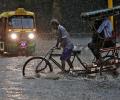
Though early days, meteorologists point towards a neutral La Nina during the initial phase of the four-month monsoon season this year that starts from June. If this holds true, by the time the rains hit the mainland, it could mean there would be one less reason to worry about the prospects of the monsoon this year. Weathermen said making any accurate prediction of how El Nino will behave and what impact it can have on the progress and distribution of rains is difficult to say at this point. A clear picture will emerge around late May or early June.

The India Meteorological Department (IMD) has predicted above-normal rainfall for most parts of India during the post-monsoon season (October to December), except for some areas in the northwest. The southwest monsoon season ended with the country recording eight per cent above normal rainfall.

The planet experienced its warmest January on record last month despite the development of La Nia, a climate pattern that usually brings cooler global temperatures, the European climate agency said on Thursday. This comes on the heels of the Earth experiencing its hottest year on record in 2024, also the first to see global average temperatures rise 1.5 degrees Celsius above pre-industrial levels. According to the Copernicus Climate Change Service (C3S), January 2025 recorded an average temperature of 13.23 degrees Celsius, 0.09 degrees warmer than the previous hottest January (2024) and 0.79 degrees above the 1991-2020 average. Scientists also found that the Earth's temperature in January was 1.75 degrees Celsius higher than pre-industrial levels. Global temperatures have stayed above the 1.5-degree mark for 18 of the last 19 months.

There is a substantial possibility of the emergence of La Nina, the opposite of El Nino, which invariably has a positive influence on the monsoon.

Skymet expects a good monsoon over western and southern India.

The cold wave days in December too are expected to be 'below-normal' this year.

The annual mean temperature in 2024 was 25.75 degrees Celsius, 0.65 degrees above the long-period average.

Spurred by cyclone Remal, the southwest monsoon set in over the Kerala coast and parts of the northeast on Thursday, a day earlier than forecast by the weather office.

The IMD said that rainfall over India in August and September would be around 106 percent of the long-period average of 422.8 mm.

Ten to 20 days of heatwave are expected against the normal of four to eight days in the entire April-June period.

Heatwave conditions have been prevailing in Odisha since April 15 and the Gangetic West Bengal since April 17, according to the MeT department.

"This year, the Southwest Monsoon is likely to set over Kerala on May 31 with a model error of four days," the India meteorological department said on Wednesday.

June rainfall accounts for 15 percent of the total precipitation of 87 cm recorded during the four-month monsoon season in the country.

On May 15, the weather office had announced the onset of monsoon over Kerala by May 31.

India is likely to see above-normal rainfall in the four-month monsoon season (June to September) with cumulative rainfall rainfall estimated at 106 percent of the long-period average (87 cm), he said.

Lakhs of voters will have to bear the searing heat when they step out to exercise their franchise in the second phase of the Lok Sabha elections on Friday.

India has received 20 per cent less rainfall since the start of the monsoon period on June 1, with the rain-bearing system making no significant progress between June 12 and 18, according to the India Meteorological Department (IMD).

India is likely to see above-normal maximum and minimum temperatures in most parts of the country in the March to May period, IMD director general Mrutyunjay Mohapatra said at a press conference.

Retail inflation declined to a five-year low of 3.54 per cent in July mainly on account of subdued prices of food items, and base effect, according to official data released on Monday. The Consumer Price Index (CPI) based retail inflation was 5.08 per cent in June 2024 and 7.44 per cent in July 2023.

Conditions were becoming favourable for further advance of the southwest monsoon over some more parts of the south peninsula and east India and adjoining areas between June 18 and 21.

'Because of global warming, the chances of heatwaves like this are much higher.'

'When you are travelling in Mumbai when the air quality is bad, you feel suffocated.' 'You may feel uncomfortable breathing Delhi air, but the level of discomfort is higher in Mumbai.'

India is likely to experience below-normal monsoon rainfall this year, with a 20 per cent chance of drought due to the end of La Nina conditions and the potential for El Nino to take hold, private forecasting agency Skymet Weather said on Monday.

The IMD DG said there should not be an impression that climate change leads to rise in the temperature, but on the contrary, it leads to erratic weather.

Scientists had earlier said the cyclone pulled the moisture and convection, impacting the intensity of the monsoon and delaying its onset over Kerala.

La Nina, construction worsen air quality; spike in respiratory ailments.

Heavy rain is expected on Sunday's match-day and also the reserve day on Monday as a multi-year La Nina weather phenomenon continues to drench much of eastern Australia.

"This warming trend is alarming," said NASA Administrator Bill Nelson.

India is set to experience extreme heat during the April to June period, with the central and western peninsular parts expected to face the worst impact, the IMD said on Monday as the country prepares for seven-phase general elections from April 19.

East and northeast India recorded 29 per cent rain deficit -- 141.5 mm against the normal of 199.9 mm -- from March 1 to May 3.

The southwest monsoon season concluded on Saturday with India receiving 'below-average' cumulative rainfall -- 820 mm compared to the long-period average of 868.6 mm -- in an El Nino year.

The World Meteorological Organisation (WMO) has officially confirmed that 2023 is the hottest year on record by a huge margin, smashing global temperature records.

The warmest six years have all been since 2015, with 2016, 2019 and 2020 being the top three. The differences in average global temperatures among the three warmest years are indistinguishably small. The average global temperature in 2020 was about 14.9C, 1.2 ( 0.1) C above the pre-industrial (1850-1900) level.
The country can expect normal rainfall during the southwest monsoon season as a positive Indian Ocean Dipole (IOD) and a lower snow cover over the northern hemisphere are likely to counter the evolving El Nino conditions, the India meteorological department (IMD) said on Tuesday.

Data released by the IMD on Thursday showed that the mean minimum temperature (MMT) this December was 7.1 degrees Celsius.
The threat of rain looms over the final of the 2022 T20 World Cup

The experts said that climate change is not only raising temperatures and making India's heatwaves hotter, but also changing weather patterns that further drive dangerous weather extremes.
 © 2026 Rediff.com - Advertise with us - Disclaimer - Privacy Policy - Sitemap - Feedback - About us - Terms of use - Grievances