
India will receive normal monsoon this season, country's meteorological department said on Wednesday in its forecast for the Southwest monsoon that covers 75 per cent of the country, and thereby may bring much-needed respite to the economy, which is reeling under the catastrophic effect of the Covid-19 pandemic.

G P Sharma, President (Meteorology) of the Skymet Weather said the Long Period Average of the rainfall during June to September will be 103 per cent with an error margin of plus or minus 5 per cent.

In another forecast for August, IMD Director General Mrutunjay Mohapatra said monsoon is also likely to be normal in the month.

Above-normal heatwave days are predicted in most parts of central, east and northwest India during this period.

Anything between 96-104 per cent of the LPA is considered as normal rainfall while precipitation in the range of 104-110 per cent is termed 'above normal'

Globally averaged temperatures in 2017 were 0.90 degree Celsius warmer than the 1951 to 1980 mean, according to scientists at NASA's Goddard Institute for Space Studies in New York. That is second only to global temperatures in 2016.

Mohapatra said there is a 40 per cent chance of a normal rainfall, 22 per cent above normal, 12 per cent excess and 18 per cent below normal.

East India, along with a major portion of central India, is likely to be at a higher risk of being rain deficient, especially during the first half of the season.
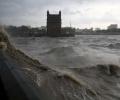
'Each cyclone has its own identity and its own behaviour based on the environmental conditions in the ocean and in the atmosphere.'

La Nina, a weather pattern arising in the Pacific Ocean that causes heavy rain in South Asia, is assuming a neutral condition, senior India Meteorological Department officials have said. This suggests the country will have a near-normal southwest monsoon.

Global rice production is expected to touch 476 million tonnes in 2011, on the back of improved weather conditions, as the influence of La Nina is expected to neutralise by June, United Nation's body FAO said.

Warning that the new year will be riskier than the previous two in terms of growth, inflation and the perils of monetary policy normalisation on consumption demand in particular, along with other external risks, a Wall Street brokerage has pencilled in an 8.2 per cent GDP growth next fiscal, with more downside risks to the projection. The biggest risk to the projection is a derailed consumption demand that has been the main growth driver in the past many years, said the Bank of America Securities India house economists who still believe that consumption demand will remain the key driver of growth next fiscal as well.

Scores of people die every year due to cold waves that sweep across the north Indian plains.

India received 41 per cent more rainfall than normal from October 1-21 with Uttarakhand alone recording more than five times its normal precipitation, IMD data showed on Thursday.

Analysts at Bank of America Merill Lynch said that fears of inflation getting "generalised" are overdone, as only two sub-categories of fuel and light and housing (accounting for 22 per cent of the basket) have seen a price-rise above the headline 5.2 per cent.

Millions of farmers plant rice, cane, corn, cotton and soybean crops in the rainy months of June and July. Harvesting starts from October

Monsoon is critical for the country's 263 million farmers and their rice, cane, corn, cotton and soybean crops because nearly half of its farmland lacks irrigation.

There has been a lot of concern in the FMCG industry after Patanjali's revenues crossed Rs 5,000 crore, on the back of an increased focus on health following the ban on Maggi noodles.

The Budget has to provide for capex on roads, railways, defence and other infrastructure sectors.
 © 2026 Rediff.com - Advertise with us - Disclaimer - Privacy Policy - Sitemap - Feedback - About us - Terms of use - Grievances