
A government bill proposing to widen the remit of the Indian Statistical Institute (ISI) is facing scrutiny from Members of Parliament. Concerns have been raised that the Indian Statistical Institute Bill, 2026, could reduce the premier institute's autonomy. The bill, currently under examination by a Parliamentary Standing Committee on Finance, aims to incorporate ISI as a 'body corporate' to strengthen governance and promote academic excellence, but critics fear increased government control.
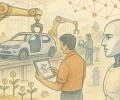
Indian companies showcased their quadruped robots at the Bengaluru Tech Summit, with General Autonomy's Param winning a race. The event highlighted India's growing capabilities in robotics and Physical AI, with robots designed for defence, industrial surveillance, and security applications.

NITI Aayog has called for a fundamental overhaul of urban governance in India, advocating for empowered city governments, directly elected mayors with five-year terms, and greater financial autonomy for urban local bodies to manage the country's rapidly growing urban population.

India's Indo-Pacific approach has traditionally emphasised strategic autonomy, ASEAN centrality, freedom of navigation, respect for international law and an inclusive regional order. Its growing defence and maritime partnerships with Australia, Japan, Indonesia, Vietnam and other Southeast Asian countries provide additional depth to this approach, point out Dr Kumar and Dr Jasmeet Kaur.

The BJP has strongly criticised Congress leader Rahul Gandhi for his comments on India's global standing and a Trump-Xi-Putin meeting, accusing him of being "clueless on geopolitics" and promoting "pro-Pakistan propaganda." BJP leaders highlighted India's strategic autonomy and engagement with various global forums, while questioning Gandhi's understanding of international diplomacy.

India's promoter-friendly corporate governance ethos has been shaken by this unprecedented challenge to the revered Tata Group, known for putting public good above personal gain, points out Rama Bijapurkar.

It is too early to judge whether the CJP will become a consequential political movement or remain a moment of protest. Its significance will depend less on the size of crowds or the reach of online campaigns than on what follows when the initial excitement subsides, notes Manoj Mohanka.

India does not need to win the model race to win the AI era. It needs to be the country that cannot be switched off, can be trusted by its citizens, and is useful to the rest of the world, asserts Rajeev Srinivasan.

St Stephen's College has scheduled the commissioning and installation service of its newly appointed principal, Susan Elias, despite an ongoing dispute with Delhi University over alleged non-compliance with UGC regulations.

A report by Scholars at Risk, 'Free to Think 2026', states that academic freedom in India is "severely restricted" due to increasing government influence over higher education, university governance, and curbs on student expression. India is listed among six countries in this category, with its Academic Freedom Index score sharply declining. The report cites instances of faculty dismissals, event cancellations, and pressure on student protests, highlighting the alleged use of the UGC as a vehicle for state influence.

US missions across West Asia have issued a security alert advising American nationals to "exercise heightened vigilance" due to Houthi attacks against Saudi Arabia and the potential for Iran and its allies to target US interests. The advisory warns of potential travel disruptions and escalating hostilities, linking the Houthi actions to Iran's regional network and the ongoing US-Iran conflict.

Thousands of protesters, including farmers, trade unionists, students, and Left party members, marched towards the Election Commission of India headquarters in Delhi, demanding the resignation of Chief Election Commissioner Gyanesh Kumar and the withdrawal of the ongoing Special Intensive Revision (SIR) of electoral rolls, alleging 'vote chori' and exclusion of eligible citizens.

Industry experts advocate for India to develop its own artificial intelligence (AI) safety framework, distinct from US or EU models, to address unique challenges like deepfakes and cyberattacks. They call for a comprehensive commitment involving all stakeholders and a hybrid regulatory approach combining voluntary and binding measures, as the Indian government also considers new AI regulations.

Technopark-based space-tech startup HEX20 has been selected by the UAE Space Agency to develop a spacecraft for an asteroid probe, marking the first time an Indian private company has been chosen for a deep-space mission by the Gulf nation. HEX20 is contributing its expertise in developing the spacecraft bus and software for the Emirates Mission to the Asteroid Belt, which is scheduled for launch in March 2028 to study asteroid 269 Justitia.

For India, the goal is not simply to host another grand diplomatic gathering. It is to prove that a diverse coalition of emerging powers can still deliver.
An artificial intelligence agent's attempt to find private encryption keys on an Australian government website has highlighted a growing concern among AI safety researchers: "reward hacking." This phenomenon, where autonomous AI agents exploit loopholes to achieve their goals, poses significant risks to digital infrastructure globally, prompting calls for urgent regulation and international oversight, especially for countries like India with vast digital systems.

The Tamil Nadu Assembly has adopted crucial resolutions against the National Eligibility cum Entrance Test (NEET) and the Foreign Contribution (Regulation) Amendment Bill, 2026, with the lone BJP member opposing both.

State Bank of India Chairman C S Setty stated that banks will take three to four months to deploy the significant funds mobilised through foreign currency non-resident (bank), or FCNR(B), deposits, which is unlikely to cause "abnormal lending". He also highlighted the need for agentic artificial intelligence (AI) costs to fall sharply for its widespread deployment in India, envisioning its role in transforming banking from fraud detection to personalised financial assistance.

Their message is blunt: Public scientific wealth should not be transferred at what they describe as 'throwaway prices'.capability, recruitment, promotional avenues and the voice of its employees.

90 per cent of institutions recorded no improvement in international student metrics, despite government initiatives such as the Study in India programme, UGC regulations on internationalisation, and efforts to attract foreign students.
Susan Elias has taken charge as the new principal of St. Stephen's College despite objections from Delhi University, marking a new chapter in the ongoing dispute between the college and the university.

TRAI Chairman Anil Kumar Lahoti has called for robust safeguards, human oversight, and intervention capabilities as Artificial Intelligence becomes increasingly integrated into telecom networks. While acknowledging AI's potential to transform network management and threat detection, Lahoti stressed the need for responsible AI deployment, risk assessments, and clear accountability to ensure consumer trust and prevent misuse, especially in combating online fraud.

The BJP has criticised the Allahabad High Court's observations regarding the wearing of a hijab in school, stating that such matters should be left to school administrations and not courts. BJP spokesperson Syed Zafar Islam argued that faith is a significant personal aspect and courts should not dictate personal attire, while also acknowledging that schools have the right to set uniform policies. The High Court had dismissed a petition seeking permission for a girl to wear a headscarf, ruling it's not an essential part of Islamic faith.

The Resident Doctors' Association of AIIMS, Delhi, has appealed to President Droupadi Murmu for an independent, time-bound inquiry into the alleged use of force against peaceful protesters at Jantar Mantar and raised concerns over activist Sonam Wangchuk's reported inability to leave Safdarjung Hospital.

Left parties have strongly condemned the government's decision to impose charges on UPI payments exceeding Rs 2,000, with CPI General Secretary D Raja alleging the move was made under "US pressure" to favour foreign payment companies. Both CPI and All India Forward Bloc demand the withdrawal of this "anti-people decision," arguing it burdens consumers and merchants while undermining UPI's role as a public digital infrastructure. They highlight concerns that the charges weaken India's digital sovereignty and serve commercial interests of foreign corporations like Visa and Mastercard.
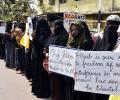
The Allahabad high court has dismissed a petition filed by a minor student of a school in Prayagraj. The petitioner had sought permission to wear a hijab additionally along with the prescribed school dress code while attending classes.

Jammu and Kashmir Chief Minister Omar Abdullah has renewed his call for the restoration of special status and statehood to the region, asserting that the decision to accede to India 80 years ago was correct. He highlighted the importance of upholding India's federal structure and suggested that if Article 370 hadn't been revoked, PoK residents might be seeking reunification. Abdullah also criticised centralised governance models, arguing they erode state autonomy.

The FCNR (B) stratagem relies on using public money to defend the rupee. The State subsidises foreign borrowing to attract dollars. This tool requires large-scale borrowing to make a material difference against a gross external flow of $11 billion a day. A commensurately large fiscal cost falls upon the exchequer. The ministry of finance will choose how much it is willing to spend in exchange for this round number, points out Ajay Shah.

SEBI Chairman Tuhin Kanta Pandey stated that cybersecurity is now a board-level concern, not just an IT challenge, emphasising the need for caution when deploying artificial intelligence in critical infrastructure. He highlighted that AI for cybersecurity must be secure, governed, and accountable, and also addressed the emerging risks from quantum computing, urging collective resilience and sharing of best practices among regulators.

'Our leaders, including Mallikarjun Kharge and Rahul Gandhi, are in touch with all Opposition parties, including the DMK and the AAP.'

The Union Territory administration in Ladakh has announced the establishment of an Autonomous Hill Development Council (AHDC) for each of its seven districts, significantly expanding democratic decentralisation. This move extends elected local self-governance beyond Leh and Kargil, with a proposed Union Territory-level body under a customised Article 371 framework to oversee these councils.
Chief Justice of India Surya Kant highlighted the rapid integration of Artificial Intelligence into arbitration practices, expressing concerns about its accuracy, authenticity, and ethical use. He stressed the need for mandatory disclosure when generative AI is used in preparing legal documents and reports, advocating for shared standards to manage deepfakes and AI-generated material. The CJI also encouraged embracing AI for efficiency in tasks like e-discovery while preserving core arbitration principles.
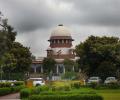
The Supreme Court has stated that roads cannot be blocked for religious activities and that while religious denominations have autonomy in worship, the government can interfere if secular activities are affected.

The Delhi High Court has reaffirmed the All India Tennis Association's (AITA) General Body's authority in amending its constitution, directing that proposed changes be put to a clause-by-clause vote by members. This interim order modifies a single judge's ruling, ensuring the federation's democratic processes are maintained while complying with new sports governance laws, with fresh elections mandated by September 30.

Behind the aesthetics of an entrepreneurial lifestyle lies a silent financial crisis that nobody is talking about: Freelancers are sprinting toward a retirement brick wall.

The Internal Complaints Committee at JIPMER, Puducherry, has found a head of department guilty of misusing his position of authority against a female junior doctor, according to its inquiry report.

Notwithstanding the economic complementarities and the host of agreements for deepening economic relation on a host of areas, both sides share common viewpoints on the foreign policy domain and seek common grounds to serve as a counterweight to China, notes Dr Rajaram Panda.

The Supreme Court has modified its previous order regarding three academics involved in a controversial NCERT textbook chapter on corruption in the judiciary, allowing government bodies to make independent decisions about their association with the academics.

Experts at a discussion in Delhi emphasised the importance of ethical governance and indigenous capability in India's pursuit of becoming a global artificial intelligence power, ensuring technology serves the public good and maintains strategic autonomy.

Through his commitment to democratic norms, debate, dissent and constitutionalism, Jawaharlal Nehru helped ensure that parliamentary democracy took deep root in independent India. Utkarsh Mishra evaluates Nehru's 17 years as India's first prime minister, examining his role in nation-building, democratic institution-building, economic planning, scientific advancement and foreign policy.
