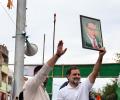
'The EC should not have let the initiative go into the hands of the political leadership. By allowing this to happen, they have opened a Pandora's box.'
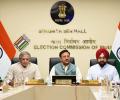
A selection committee headed by Prime Minister Narendra Modi will meet early next week to finalise the name of the next chief election commissioner. The panel will recommend a name from among the candidates shortlisted by a search committee. The president will then appoint the next CEC based on the recommendation. The panel comprises the Leader of the Opposition in Lok Sabha Rahul Gandhi and a Union Cabinet minister nominated by the prime minister.
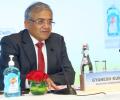
Congress general secretary K C Venugopal said in a hasty midnight move, the government has notified the appointment of the new CEC.
'The Election Commission is conducting the National Register of Citizens in Bihar through the backdoor.'
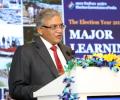
Kumar, who played a key role in implementing decisions following the abrogation of Article 370 of the Constitution in Jammu and Kashmir during his stint in the Union home ministry, took charge as an election commissioner on March 15, 2024.
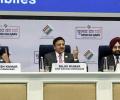
The Election Commission of India (ECI) has refuted allegations by the Aam Aadmi Party (AAP) that the Commission is being run by Chief Election Commissioner Rajiv Kumar. The ECI said it is a three-member body and has collectively noted "repeated deliberate pressure tactics" to malign the poll authority in the Delhi elections. The ECI has decided to exercise constitutional restraint and not be swayed by such insinuations. The AAP has alleged that the EC has been ignoring the BJP's alleged violations of poll code, and that Kumar is not taking action against the BJP to secure a post-retirement assignment. Delhi goes to polls on Wednesday.
The other three crore -- nearly 40 percent -- will have to provide one of the 11 listed documents to establish their place or date of birth.
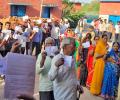
Leaders of several INDIA bloc parties met the Election Commission over the Special Intensive Revision of electoral rolls in Bihar and raised concerns over its timing, alleging that over two crore voters of the state may be disenfranchised by this mammoth exercise being done just ahead of assembly elections.

The government has set up a search committee under Union Law Minister Arjun Ram Meghwal to shortlist names for the appointment of the next chief election commissioner, sources said on Monday, citing an order.
The Election Commission of India has invited all national and state political parties to provide suggestions by April 30 on any unresolved issues related to the electoral process. This call for feedback comes amid allegations of electoral roll manipulation, with opposition parties demanding a discussion in Parliament on the issue. The EC has also proposed an interaction with party presidents and senior members to further strengthen electoral processes.
The Supreme Court will hear on February 19 pleas challenging the appointments of the Chief Election Commissioner and Election Commissioners under the 2023 law. The court will take up the matter on a priority basis, after some urgent listed matters. The government has appointed a new CEC and ECs under the new law, which excludes the Chief Justice of India from the selection panel, despite a 2023 Supreme Court verdict directing the inclusion of the CJI in the panel. The petitioners argue that the exclusion of the CJI undermines the independence of the election commission.

The sources in the government said the notification announcing the name of the next CEC could be issued "in the next few hours".

The Supreme Court has adjourned pleas challenging the appointments of the chief election commissioner (CEC) and election commissioners (ECs) under the 2023 law. The court indicated the matter would be listed after the Holi festival break due to a paucity of time. Petitioners, including the NGO Association for Democratic Reforms, argued for an urgent hearing, emphasizing the importance of the issue and the potential impact on democratic processes. The appointment of the new CEC and ECs under the 2023 law, which excludes the Chief Justice of India from the selection panel, has been a point of contention, with petitioners alleging it undermines the independence of the election commission.
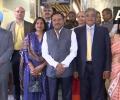
Rajiv Kumar, the 25th chief election commissioner of India, has demitted office after a nearly three-year tenure marked by both electoral successes and allegations of bias from opposition parties. Kumar oversaw the 2024 Lok Sabha elections and the Jammu and Kashmir assembly polls, among other major elections. During his tenure, he implemented reforms across various aspects of the Election Commission's functioning, including structural, technological, capacity development, communication, international cooperation, and administration. However, he faced criticism from opposition parties and activists on several issues, including the efficacy of Electronic Voting Machines, alleged fudging of voter data, and being "lenient" on the ruling BJP. While the Commission responded to the allegations, Kumar often defended himself and the poll authority through poetry. In his farewell address, Kumar expressed concerns about the timing of petitions raising doubts over poll processes and the impact of freebie promises on the fiscal health of the state. He also criticized the practice of showing early trends on counting day by news channels, calling it "nonsense". Kumar's tenure was marked by numerous controversies, with opposition parties and activists alleging bias and irregularities. While the Election Commission defended its actions, the allegations cast a shadow over his time in office.

The Congress demanded that the government and the Election Commission come clean on the EVM issue and urged the Supreme Court to take suo motu cognisance of the matter.

Chief Justice of India Sanjiv Khanna on Tuesday recused from hearing a batch of pleas challenging the exclusion of the CJI from the panel meant for selecting the chief election commissioner and election commissioners. The CJI, who was sitting on the bench with Justice Sanjay Kumar, told the advocates appearing for the PIL petitioners that he couldn't hear the pleas now. The cases will now be listed before another bench after the winter break.
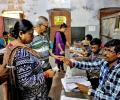
The Supreme Court of India has asked petitioners in two Public Interest Litigations (PILs) to make representations to the Election Commission of India (ECI) regarding their demand for uploading polling booth-wise voter turnout data on the ECI website. The PILs, filed by TMC MP Mahua Moitra and NGO Association for Democratic Reforms, seek a direction for the ECI to upload the data within 48 hours of the conclusion of polling in Lok Sabha and assembly elections. The ECI, represented by senior advocate Maninder Singh, expressed willingness to deliberate on the matter and suggested a meeting with the petitioners to address their concerns. The court has adjourned the hearing to the week of July 28.
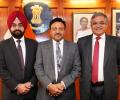
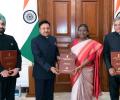
Newly appointed election commissioners Gyanesh Kumar and Sukhbir Singh Sandhu assumed charge on Friday.
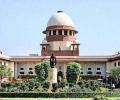
The Supreme Court of India has scheduled a hearing on February 19 for pleas challenging the appointment of the Chief Election Commissioner and Election Commissioners under the 2023 law. The court emphasized the potential consequences if any action is taken before the hearing. The pleas argue that the 2023 law, which excludes the Chief Justice of India from the selection panel, undermines the independence of the Election Commission and allows for undue influence from the executive branch. The court's earlier verdict in March 2023 called for an independent selection panel comprising the Prime Minister, Leader of the Opposition, and the Chief Justice of India to ensure the integrity of the Election Commission. The case highlights concerns about the independence of India's electoral process and the potential for political influence in the appointment of key election officials.

Congress leader Rahul Gandhi has criticized the government's decision to appoint Gyanesh Kumar as the new Chief Election Commissioner (CEC) in the middle of the night, arguing that it is "disrespectful" and "discourteous" given the ongoing Supreme Court challenge to the selection process. Gandhi presented a dissent note to the selection committee, stating that the process violates the Supreme Court order and undermines the integrity of the electoral process.

On Thursday, August 8, 2024, an Election Commission team led by Chief Election Commissioner Rajiv Kumar arrived in Srinagar to meet with representatives of political parties.
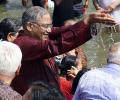
Despite recent fatal stampedes at the Kumbh Mela and a Delhi railway station, pilgrims, driven by faith, continue to participate in the holy gathering in Prayagraj. Despite safety concerns, pilgrims from across India are undeterred by the tragedy and are taking the holy dip at the Triveni Sangam.
The political parties have been given time slots for the meeting with the Election Commission.
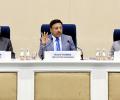
Chief Election Commissioner Rajiv Kumar has asserted the integrity of India's electoral process, stating that no discrepancies have been found between the votes counted on electronic voting machines (EVMs) and Voter Verifiable Paper Audit Trail (VVPAT) slips. Addressing concerns about mismatches in polling figures, Kumar attributed the issue to limitations in the data reported by the Voter Turnout Reporting (VTR) app, which excludes postal ballot votes. He emphasized the robust mechanisms in place to ensure accuracy, including reconciliation of every vote with Form 17C and thorough review of any minor errors. Kumar highlighted that the Election Commission rigorously follows guidelines for all aspects of the electoral process, including electoral rolls and machine handling.
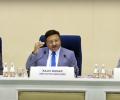
On deletions, Kumar clarified that they are processed only through Form 7 or Form B, following strict guidelines.
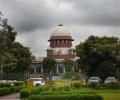
It will be court's opinion versus the legislative power to enact law, the Supreme Court on Wednesday said as it posted the pleas challenging the appointment of the chief election commissioner and election commissioners under the 2023 law on February 4.

Kumar also said exit polls create a huge distraction by raising expectations and it was a matter for self-introspection for the media, particularly electronic media.

Besides disclosing in their affidavits, candidates have to prominently declare criminal cases they are facing, if any, thrice in newspapers in print as well on television, he said, adding that political parties too have to publish within three days of nomination why a candidate with criminal background was selected. "You (political parties) have to tell the public whether you did not get any (other) candidate and why was it necessary to select them (those with criminal background)," he said.
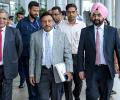
'They refuse to be transparent. They refuse to be accountable.'
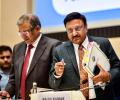
'Unlike in the sporting arena, where sports federations moved from partisan to impartial referees, in Indian democracy's biggest festival, it appears we are moving backward from unbiased and objective to one-sided and partisan,' observes Nilanjan Mukhopadhyay.

The Election Commission on Saturday deferred the Haryana assembly poll date to October 5 from October 1, saying the decision was taken keeping in mind a centuries-old festival of the Bishnoi community.
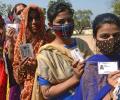
The assembly polls in Maharashtra will be held in a single phase while Jharkhand polls will be held in two phases, the Election Commission of India announced on Tuesday.

There has been speculation that Goel quit due to differences with Kumar.

'Whenever the hike in voting percentage is more, the NDA gains more, and when the hike is negligible, the NDA falls.' 'I have established this in UP, Haryana and Jharkhand.'
The Supreme Court on Thursday questioned the Centre over the procedure adopted for the appointment of election commissioners and asked how six names were shortlisted from 200 within a few hours.
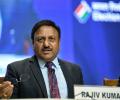
Assembly elections in Jammu and Kashmir will be held in three phases from September 18 while Haryana will go to polls in a single phase on October 1, the Election Commission announced on Friday.
Seeking to ensure a level-playing field in the Lok Sabha elections, the Election Commission on Monday ordered the removal of home secretaries of Gujarat, Uttar Pradesh, Bihar, Jharkhand, Himachal Pradesh and Uttarakhand, sources said.
'To attribute motives to the individual election commissioner or the Election Commission as a group is very unfair.'
'They have been found wanting in taking stern measures to stop this because the Constitution has given them this authority and the power to ensure a free and fair election in the country.'
A bench of justices Sanjiv Khanna, Dipankar Datta and Augustine George Masih told the petitioners, who pointed out that a meeting for the selection of ECs was pre-poned, to file a separate application pointing out the fact.
 © 2026 Rediff.com - Investor Information - Advertise with us - Disclaimer - Privacy Policy - Sitemap - Feedback - About us - Terms of use - Grievances