
The Israeli Air Force has destroyed an aircraft used by Iranian leadership at Mehrabad International Airport in Tehran, along with striking over 200 targets across western and central Iran, significantly impacting Iran's strategic capabilities.

Mojtaba Khamenei, 56, has been chosen to assume control of the country.

Iranian Supreme Leader Ayatollah Ali Khamenei has been killed in a US-Israeli attack, sparking celebrations in Iran and raising questions about the future of the regime.

Maharashtra Congress leader Naseem Khan met with the representative of Iran's Supreme Leader in India to express condolences for the deaths of Ayatollah Khamenei, soldiers, and civilians in the West Asia conflict.

'Many have contributed in terms of gold and silver. Ladies in big numbers have contributed their home belongings and gold.' 'Some have donated their cars too.'
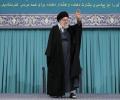
Following US and Israeli strikes in Iran, reports have surfaced questioning the wellbeing of Supreme Leader Ayatollah Khamenei, prompting a swift denial from Iranian officials and condemnation of the military action.

Joe Kent, former head of the National Counterterrorism Center, accuses Israel of instigating the conflict between the United States and Iran, claiming there was no imminent threat from Iran.
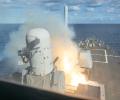
In a coordinated military operation, the United States and Israel launched airstrikes against Iran, escalating tensions amid stalled nuclear talks and claims of resumed nuclear activities, resulting in the death of Iran's supreme leader.

The representative of Iran's Supreme Leader in India expressed gratitude towards Indians, calling India a land of 'loyalty and humanity'.

Referring to local sources, IRNA shared a video clip that it claims shows the downing of the American F-15 fighter jet in Kuwait.

Iran is observing 40 days of public mourning following the death of Ayatollah Ali Khamenei, Reuters reported, citing Iranian state media.

Amid rising tensions, Israel's Defence Minister has issued a stark warning that any leader succeeding Iran's Supreme Leader Ali Khamenei will be considered a target, as reports suggest his son Mojtaba may be next in line.

In the central Iranian city of Isfahan, residents gathered at Imam Square to protest the strikes and to mourn what state media termed the martyrdom of Ayatollah Khamenei. Demonstrators raised slogans including "God is great" as the airstrikes continued.
A senior Iranian official has stated that Iran has not yet elected a successor to Supreme Leader Ayatollah Syed Ali Khamenei, following his assassination. The process to elect a new leader is underway, with several candidates being considered.

Ayatollah Ali Khamenei, Iran's supreme leader, led the prayers at assassinated Hamas leader Ismail Haniyeh's funeral in Tehran, on August 1, 2024, a rare honour for someone who is not Iranian.
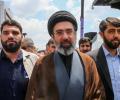
'Mojtaba Khamenei supervised the most recent repression in December 2025 and January 2026 which remains ongoing.'

'Despite the large number of missiles and drones we have already launched, we still possess reserves and missile cities whose doors have not yet been opened,' says Iran's Consul-General Saeid Reza Mosayeb Motlagh.

'Our diplomacy should have been focused on preventing war and avoiding the inevitable disruptions it would cause, posing a real risk to India's growth story,' asserts former foreign secretary Shyam Saran.

Amid rising tensions in West Asia, China is urging all parties to cease military operations, following Trump's appeal for help in securing the Strait of Hormuz.

Quoting assembly of experts member Mirbaqeri, the report stated that while a "majority consensus over Khamenei's successor has been reached," the transition process is not yet fully complete as "some obstacles regarding the process need to be resolved."

Trump claims the United States is performing exceptionally well in its ongoing conflict with Iran, citing weakened Iranian military capabilities and a strong US position.
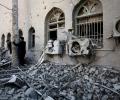
The logic of war plus the gathering storms in US politics as the midterms loom large leave him with no real alternative but to negotiate, points out Ambassador M K Bhadrakumar.
Trump said he is unwilling to make a deal with Tehran at this stage despite indications the country wants negotiations.

'The US landed in this war without planning. The US felt that if they kill Ayatollah Khamenei the people of Iran will come out on the roads and do a regime change.' 'On the contrary, the US bombings on Iran has united the entire nation.'

He also criticised the possible succession of the son of the late supreme leader of the Islamic Republic, Mojtaba Khamenei, who is widely viewed as a leading contender for the position.

The US embassy in Saudi Arabia and the US consulate in Dubai were reportedly targeted by suspected Iranian drone attacks amid heightened tensions in the Middle East following US and Israeli strikes on Iran.

This threat comes as the assembly of experts in Iran has reportedly reached a majority consensus regarding the successor to the late Supreme Leader Ayatollah Ali Khamenei, according to the Tehran-based Mehr News Agency (MNA).

Trump said that Iran's leadership, along with its air defence, Air Force, and Navy are 'gone'.

The two policemen were injured by "hard and blunt instruments", while "two protesters with firearm injuries" were also brought to JPMC, the surgeon told Dawn.

Iran's Islamic Revolutionary Guard Corps (IRGC) claims control of the Strait of Hormuz and reports striking a US destroyer, escalating tensions in the Middle East following retaliatory strikes between Iran, the US, and Israel.

Secretary of State Marco Rubio urged its citizens to immediately depart from several Middle Eastern countries, citing "serious safety risks."
Trump also asserted that US forces had struck hundreds of targets across Iran, including facilities of the Islamic Revolutionary Guard Corps and air defence systems.

The delegations from the US and Iran head to Islamabad on Friday, carrying a ceasefire that is already fraying, a Strait that is technically open and practically closed, and a negotiating agenda that would challenge even parties actually negotiating in good faith, which these groups are not. Prem Panicker continues his must read blog on the Iran War.

The US-Israeli military campaign, dubbed "Operation Epic Fury" by Washington, has entered its third day, with US President Donald Trump stating that operations would continue "until all of our objectives are achieved."

'Without ground troops the US will not be able to oust the Iranian Islamic regime. Political change does not happen just by using bombs or planes.'

'Much will depend on the position of the United States.' 'It will have to be seen to what extent the US will be more interested in achieving some form of a deal and to what extent Israel will be allowed to continue to carry out both airstrikes and the killing of Iranian officials.'

'TTP has vowed to take revenge for the attacks that Pakistan is carrying out against Afghanistan.' 'To diminish this threat, Pakistan is hitting Afghanistan hard.'

United States President Donald Trump said on Friday that the situation in Iran is being monitored very closely and hoped for the protestors in the country to be safe.

The crises of the 21st century, 9/11, the economic meltdown, COVID-19, Russia-Iran war and the Hamas-Israel war seem to be never ending. In this situation, Iran might be contemplating a nuclear deterrent to defend itself, observes Ambassador T P Sreenivasan, the distinguished long-time Rediff contributor who turns 80 on June 17..
The direction comes hours after Iran fired over a dozen ballistic missiles targeting at least two American bases in response to the killing of its General Qasem Soleimani in a drone strike.
 © 2026 Rediff.com - Advertise with us - Disclaimer - Privacy Policy - Sitemap - Feedback - About us - Terms of use - Grievances