
A US trade representative described India as a 'tough nut to crack' during trade agreement negotiations in Washington, highlighting India's protection of its agricultural markets and the ongoing discussions on specific commodities.

US President Donald Trump stated that the US and India are 'pretty close' to finalising a trade deal, which he expects to be significantly different from previous agreements. This announcement comes amidst ongoing discussions between officials from both nations, including Secretary of State Marco Rubio's visit to India and Commerce Minister Piyush Goyal's meetings with US Trade Representative Jamieson Greer, following an initial framework agreement in February.

Finance Minister Nirmala Sitharaman stated that negotiations for the India-US trade agreement have reached a 'plateau', indicating limited scope for further concessions from either side, while also highlighting the US's aim to reduce its trade deficit with India.

Marco Rubio will visit Mumbai and Jamnagar to discuss energy cooperation as S Jaishankar says India-US trade talks are nearing a landing point, with a few issues unresolved.

Trade negotiations between the United States and Canada have collapsed, leading to the US imposing 50% tariffs on nearly $28 billion worth of Canadian imports, with Canada immediately vowing to retaliate dollar-for-dollar.

South African President Cyril Ramaphosa on Friday described BRICS as an important global forum, highlighting the grouping's growing demographic and economic weight and noting that its members account for around half of the world's population and 40 percent of global GDP.
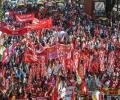
'Major unions should be included. If this goes on, decision-making will become heavily one-sided and we will be forced to continue our strikes.'

The US-Canada trade war has escalated sharply, with US President Donald Trump on Monday announcing that tariffs on Canadian cars, trucks, automotive parts and steel imports will be raised to 50 percent from January 2027, following the collapse of trade negotiations between Washington and Ottawa last week.

Former Rajasthan chief minister Ashok Gehlot has criticised the Centre for introducing a 0.4% charge on UPI transactions above Rs 2,000, alleging the decision was influenced by pressure from the United States and its payment companies like Visa and Mastercard. He highlighted a perceived shift in the government's stance on Merchant Discount Rate (MDR) for UPI, claiming it would ultimately burden consumers and small businesses while benefiting American firms.

'We expect the Indian delegation to flag New Delhi's worries and elaborate on its standpoint on the Russia-linked tariff as well as the Section 301 investigation into overcapacity.'

'We are open to all countries around the world as long as we get a fair deal, as long as we are ensured continuity in the engagement.'
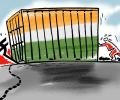
The United States and the European Union have strongly criticised India's trade policies at the World Trade Organization review, highlighting concerns over high tariffs, quality-control orders (QCOs), and restrictions on digital trade and services, which they argue undermine India's economic openness.

India's total goods trade with BRICS nations more than doubled from FY21 to FY26, reaching USD 417.5 billion, but a significant surge in imports, particularly from China and Russia, has caused India's trade deficit with the bloc to more than triple, reaching USD 226.1 billion.

Futures and options (F&O) trading suits investors with good market knowledge, sufficient risk capital, a tested strategy and strong discipline.

Expiry day can make an otherwise ordinary trading session feel unusually fast. Index prices may move sharply around important strikes, option premiums can change quickly, and a position that looked manageable in the morning can behave very differently later in the day.

Prime Minister Narendra Modi and US President Donald Trump held a telephone conversation to review progress in bilateral ties, covering trade, defence, and energy, against the backdrop of heightened trade friction due to the 'Lindsey O. Graham Sanctioning Russia and Iran Act of 2026'.

India is waiting for assurance from the US on comparative advantage over other economies under the deal.

The US announced a 60-day pause on sanctions against Russia and tariffs on other countries, including India, to analyse the global economic impact. This decision, made via an executive order by Trump, has drawn significant criticism from both Republicans and Democrats, who had previously passed the Lindsey O. Graham Sanctioning Russia and Iran Act. US officials stated the waiver allows for assessment of global energy pressures and European allies' refusal to impose secondary sanctions on Russian oil buyers.

Left-arm pacer T Natarajan has been traded back to Sunrisers Hyderabad, while leg-spinner Zeeshan Ansari has moved to Delhi Capitals in a player trade between the two IPL franchises. Natarajan returns to SRH for a revised fee of Rs 5 crore, having previously been bought by DC for Rs 10.75 crore at the IPL 2025 auction. Ansari joins DC at his existing fee of Rs 40 lakh.

Defence Minister Rajnath Singh on Tuesday called for dialogue and diplomacy to resolve global conflicts, stating, "war can never be the answer to war," while addressing the Shanghai Cooperation Organisation (SCO) Council of Heads of Government meeting in Dushanbe, Tajikistan.

The Finance Ministry has dismissed allegations of US pressure influencing the 0.4% Merchant Discount Rate (MDR) on select UPI transactions. It clarified that NPCI guidelines prioritise RuPay credit cards on UPI and do not favour international cards. The ministry also asserted that the MDR, applicable to person-to-merchant transactions above Rs 2,000, is unlikely to increase cash transactions or cause inflation, with measures in place to prevent burdening consumers.

The Finance Ministry has refuted allegations that US pressure influenced the decision to levy a 0.4 per cent Merchant Discount Rate (MDR) on select UPI payments. The ministry clarified that the NPCI guidelines prioritise RuPay credit cards on UPI to promote domestic alternatives and ensure a self-sustaining revenue model for smaller domestic companies, countering claims of favouring foreign payment providers.
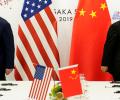
Top US and Chinese officials, including Vice Premier He Lifeng and Treasury Secretary Scott Bessent, held "candid, in-depth and constructive" talks in New York on economic and trade issues, with a specific focus on artificial intelligence. These discussions precede Chinese President Xi Jinping's anticipated visit to Washington and occur amidst new US sanctions targeting countries purchasing Russian oil and gas, and the US unveiling an "AI Force."

US President Donald Trump and First Lady Melania Trump hosted a lavish state dinner for Chinese President Xi Jinping and his wife Peng Liyuan at the White House on September 24, 2026. The guest list featured a who's who of American tech and business leaders, including Jensen Huang, Tim Cook, Sundar Pichai, Elon Musk, Satya Nadella, Sam Altman, Mark Zuckerberg, Jamie Dimon and Jeff Bezos, alongside senior US officials.

Chinese President Xi Jinping is set to visit the United States from September 23 to 25 for summit talks with US President Donald Trump, with discussions expected to cover critical economic and trade issues, including AI, and the recently signed US sanctions law targeting countries buying Russian oil and gas.

The RSS-affiliated Swadeshi Jagran Manch (SJM) has urged the government to reconsider imposing a merchant discount rate (MDR) on UPI transactions above Rs 2,000, arguing that the costs do not warrant such a move. This comes after the government announced a 0.4 per cent fee on merchant transfers over Rs 2,000 from October 15, while assuring that person-to-person and small payments remain free. SJM co-convener Ashwani Mahajan highlighted that banks have not demanded MDR and that UPI has reduced their transaction costs.

Former England all-rounder Samit Patel has called for patience and support for Indian teenage batting sensation Vaibhav Sooryavanshi, highlighting his immense talent and the need for Indian cricket to nurture him without undue pressure.

External Affairs Minister S Jaishankar stated that the stability of the Line of Actual Control (LAC) is essential for normalising India-China relations, asserting that border disturbances will have consequences. He connected trade and investment growth to border peace and highlighted significant economic issues, including a severe trade imbalance and lack of market access for India in China. Jaishankar also referenced the 2020 Galwan clashes as a critical turning point, underscoring the profound impact of border tranquillity on the overall bilateral relationship.

The Finance Ministry has clarified that the 0.4 per cent Merchant Discount Rate (MDR) on UPI transactions above Rs 2,000, effective October 15, is not expected to increase cash transactions or cause inflation. The ministry also dismissed allegations of US pressure influencing the decision, asserting that the policy aims to promote RuPay credit cards within the UPI ecosystem, and a monitoring mechanism will ensure the MDR burden is not passed on to consumers.
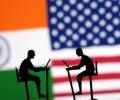
India may press for an automatic review mechanism in its proposed interim trade deal with the United States (US), mirroring a sunset clause introduced by the European Parliament in its trade agreement with Washington, people aware of the negotiations said. The European Parliament last week approved the EU-US trade deal but inserted a sunset clause requiring the arrangement to expire on December 31, 2029, unless both sides agree to extend it.

Chinese President Xi Jinping concluded his three-day visit to the US, stating that his discussions with President Donald Trump had injected "new substance" into the China-US relationship. Both leaders expressed optimism for future cooperation, with agreements reached on certain trade goods and discussions held on AI capabilities.

The United States and India are on the verge of finalising a landmark bilateral trade deal, aiming to boost trade to USD 500 billion by 2030, according to US Deputy Assistant Secretary of State Bethany Poulos Morrison. The agreement seeks to open India's 1.4 billion-strong market to American goods on reciprocal terms, with ongoing high-level discussions to recalibrate the pact after recent changes in US tariff policy.

India has stated its commitment to protecting its economic interests and ensuring energy security after the US House of Representatives passed a bill allowing the US President to impose tariffs of up to 100 per cent on countries, including India and China, for purchasing Russian crude oil. The Ministry of External Affairs affirmed India's resolve to maintain diversified energy sourcing and has articulated its concerns to US interlocutors regarding the bill's potential implications.

The US House of Representatives has advanced a bill that would empower President Donald Trump to impose 100 per cent tariffs on countries, including India, that purchase oil and gas from Russia, and also extend sanctions on Iran. The legislation, which previously passed the Senate, aims to curb Russia's energy revenue amidst the Ukraine conflict.
A think tank, GTRI, has urged India to resist US pressure regarding its UPI policies, advocating for competition, policy autonomy, and a sustainable payments ecosystem. This comes as the Lok Sabha passed a bill allowing charges on UPI, and the US has criticised India's digital payment systems, raising concerns about the future of India's digital payment landscape.

The 12th edition of the Pakistan Super League (PSL 12) will take place from March 18 to May 2 next year, maintaining its eight-team format. The dates were confirmed at a Governing Council meeting in London, paving the way for upcoming player signings and auctions.

'The Indian market has struggled over the past two years.' 'It peaked in September 2024, and although it has moved up and down since then, investors have not really made money.'
India and the US have reported positive progress in recent trade talks in Washington, agreeing to maintain engagement to finalise a bilateral trade agreement, which now requires recalibration following new US tariffs.

A new Merchant Discount Rate (MDR) on UPI transactions above Rs 2,000, effective October 15, could force small merchants and price-sensitive consumers to revert to cash, according to economic think tank GTRI. The move, which introduces a 0.4 per cent MDR with a Rs 300 cap and concessional rates for specific categories, is questioned by GTRI founder Ajay Srivastava, who suggests it's not a revenue issue for the government but potentially a response to US pressure regarding UPI and RuPay's preferential market position.

The Congress party has strongly criticised the Modi government's decision to introduce a 0.4% Merchant Discount Rate (MDR) on UPI transactions over Rs 2,000, alleging it is a result of US pressure to benefit American card companies. The party also linked this move to broader US actions against India, including tariffs and H-1B visa issues, coining the term "Narendra's Ongoing Trump Appeasement." The government, however, clarified that consumers will not bear the charge, which applies only to merchants.
