
'Trump has weakened, not necessarily restrained.'

The US midterm elections saw the Democratic Party gain control of Congress and key gubernatorial posts, leading international affairs experts to view the outcome as a referendum on President Donald Trump's policies. Analysts suggest the results signal a desire for change in his behaviour and could prompt a more pragmatic approach in his remaining term, with potential implications for global politics and India-US relations.

A survey by Indian American Impact reveals that 25% of South Asian Americans who voted for Donald Trump in the 2024 presidential election plan to support Democratic candidates in the upcoming November 3 midterm elections. Key issues driving voters include cost of living, healthcare, jobs, and education, with discrimination also a significant concern. The survey highlights the potential influence of this demographic in closely contested states like Michigan and Texas.

Indian stock markets extended their rally for the fifth consecutive day, with the Sensex climbing nearly 384 points to close above 77,000, driven by foreign fund inflows, easing crude oil prices, and improved global sentiment following the US midterm election results.

Indian-American physician Amish Shah has made history by becoming the first from the community to represent Arizona in the US Congress. Shah, a Democrat, defeated Republican Jay Feely in Arizona's First Congressional District, flipping a Republican-held seat. A three-term member of the Arizona House of Representatives, Shah campaigned on issues like lowering costs, expanding healthcare, and solving the water crisis, and his victory is part of a broader trend of Indian-American candidates succeeding in US elections.

The US Senate passed a resolution directing then-President Donald Trump to withdraw American forces from the conflict with Iran. This bipartisan vote, though largely symbolic as a concurrent resolution, highlighted congressional concerns over potential escalation and a desire to limit presidential military authority without legislative approval.

Iranian supreme leader Ayatollah Mojtaba Hosseini Khamenei has declared that the results of the US midterm elections and shifts between American political parties will not alter Iran's defensive strategy or soften Washington's long-standing hostility toward the Iranian nation.
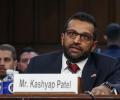
Over 100 US lawmakers, led by Congressman Raja Krishnamoorthi, have written to FBI Director Kash Patel demanding an investigation into an attempted mass shooting at a Hindu temple in Illinois as a federal hate crime. They also sought answers on measures to address online threats targeting Indian-Americans, criticising the Trump administration's past messaging for legitimising racial stereotypes.

Brazil's defeated right-wing presidential candidate, Flavio Bolsonaro, has declared himself the legitimate head of state from self-imposed exile in the United States, alleging electoral fraud. His move comes days after leftist President Luiz Inacio Lula da Silva secured victory, further highlighting political instability in Brazil. Bolsonaro faces corruption inquiries at home and departed Brazil despite instructions to surrender his passports.

Several Indian-Americans have achieved significant victories in the US midterm elections, with five securing seats in the House of Representatives and Maryland Lieutenant Governor Aruna Miller winning re-election. The article profiles these successful candidates, highlighting their backgrounds and contributions to American politics.

Top US lawmakers, leaders, and civil society members have strongly condemned an alleged plot to attack a Hindu temple in Illinois. Alexandros Paporakis, 19, was arrested for attempting a mass shooting at the Aurora temple, which failed when his rifle jammed. Indian-American Congressmen and other officials have called for efforts to combat rising anti-Indian and anti-Hindu prejudice in America, highlighting the need to protect minority houses of worship.

Kimi Antonelli secured victory at the US Grand Prix, bringing him to the verge of becoming Formula One's youngest-ever champion. The Mercedes driver now needs only two points in Mexico to clinch the title, despite efforts from rivals Lewis Hamilton and George Russell to delay his triumph. Charles Leclerc finished second, with Max Verstappen third.

Kimi Antonelli can become Formula One's youngest world champion in Mexico City with a top-nine finish, while Sergio Perez celebrates his 300th start before home fans.

The Bill proposes replacing employment-based Green Card preferences with a points-based immigration framework.
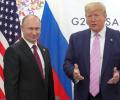
Former President Donald Trump's recent deal with Russia to supply diesel to the US and global markets has ignited a political firestorm, drawing sharp criticism from Ukraine's President Volodymyr Zelenskyy, Democratic leaders, and a segment of Republicans, despite the US Treasury lifting sanctions on Russian diesel supplies.

The US House of Representatives has passed the Lindsey O Graham Sanctioning Russia and Iran Act of 2026, authorising President Trump to impose sanctions on Russia's energy sector and tariffs on countries like India and China that purchase Russian oil and gas. The legislation aims to curb Russia's ability to evade existing sanctions and reduce global dependence on its energy exports, despite some Democratic opposition to increased tariff authority for the President.

The US announced a 60-day pause on sanctions against Russia and tariffs on other countries, including India, to analyse the global economic impact. This decision, made via an executive order by Trump, has drawn significant criticism from both Republicans and Democrats, who had previously passed the Lindsey O. Graham Sanctioning Russia and Iran Act. US officials stated the waiver allows for assessment of global energy pressures and European allies' refusal to impose secondary sanctions on Russian oil buyers.

The US House of Representatives has advanced a bill that would empower President Donald Trump to impose 100 per cent tariffs on countries, including India, that purchase oil and gas from Russia, and also extend sanctions on Iran. The legislation, which previously passed the Senate, aims to curb Russia's energy revenue amidst the Ukraine conflict.

The US House of Representatives is debating a bill that would authorise the President to impose sanctions on Russia and steep tariffs on its oil and gas trading partners, including India and China. The bill, aimed at pressuring Russia over the Ukraine war, has faced opposition but is expected to be put to a vote.

President Donald Trump has announced a promise to issue a USD 5,000 dividend to every adult US citizen if Republicans secure victory in both the House and the Senate in the upcoming midterm elections, citing the nation's economic success under his administration.

US lawmakers are racing to amend the Russia sanctions bill before recess. One amendment specifically names India, China, and other countries as potential targets for 100% tariffs due to their oil trade with Russia. Another significant amendment proposes to scrap the tariff section entirely, while others address presidential waiver powers and aid to Ukraine.

US President Donald Trump stated that Iran is eager to make a deal and predicted a sharp decline in oil prices due to abundant supply, amidst a Senate resolution to limit his war powers in Iran.

President Donald Trump is set to sign the Sanctioning Russia and Iran Act, which includes tariffs on countries buying Russian oil and gas, such as India. India has voiced concerns over the potential impact on its ties with the US and the global energy market.

US President Donald Trump is expected to sign the Lindsey O. Graham Sanctioning Russia and Iran Act of 2026 later on Friday (local time). A White House official confirmed the development to ANI without revealing further details.

The Social Reckoning may lack the crackling energy of The Social Network, but Aaron Sorkin delivers a timely warning about what happens when a world-changing platform escapes the control of its creator.

Indian-American Congressman Raja Krishnamoorthi voted in favour of a Russia sanctions act in the US House, diverging from his Democratic party and other Indian-American lawmakers. The bill, which passed, imposes tariffs on Russian oil and gas buyers, potentially impacting India and China, and exempts US uranium purchases from Russia.

The IIT Bombay Faculty Forum has expressed strong solidarity with Professor Suryanarayana Doolla, who was invigilating an exam where a student was found using a smartphone, an incident preceding the student's death by alleged suicide.

The Mumbai Police has transferred the alleged suicide case of a second-year IIT Bombay BTech student to the Crime Branch after his father filed a complaint alleging casteist slurs and harassment by Professor Suryanarayan Dulla, who was also named in an FIR.

India has stated its commitment to protecting its economic interests and ensuring energy security after the US House of Representatives passed a bill allowing the US President to impose tariffs of up to 100 per cent on countries, including India and China, for purchasing Russian crude oil. The Ministry of External Affairs affirmed India's resolve to maintain diversified energy sourcing and has articulated its concerns to US interlocutors regarding the bill's potential implications.

China has strongly rejected a US bill that would impose tariffs on countries, including India, for purchasing Russian oil and gas. Beijing views the "Lindsey O Graham Sanctioning Russia and Iran Act 2026" as an act of "long-arm jurisdiction" and interference in its sovereign trade relations, asserting that its economic cooperation with other nations is based on equality and mutual benefit.

The Congress party has strongly criticised the Modi government's decision to introduce a 0.4% Merchant Discount Rate (MDR) on UPI transactions over Rs 2,000, alleging it is a result of US pressure to benefit American card companies. The party also linked this move to broader US actions against India, including tariffs and H-1B visa issues, coining the term "Narendra's Ongoing Trump Appeasement." The government, however, clarified that consumers will not bear the charge, which applies only to merchants.
The Congress party has accused the Modi government of succumbing to US pressure by introducing a 0.4% Merchant Discount Rate (MDR) on UPI transactions over Rs 2,000 for merchants. The party alleges this move aims to benefit US card companies and links it to broader US actions against India, including tariffs and H-1B visa issues. The government, however, clarifies that consumers will not be charged.

The US senate last week passed a bill that would allow Washington to impose tariffs on major buyers of Russian energy.

'If you listen to a rowdy in a class, he will keep on bullying you.' 'India can say do whatever you want. We will not compromise on anything.'

Opposition parties, including Congress, TMC, and RJD, have strongly criticised the government's decision to impose a 0.4% Merchant Discount Rate (MDR) on UPI transactions exceeding Rs 2,000 made to merchants. They allege the move is a result of "American imperialism" and will lead to increased commodity prices, while the government maintains the charge is on merchants and not consumers, with person-to-person transactions remaining free.

The Indian government has introduced a 0.4% fee on UPI transactions above Rs 2,000 for merchants, effective October 15, sparking strong opposition from political parties and traders. Despite accusations of foreign influence and demands for a rollback, the finance ministry and top functionaries have stated there will be no reversal, citing the need for a self-sustaining digital payments ecosystem.

The opposition has intensified its criticism of the government's decision to impose a 0.4 per cent Merchant Discount Rate (MDR) on UPI transactions above Rs 2,000, effective October 15. Leaders like Rahul Gandhi and Jairam Ramesh allege the move is a result of US pressure, particularly from American card companies, and demand an immediate rollback, warning of increased costs for consumers.
The opposition has strongly criticised the government's decision to introduce a 0.4% Merchant Discount Rate (MDR) on UPI transactions above Rs 2,000 for merchants, effective October 15. They allege the move is a result of US pressure and will lead to increased commodity prices, calling it a "betrayal" of the common man. The government, however, clarifies that customers will not be charged, and the MDR applies only to merchants for larger transactions.
The Congress party has accused the Indian government of imposing new charges on UPI transactions due to pressure from the United States, specifically to benefit American card companies. The opposition party demanded the withdrawal of the decision, calling it "anti-national" and alleging it fills the coffers of US firms while burdening Indian citizens. The government, however, clarified that the Merchant Discount Rate (MDR) charges apply only to commercial transactions above Rs 2,000 and are not levied on consumers, a stance supported by the BJP which accused Congress of spreading "fake news".

The US push for clearer crypto rules is putting pressure on India to fill its own regulatory gap for virtual digital assets.
