
India's Production-Linked Incentive (PLI) schemes have achieved only 28% of their targeted employment generation by FY26, despite mobilising 76% of the envisaged investment, according to a NITI Aayog assessment. The report highlights an uneven translation of manufacturing growth into job creation and calls for refining the schemes' design, shifting towards demand-side support and sector-specific interventions.

NITI Aayog has recommended treating data centres as strategic infrastructure rather than mere investment projects, releasing a report titled 'Data Centre Evaluation Framework to Help States Plan for Sustainable Growth'. The report advocates for common standards, central government guidance, and a structured approach for states to manage data centre growth, considering resource requirements and economic benefits.

NITI Aayog has called for a fundamental overhaul of urban governance in India, advocating for empowered city governments, directly elected mayors with five-year terms, and greater financial autonomy for urban local bodies to manage the country's rapidly growing urban population.

India is developing a 'Gross Domestic Knowledge Product' (GDKP) to identify and define its knowledge assets, a move aimed at safeguarding them amidst global efforts to monetise and 'weaponise' knowledge, according to NITI Aayog member R Balasubramaniam.

A Niti Aayog report reveals that an estimated 8.7 crore Indian youth aged 15 to 29 are not engaged in education, employment, or training (NEET), underscoring the critical need for subsidised training programmes focused on self-employment and emerging sectors.
Niti Aayog has launched the India Science and Technology (S&T) Scoreboard, highlighting state-wise performance in research publications and patent applications. Tamil Nadu, Uttar Pradesh, and Maharashtra are the top three states in research publications, with Tamil Nadu also leading in patent filings. The interactive platform aims to help states benchmark progress and formulate better S&T policies.

'Every mission is judged at the point where the State meets its citizens. What citizens expect from us is simple -- they expect to be heard, to receive a decision in real-time, and to be treated with dignity whatever their circumstances.'

Following Prime Minister Narendra Modi's strong criticism of India Inc for not creating enough jobs and hiking salaries despite corporate tax cuts, industry leaders and business associations have responded, detailing their efforts and highlighting challenges in boosting employment and reducing import dependence.

A NITI Aayog report outlines India's potential to scale its bioeconomy to USD 691 billion by 2035 and USD 2.6 trillion by 2047, creating over 30 million high-value jobs. The report stresses the need for coordinated national execution, regulatory reforms, a strengthened talent pipeline, and a significant BioEconomy Growth Fund to achieve this vision, positioning India among the top biotechnology powers globally.

NITI Aayog's inaugural Investment Friendliness Index, scoring 36 states and Union Territories on 84 indicators across eight pillars, revealed that no state or UT reached a score of 60 out of 100, indicating significant room for improvement in attracting investment.
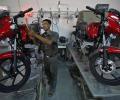
Bajaj Auto received the highest incentive payout under the government's Production-Linked Incentive (PLI) scheme for automobiles and auto components in FY26, securing approximately 625.65 crore. Despite exceeding investment targets, the scheme has significantly underperformed in job creation and incremental sales, generating only 46% of projected jobs and 23% of targeted sales by March 2026.

Lohum's subsidiary Vidyuta has secured government approval under the Electronics Component Manufacturing Scheme (ECMS) for a 20 KTPA cathode active material manufacturing facility, involving a Rs 500 crore investment. This initiative aims to boost domestic production of critical lithium-ion battery components, reducing import reliance and strengthening India's electronics manufacturing ecosystem.

'We have become so unequal that we are among the most unequal countries in the world.'
NITI Aayog member Abhay Karandikar stated that the US government's new export controls, which led AI giant Anthropic to take its latest models offline, underscore the critical need for India to achieve self-reliance in technology development, particularly in AI infrastructure and hardware.

Amitabh Kant, former NITI Aayog CEO, and PGTI CEO Amandeep Johl express strong confidence in India's potential to become a global golf powerhouse within the next decade. Kant specifically predicts a woman golfer will achieve a breakthrough moment for the country. They highlight India's demographic advantage, rising youth participation, and the need for university-level talent development and private investment in infrastructure to achieve this goal.

The Union Sports and Education Ministries, in collaboration with UNESCO, have launched the 'Sports Values in Every Classroom Toolkit' to promote clean sport values and integrity among students nationwide. The initiative, announced at NADA India's Clean Sport Conclave, aims to integrate values like respect and fairness into education through multilingual video modules. Ministers Mandaviya and Joshi emphasised the importance of this partnership in strengthening India's sporting ambitions and bridging the gap between education and sports.

Glimpses of the INDIA bloc's protest march from Parliament House to Nirvachan Sadan, the Election Commission headquarters, in New Delhi on Tuesday, October 6, 2026.

Industry leaders at MRAM Expo 2026 highlighted that India's maintenance economy has the potential to unlock a 1 per cent GDP opportunity. This growth can be achieved by addressing productivity losses from equipment breakdowns, unplanned downtime, and inefficient assets through smarter asset management practices. The NITI Aayog also supports AI-based predictive maintenance for resilient infrastructure, while the Indian Asset Performance Management market is projected for substantial growth by 2033.

Elon Musk, CEO of SpaceX, stated that Starlink's services in India must be affordable for widespread adoption and that competition would benefit consumers, despite potentially reducing Reliance Jio's profits. He criticised Reliance Jio as a 'de facto monopoly' in India, alleging that certain business conglomerates were blocking Starlink's entry.

NITI Aayog member Gobardhan Das asserted that India possessed a rich scientific tradition that suffered setbacks during centuries of foreign domination, with its repository of knowledge systematically destroyed by invaders.

Rahul Gandhi dramatically shifted the INDIA bloc's protest after their march to the Election Commission was stopped and leaders were detained. He entered Akashvani Bhavan, leading to a standoff and a continued sit-in joined by other opposition leaders, including Priyanka Gandhi Vadra, to protest against alleged threats to democracy.

Former NITI Aayog vice-chairman Rajiv Kumar has urged the government to maintain zero-fee UPI transactions for several more years, arguing that the benefits of UPI as a public good outweigh the costs. This comes amidst the government's recent decision to introduce a 0.4% fee on person-to-merchant UPI transactions above Rs 2,000 from October 15, a move that has drawn criticism.

The Centre has announced a major bureaucratic reshuffle, appointing Prakash Rajpurohit as Deputy Election Commissioner and approving appointments for 27 civil servants at joint secretary and equivalent levels across various ministries and departments.

Bollywood stars attend the screening of Vibe written, directed, produced, and starred by Kunal Kemmu along with Preity Zinta, Sparsh Shrivastava and Vanshika Dhir in Mumbai.

Sports Minister Mansukh Mandaviya has announced the formation of a 10-member Task Force, chaired by Yugal Kishore Joshi, to explore the revival of Formula 1 in India. The committee will assess challenges, identify policy interventions, and develop a roadmap to potentially host a race by 2028, addressing issues that led to its discontinuation after 2013.

Rahul Gandhi has ignited a political storm by accusing Prime Minister Narendra Modi, Amit Shah, RSS chief Mohan Bhagwat, and CEC Gyanesh Kumar of "vote chori" and "treason".

Ashok Lahiri, a distinguished economist with experience in government, the private sector, and electoral politics, has been appointed as the new Vice-Chairman of NITI Aayog, tasked with strengthening India's reform trajectory and policy-making.

'It is not about a place with fewer incidents of violence but a city where women have real agency in planning their daily lives.'
India's Sports Minister Mansukh Mandaviya has announced the formation of a 10-member Task Force, chaired by Niti Aayog's Yugal Kishore Joshi, to assess the feasibility and challenges of reviving Formula 1 in the country. The committee aims to develop a roadmap for India to host a Grand Prix by 2028, focusing on sustainable growth, policy interventions, and addressing past issues like taxation. The Adani group, owners of the Buddh International Circuit, will also be involved.

High drama unfolded as INDIA bloc leaders, including Rahul Gandhi and Priyanka Gandhi Vadra, marched to the Election Commission headquarters in Delhi, demanding the resignation of Chief Election Commissioner Gyanesh Kumar over alleged irregularities in the Special Intensive Revision of electoral rolls and his misleading statements regarding Supreme Court observations on Form 6.

Rahul Gandhi led a significant opposition protest in New Delhi, attempting to march to the Election Commission office to allege "vote chori" and demand the CEC's resignation. The protest resulted in a lockdown of Parliament Street, a standoff at the All India Radio premises, and detentions of several opposition MPs, drawing strong reactions from the ruling BJP.

Looking at the unconfirmed list of contestants lining up for the 20th edition of Bigg Boss.

A career break does not erase the experience that came before it. But the labour market can act as though it does. The more women invest in building professional careers, the more costly an interruption can become. How, then, do we enable women to make a comeback? Whose responsibility is it? asks Radha Roy Biswas.

Arundhati Bhattacharyya, Salesforce President and CEO for South Asia, highlighted how cloud and AI are democratising capabilities, offering India a unique opportunity to leapfrog in the technology revolution. Speaking at the IMC Chamber of Commerce, she emphasised that AI will create more jobs by addressing unmet business demands and could significantly boost India's GDP, with NITI Aayog estimating a USD 500-600 billion addition by 2035. She urged Indian businesses to transform using technology, focus on data, redesign work, and invest in skills, stressing that AI is not just for large corporations.
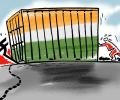
The United States and the European Union have strongly criticised India's trade policies at the World Trade Organization review, highlighting concerns over high tariffs, quality-control orders (QCOs), and restrictions on digital trade and services, which they argue undermine India's economic openness.

NITI Aayog Member Rajiv Gauba has detailed an extensive deregulation agenda, moving India towards a 'permitted unless prohibited' principle to dismantle new forms of the Licence Raj and clear 'regulatory cholesterol' for businesses.

The Delhi Chief Electoral Officer's office has issued notices to over 33 lakh voters, including former deputy prime minister LK Advani, External Affairs Minister S Jaishankar, and former vice-president Jagdeep Dhankhar, over discrepancies in their electoral roll details. These notices are part of the Special Intensive Revision (SIR) exercise, primarily due to details not matching with the 2002 SIR. Despite concerns raised by some politicians, officials assure that no names will be deleted without due verification and an opportunity for voters to respond.
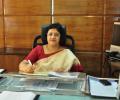
Arundhati Bhattacharya, Salesforce President and CEO for South Asia, stated that cloud and AI are democratising capabilities, offering India a unique opportunity to leapfrog in technology. Speaking at the IMC Chamber of Commerce, she emphasised that AI will create more jobs and urged Indian businesses to transform using technology, rather than merely digitising. She also highlighted the significant economic potential of AI adoption for India.

New Delhi is under a thick blanket of security as it hosts top world leaders for the BRICS Summit. Extensive security measures, including thousands of personnel and CCTV cameras, are in place. Commuters can expect temporary traffic restrictions and diversions due to VVIP movements, though officials aim to minimise public inconvenience.

The Delhi Traffic Police has issued a detailed advisory regarding traffic restrictions and diversions during the upcoming BRICS Summit from September 12-13. While Delhi will not be shut down, commuters should expect temporary stoppages and diversions, especially on routes used by VVIP convoys. The advisory covers movement for residents, essential services, public transport, and advice for exam candidates and hospital visitors, urging reliance on official updates.
