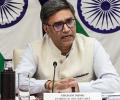
The United States has approved the extradition of Tahawwur Rana, accused of involvement in the 2008 Mumbai terror attacks, to India. The decision was announced by President Donald Trump during a joint press conference with Prime Minister Narendra Modi in the White House. India is currently working on the logistics of Rana's surrender and extradition, with several final steps to be completed before he is sent back to India. The joint statement issued by India and the US during Prime Minister Modi's visit reaffirmed their commitment to fighting terrorism and eliminating terrorist safe havens. The leaders also called on Pakistan to bring to justice the perpetrators of the 26/11 Mumbai and Pathankot attacks. Rana, a Canadian national of Pakistani origin, is currently lodged at a metropolitan detention center in Los Angeles. He is associated with Pakistani-American terrorist David Coleman Headley, one of the main conspirators of the 26/11 attacks.

India and the European Union have finalized a comprehensive mobility pact that will create new opportunities for Indian students and professionals in Europe. The agreement was reached during summit talks between Prime Minister Narendra Modi and top EU officials.

2025 was a period of profound transformation across the globe. From historical leadership changes in the United States and the Vatican to groundbreaking scientific achievements and rising geopolitical tensions, these events reshaped international relations.
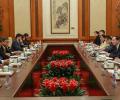
In the talks, China emphasised that the two sides should proceed from the fundamental interests of China, India and adhere to the strategic height and long-term perspective of China-India relations, the readout said.

Speaking during an event on Saturday, Pakistani President Asif Ali Zardari revealed that during New Delhi's retaliatory strikes in May, his Military Secretary urgently advised him to move to a bunker for safety, highlighting the intense fear gripping Pakistan's top leadership amid the Indian operation.

Prime Minister Narendra Modi conveyed India's concerns to his British counterpart Keir Starmer over the activities of pro-Khalistani extremists in the UK, emphasizing the need for action against radicalism and violent extremism.
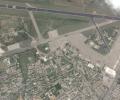
The Pakistani government has once again found itself embarrassed on the world stage, now acknowledging the impact of India's strategic and precision strikes on its military installation during the escalation in May, following Operation Sindoor, which came in retaliation for the April 22 Pahalgam terror attack that killed 26 civilians.
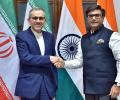
India's Foreign Secretary Vikram Misri will travel to Beijing for a two-day trip beginning Sunday, marking the second high-profile visit from India to China in less than one-and-a-half months. The visit comes amidst ongoing border tensions and follows a recent disengagement pact between the two countries in eastern Ladakh. The Foreign Secretary-Vice Minister mechanism meeting will focus on the next steps for India-China relations, including in the political, economic, and people-to-people domains. The decision to revive this bilateral mechanism was taken at a meeting between Prime Minister Narendra Modi and Chinese President Xi Jinping in Kazan in October.
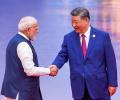
Prime Minister Narendra Modi and Chinese President Xi Jinping held talks focusing on rebuilding bilateral relations, emphasizing border peace and addressing cross-border terrorism.

'The US values its relationship with India and under the strong leadership of President Donald J Trump and Prime Minister Modi, I am optimistic about the days ahead for both of our nations.'

US Ambassador-designate Sergio Gor emphasizes the importance of the India-US relationship after meeting with Prime Minister Narendra Modi, focusing on cooperation in defence, trade, and critical minerals.
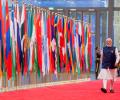
During a special briefing in Tianjin, Misri confirmed that the prime minister will first address the SCO plenary session before meeting President Putin.
Prime Minister Narendra Modi on Saturday met United States Ambassador-designate to India Sergio Gor and said he was confident that India-US ties will further strengthen during his tenure.

Prime Minister Narendra Modi raised concerns about cross-border terrorism with Chinese President Xi Jinping, advocating for India-China cooperation to combat the threat. The discussion occurred during the SCO Summit amidst efforts to rebuild bilateral relations after a border standoff.
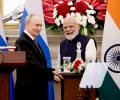
India and Russia have solidified a five-year plan to enhance their economic and trade partnership, while also addressing the ongoing conflict in Ukraine and the threat of terrorism.

Afghan Foreign Minister Amir Khan Muttaqi arrived in New Delhi for a six-day visit, marking the first high-level trip from Kabul since the Taliban's takeover. He is scheduled to meet with Indian officials to discuss bilateral relations and regional issues.

Afghan Foreign Minister Amir Khan Muttaqi is expected to visit India next week, marking the first high-level trip from Kabul since the Taliban's rise to power. The visit follows a temporary exemption to a UN travel ban and is expected to enhance India's relations with the Taliban government.
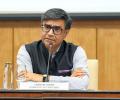
Foreign Secretary Vikram Misri, who faced trolling on social media in the wake of India and Pakistan reaching an understanding on May 10 to halt all military actions, has received support from veteran diplomat Nirupama Menon Rao, a body of Indian diplomats and a host of politicians from several parties.
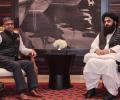
India joined Russia, China, and other nations in opposing the deployment of foreign military infrastructure in Afghanistan during 'Moscow Format' talks. The discussions focused on bringing prosperity and development to Afghanistan, with participants emphasizing the need to eliminate terrorism and integrate Afghanistan into regional connectivity.
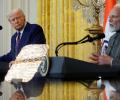
India responds to US President Trump's claim that PM Modi assured him of halting Russian oil imports, stating it is diversifying energy sources to meet market conditions and safeguard consumer interests.
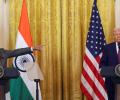
Prime Minister Narendra Modi spoke with President Donald Trump and set the record straight that India had paused strikes on Pakistan during Operation Sindoor following a request from Islamabad and not due to mediation or offer of a trade deal by the United States.
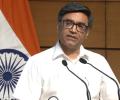
India carried out missile strikes on terror targets in Pakistan and Pakistan-Occupied Kashmir, including the Jaish-e-Mohammad stronghold of Bahawalpur and Lashkar-e-Taiba's base in Muridke, after the Pahalgam attack that killed 26 civilians. The Foreign Secretary said the actions were measured, non-escalatory, proportionate and responsible.

United States President Donald Trump on Wednesday said Prime Minister Narendra Modi had assured him that India would stop purchasing oil from Russia, describing it as "a big step" in efforts to increase global pressure on Moscow.

India has expressed its expectations for Saudi Arabia to consider 'mutual interests and sensitivities' in their bilateral strategic partnership, following Riyadh's strategic defence pact with Pakistan.

India and Pakistan have agreed to a ceasefire on all fronts with effect from 5 pm on Saturday, following talks mediated by the US. The agreement was announced by Foreign Secretary Vikram Misri, who said that the DGMOs of both countries will speak again on May 12 at 1200 hours.

President Putin and Prime Minister Modi greeted each other with a warm hug, after which they walked towards the stage for a family photo of the SCO members.
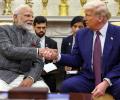
Amid trade tensions between Delhi and Washington, the NYT article gives an account of how relations between Trump and Modi "unraveled" after Trump's repeated claims of solving the four-day conflict in May between India and Pakistan, an assertion denied by India.

India's Foreign Secretary Vikram Misri said on Thursday that the choice of de-escalation is with Pakistan, as India only responded to the April 22 Pahalgam terror attack, which killed 26 people. He added that Pakistan has been escalating the situation with cross-border terrorism against India for decades.
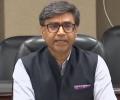
India has accused Pakistan of breaching an understanding reached earlier on Saturday to stop military actions. Foreign Secretary Vikram Misri said there have been repeated violations of the understanding since the evening, and that the Indian armed forces are giving an appropriate response.
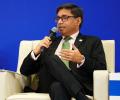
The appointment of Misri, a 1989-batch Indian Foreign Service officer, came after he served as the Indian ambassador to China for nearly three years.

The Indian and Pakistani militaries targeted each other's installations using missiles in the last over 12 hours, further escalating the already tense conflict situation.
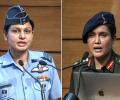
India conducted precision strikes on nine terror targets in Pakistan and Pakistan-Occupied Kashmir, targeting terrorist infrastructure to deter further attacks. The operation, codenamed 'Operation Sindoor', was detailed by two women military officers, Col Sofiya Qureshi and Wing Commander Vyomika Singh, at a press briefing in New Delhi. The officers highlighted the precise nature of the strikes, emphasizing the use of "niche technology weapons" to ensure no collateral damage. The briefing showcased India's military prowess and the growing role of women in the armed forces.

Officials said the government-to-government engagement between the two countries on all other issues remains normal, but conceded rough spots over trade that need ironing out.
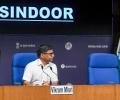
Shiv Sena (UBT) leader Priyanka Chaturvedi on Wednesday alluded to private companies promoting patriotism on one side while profiting off the India-Pakistan cricket matches, as the Army's Colonel Sofiya Qureshi and Air Force's Wing Commander Vyomika Singh are set to appear on an episode of Kaun Banega Crorepati (KBC).
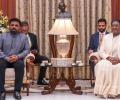
The two sides are also likely to firm up a currency swap framework and seal several other agreements including one on debt restructuring following talks between Modi and Sri Lankan President Anura Kumara Disanayaka on April 5, people familiar with the matter said.

Earlier, at 4:39 am, the district collector had also advised residents to keep lights off and avoid going near windows, roads, balconies, or terraces.
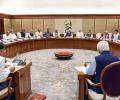
India has reached out to key global powers, including members of the UN Security Council, and apprised them about the reasons behind its military strikes on nine terror targets in Pakistan and Pakistan-occupied-Kashmir in retaliation for the Pahalgam terror attack. New Delhi also conveyed to the countries that it will retaliate if Islamabad escalates the already tense situation.

Japan is expected to increase its investment target in India from the earlier 5 trillion yen ($34 billion) to almost 10 trillion yen.
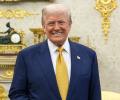
Trump, who has repeatedly said that he stopped the conflict between India and Pakistan through trade, last Friday said for the first time that "five jets were shot down" during the fighting.
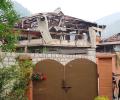
Markaz Taiba of Lashkar-e-Taiba (LeT) in Pakistan's Muridke, one of the nine terror camps struck by the Indian armed forces on Wednesday, is a site where terrorists including Ajmal Kasab involved in the 2008 Mumbai attack were trained, a senior military official said.
 © 2026 Rediff.com - Advertise with us - Disclaimer - Privacy Policy - Sitemap - Feedback - About us - Terms of use - Grievances