
The Jammu and Kashmir government reports that over 3,000 schools have experienced low or zero enrolment since 2022, prompting school closures and mergers. The report details the financial implications and district-wise breakdown of the affected schools.

A Pakistani intruder was killed by the BSF while attempting to cross the International Border in the Kathua district of Jammu and Kashmir. The BSF is lodging a protest with Pakistani counterparts.

The Jammu and Kashmir government has achieved significant progress in digitising revenue records, reaching 93.39 per cent completion with over 64 lakh records approved across the Union Territory.

The first direct Vande Bharat Express service between Jammu and Srinagar has commenced commercial operations, significantly reducing travel time between the two cities and enhancing rail connectivity in the region.
Congress leader Rahul Gandhi has called for a high-level investigation into the alleged rape and murder of a girl in Ghazipur, Uttar Pradesh, demanding immediate justice and protection for the victim's family.
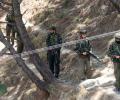
A police team came under fire from terrorists during a combing operation in Kathua district of Jammu and Kashmir on Monday night. The encounter led to a night cordon being laid to prevent the three terrorists trapped in the forest from escaping. Deputy Inspector General Shiv Kumar Sharma said the operation would continue until the last terrorist is neutralized, urging people near the border to report suspicious activities.

On February 6, 2026, during his visit to Jammu and Kashmir, Union Home Minister Amit Shah visited key border outposts along the India-Pakistan frontier, shared a Bada Khana meal with soldiers to boost morale, and held an important meeting with BJP leaders in Jammu.

Northern states in India are experiencing severe heatwave conditions, with temperatures reaching up to 46.6 degrees Celsius. The heatwave has impacted daily life, leading to a decline in tourism and increased power demand. Authorities have issued advisories and implemented measures to mitigate the effects of the extreme heat.
The Anti-Corruption Bureau of Jammu and Kashmir faces scrutiny due to a low conviction rate in corruption cases over the past six years, despite a high volume of complaints and enforcement actions.
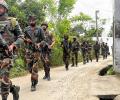
A massive multi-tier combing operation to track down a group of infiltrating terrorists continued for the fourth consecutive day in forested areas of Jammu and Kashmir's Kathua district. The operation, involving the army, NSG, BSF, police, Special Operation Group, and CRPF, is supported by helicopter, UAVs, drones, bulletproof vehicles, and sniffer dogs. The operation was launched on Sunday evening following an encounter between security forces and terrorists hiding in a nursery. Security agencies have questioned several persons in various areas and picked up three suspects for questioning.

Security forces on Monday resumed Operation Trashi-1 in the forested Sonar village area of Kishtwar after suspending it overnight due to poor visibility and difficult terrain.
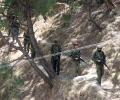
A multi-agency operation is underway in Kathua, Jammu and Kashmir to track down three terrorists believed to be hiding in a forested area. The operation, which resumed Thursday, involves the Indian Army, Police, CRPF, NSG, and BSF. The terrorists are suspected to be part of a group that has had multiple encounters with security forces in the past few weeks, resulting in the deaths of four policemen. The operation is being conducted with aerial surveillance, sniffer dogs, and multiple surveillance-cum-ambushes. Six people, including some women, have been detained for questioning in connection with the terrorists' movements.
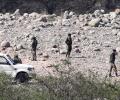
Four recent encounters in Jammu and Kashmir's Kathua district have exposed the route used by terrorists to infiltrate into India from across the International Border (IB), a senior police officer said. The successful recovery of huge quantities of arms and ammunition, including explosives, after the gunfights has scuttled a major plan of the terror groups to carry out a major strike in Jammu and Kashmir.
Jammu and Kashmir has shown significant progress in addressing public grievances through the JK Samadhan portal, achieving an 88 per cent disposal rate. District administrations and key departments have played a crucial role in this achievement, with high disposal rates and positive citizen feedback.

Security forces in Jammu and Kashmir are continuing a multi-agency operation to track down three terrorists who have escaped multiple encounters. The operation has entered its 12th day and has seen the deployment of additional troops, aerial surveillance, and a crackdown on terrorist supporters.
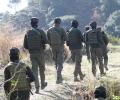
Security forces on Saturday extended the ongoing search operation to new areas after the body of the fourth policeman and two slain terrorists were recovered from the scene of a gunfight in a remote forested area in Kathua district of Jammu and Kashmir, officials said.
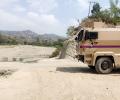
Two terrorists were killed and five security personnel were injured in a fierce gun battle in a remote forested area of Kathua district in Jammu and Kashmir. The encounter, which involved a group of approximately five terrorists, triggered intense firing and explosions. The gunfight, centered near Jakhole village, resulted in injuries to Special Police Officer Bharat Chalotra, who sustained facial wounds. Three security personnel, including a Sub-Divisional Police Officer (SDPO), were reportedly trapped near the gunfight's location. The terrorists were moving through the forest area when a police party headed by an SDPO moved in after getting specific information. Reinforcements from the police, army, and CRPF were immediately deployed to the area.

Delhi Police's Special Cell has dismantled an inter-state terror, arms, and espionage module allegedly supported by Pakistani handlers and the ISI, revealing a covert surveillance network near sensitive military locations.
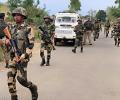
Three civilians were killed in a remote area of Jammu and Kashmir's Kathua district, sparking protests and a shutdown. The killings, which are being investigated as a possible case of terrorism, have caused fear and anger in the community. Union Home Secretary Govind Mohan is reviewing the security situation and has assured that such incidents will not be allowed to happen again. The incident has also raised concerns about the safety of local politicians, with one MLA being attacked by a group of protesters.
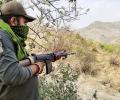
Security forces in Jammu and Kashmir resumed an anti-terrorist operation in Kathua district, a day after a deadly encounter killed three terrorists and three policemen. Seven others were injured in the gunbattle. The operation began on Thursday morning after a group of suspected Jaish-e-Mohammad terrorists infiltrated from across the International Border. While the bodies of three terrorists were found, the fate of two others remains unknown. The operation, centered near Jakhole village, saw intense clashes involving police, army, and CRPF forces.
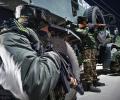
The terrorists were located by joint troops of Army, police and CRPF amid intensified search operations in the higher reaches of Ramnagar-Basantgarh area around 4 pm on Tuesday, leading to a fierce gunfight.

Haryana government suspends jail officials after a terror accused was murdered inside Neemka Jail in Faridabad. The victim, Abdul Rehman, was allegedly involved in a conspiracy to attack the Ram temple in Ayodhya.
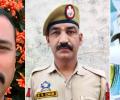
Balwinder Singh Chib, a police officer in Jammu and Kashmir's Kathua district, was killed in an encounter with Pakistani terrorists, continuing a legacy of sacrifice that spans three generations of his family. Chib's great-grandfather and uncle were also martyred in the line of duty, and his brother died during World War I. The family is venerated in their village for their history of patriotism and sacrifice.
Security forces have intensified search operations using aerial surveillance and sniffer dogs following a night-long cordon after fresh reports of suspected movement of three individuals, believed to be terrorists, who escaped a recent encounter in Jammu and Kashmir's Kathua district, officials said.

Security forces in Jammu and Kashmir's Kishtwar district killed two Pakistani terrorists affiliated with Jaish-e-Mohammad (JeM) in an encounter. One of the deceased is believed to be a notorious JeM commander, Saifullah, who had been active in the region for five years.

Western Army Commander Lieutenant General Manoj Kumar Katiyar reports a sustained decline in militancy in Jammu and Kashmir, emphasizing the army's readiness to respond to any misadventures by Pakistan and its support for terrorist activities.

''Women are coming into public spaces in larger numbers than ever before. They are educated, capable, opinionated, and determined.' 'But the more women push for access to public space, the harder they are pushed back -- through attacks like this, through discrimination, through the glass ceiling, through the deliberate denial of recognition.'

Taken by surprise when heavily armed men ambushed their convoy but quickly gathering themselves, jawans of the 22 Garhwal regiment fired more than 5,100 rounds to protect their injured colleagues and forced the terrorists to retreat into Kathua's wooded hills, officials said.

The intense exchange of fire between the two sides lasted several hours before the guns fell silent. Reinforcements have been deployed to strengthen the cordon and neutralise the terrorists, the officials said.

Several individuals were detained for questioning as a massive search operation to flush out terrorists entered the third day in the upper reaches of Jammu and Kashmir's Kishtwar district on Tuesday, officials said.

A paratrooper critically injured in a gunfight with terrorists in Kishtwar district succumbed to his injuries. A massive search operation is underway to locate the terrorists.

Mirroring the traditional hawala system, where money is sent through non-banking channels, this digital version uses the anonymity of unregulated cryptocurrency to erase the financial trail and inject cash into the domestic economy.
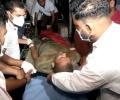
Five Army personnel were killed and as many injured on Monday when a group of heavily-armed terrorists ambushed a patrolling party in Badnota area in Kathua.

Rifleman Adarsh Negi spoke to his father over the phone on Sunday. The next day, Dalbir Singh Negi got another call, informing him about his son's death in the terror attack in Jammu and Kashmir's Kathua.

Security forces tightened their cordon around a forest area in the higher reaches of Doda district on Tuesday evening following an encounter with hiding terrorists, officials said.

Head constable Bashir Ahmad laid down his life and two officers -- a DSP and an assistant sub-inspector -- were injured in the encounter, he said, adding both the officers are stable.

On Monday, five Army personnel were killed and five injured when heavily armed terrorists hurled a grenade and opened indiscriminate fire on two army vehicles around 3.30 pm on the Machedi-Kindli-Malhar mountainous road near Badnota village, about 150 km from the district headquarters Kathua.
Two alleged overground workers (OGWs) were arrested for their involvement in a terror attack on an army patrol party in Jammu and Kashmir's Kathua district, the police said.

The manhunt for the terrorists responsible for the ambush in Jammu and Kashmir's Kathua district, which resulted in the tragic death of five army personnel, has led to the detention of a truck driver and 50 others for questioning, officials said on Wednesday.
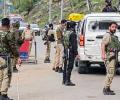
Jammu and Kashmir Police have intensified their crackdown on terror operatives and overground workers (OGWs) across the Jammu region, conducting extensive search operations in multiple districts.
