
The heat wave is likely to impact parts of Jammu and Kashmir, Himachal Pradesh, Uttarakhand, Punjab, Haryana, Delhi, Rajasthan, Madhya Pradesh, Jharkhand, Odisha and Gangetic West Bengal, the Met office said.

The India meteorological department said heatwave conditions will persist for at least two more days.

A strong dust storm and gusty winds followed by rain hit Delhi-NCR on Friday evening, causing trees to be uprooted in several parts and leading to traffic congestion. Thunderstorms caused power disruptions in several parts of the city, primarily due to trees and branches falling on electricity cables. The India Meteorological Department (IMD) has issued an orange alert, recommending people stay indoors and avoid unnecessary travel.

Skymet says the IMD ignored the required criterion of two days of necessary rainfall to declare a proper onset of monsoon, reports Sanjeeb Mukherjee.

A 22-year-old youth and a person with disability died, while at least 11 were injured, in separate rain-related incidents in the national capital on Wednesday evening. The incidents occurred amid sudden changes in weather in Delhi, as a rainy storm marked by hail wrecked havoc across the city, throwing traffic out of gear as far as Delhi-Noida, Delhi-Ghaziabad, and Delhi-Gurugram roads and uprooting several trees.

India will launch its own composite index next year to quantify the impact of heat on its population and generate impact-based heat wave alerts for specific locations, the India Meteorological Department (IMD) has said.

While two bodies were recovered on Wednesday, the death toll climbed to four on Thursday after the recovery of two more bodies from the Indira Priyadarshini Hydroelectric project site in Kangra district.

vThe longest duration cyclone over the north Indian Ocean had developed over the Bay of Bengal and weakened over the Arabian Sea between November 8-23, 1977 with a life period of 14 days and six hours.

'Marathwada is the suicide capital of Maharashtra.' 'To stop such man-made disasters, the government should immediately come up with a rightful package, not this charitable approach to compensation.'

According to the IMD, a rain event is categorised as a cloudburst if a weather station receives 100 mm of rain in one hour.
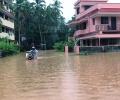
Heavy monsoon rains battered Karnataka's coastal belt for the third consecutive day on Monday, severely disrupting normal life in Dakshina Kannada district, prompting authorities to issue a red alert and deploy disaster response teams. A red alert indicates extremely heavy rainfall of over 20 cm in 24 hours, and will remain in force for the next five days, according to the India Meteorological Department (IMD). Several parts of Mangaluru city reported waterlogging and traffic snarls, while minor incidents of landslides were reported from hilly regions across the district. The district administration has directed schools and composite colleges to remain shut on 27 and 28 following the IMD issuing a red alert. Instructions were also issued to relocate residents living in vulnerable hillside and riverside areas to safer locations. The authorities have sought prompt action from the National Highways Authority of India (NHAI) following complaints of water intrusion in residential areas due to ongoing highway construction works.

Heavy overnight rain in Gurugram caused widespread waterlogging and traffic gridlock, bringing the city to a standstill. Several residential areas and major roads were inundated, leading to commuter chaos.

Climate change has hampered the ability of the forecasting agencies to accurately predict severe events and weather bureaus across the world are focusing on augmenting the observational network density and the weather prediction modelling to improve predictability, India Meteorological Department (IMD) Director General Mrutyunjay Mohapatra has said.

Heavy rains across India have led to widespread flooding, causing damage to infrastructure, displacement of residents, and disruption of normal life. Rescue efforts are underway in affected areas.

The eastern and northern parts of Delhi witnessed rain and hailstorm, IMD said.

The national capital has been witnessing an incessant spell of light to moderate rain for the past two days.

The country can expect normal rainfall during the southwest monsoon season as a positive Indian Ocean Dipole (IOD) and a lower snow cover over the northern hemisphere are likely to counter the evolving El Nino conditions, the India meteorological department (IMD) said on Tuesday.

This would be due to early monsoon onset, abundant precipitation in the soil and the government's higher minimum support price (MSP) for farmers, the USDA said in its assessment.

Heavy rains in Madhya Pradesh's Shivpuri and Guna districts have led to a flood-like situation, stranding people including school children. The Army has been called in for rescue and relief operations. Other districts are also affected, and the IMD has issued a heavy rain alert.

Scientists had earlier said the cyclone pulled the moisture and convection, impacting the intensity of the monsoon and delaying its onset over Kerala.

Addressing a press conference virtually, India Meteorological Department Director General Mrutyunjay Mohapatra said September was likely to witness normal rainfall in the range of 91-109 per cent of the long period average of 167.9 mm.

'The lakes up there were already at the brink due to accumulated rainwater, and then snowmelt occurred.' 'When one lake breached, it triggered a cascading effect -- other lakes breached subsequently.'

Dense fog blanketed parts of Delhi on Wednesday morning, reducing visibility and disrupting over 100 flights and 26 trains. The India Meteorological Department (IMD) reported minimum visibility of 200 metres in moderate fog at Safdarjung and 150 metres in dense fog at Palam. The IMD has issued an orange alert for Delhi, with dense to very dense fog reported in several areas. Cloudy skies are expected throughout the day, with light rain or drizzle likely in some areas.

The frequency of short-duration, heavy rainfall events over central India and long-duration heavy rainfall events over the north-western coasts of the country has risen considerably in the last few decades.

Heavy waterlogging was witnessed in several towns and cities, while roads were closed in rural areas on Friday morning due a heavy spell.

The India meteorological department on Monday issued an 'orange alert' for Mumbai and Thane signalling very heavy rainfall till June 21.

The southwest monsoon might finally start withdrawing from parts of North-West India over the next three days, signaling the end of its four-month journey over the country that started in June, the India Meteorological Department (IMD) said. However, though the retreat might begin from next week, the rains might not descend quickly, as the met department predicted fresh spells of rains in Vidarbha, Chhattisgarh and east MP on September 21-22 and over Odisha, Coastal areas north Andhra Pradesh and Gangetic West Bengal on September 19-21. "Due to anti-cyclonic flows over northwest India at lower tropospheric levels, dry weather is very likely over west Rajasthan, Punjab, Haryana, Chandigarh and Delhi during the next five days. "Hence conditions are becoming favourable for the withdrawal of Southwest Monsoon from parts of northwest India during next three days," the IMD said.

There could be occasional gusty winds reaching 40-50 kmph as per the weather bureau's prediction.

From the Sensex firms, Mahindra & Mahindra, HCL Tech, Tata Motors, Nestle, ITC, Hindustan Unilever, Larsen & Toubro, and Tech Mahindra were the biggest gainers. In contrast, Eternal, UltraTech Cement, Power Grid, Tata Steel and Kotak Mahindra Bank were among the laggards. Eternal dropped 4.51 per cent.

Mercury hovered around 40 degrees Celsius in large parts of the country on Monday as the Indian meteorological department predicted heat wave conditions in parts of east India over the next four days and the northwest region over the next two days.
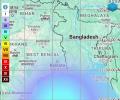
There was no report of any loss of properties or casualty so far, a senior official of the Odisha revenue department said, adding that the impact of the earthquake was "negligible" as its centre was in the Bay of Bengal.

Incessant heavy rain lashed Mumbai, prompting the meteorological department to upgrade the 'orange' alert to 'red' with effect from Wednesday night till Thursday afternoon, officials said.

Data since 2005 show that the five years with the highest rainfall saw average market returns of 8.98 per cent, while the five driest years returned 25.7 per cent on average.

The IMD, in its review for the month, said the observed monthly average maximum, minimum and mean temperature for the country as a whole during March this year are 32.65 degrees Celsius, 19.95 degrees Celsius and 26.30 degrees Celsius, respectively, against the normal 31.24 degrees Celsius, 18.87 degrees Celsius and 25.06 degrees Celsius based on the climatology period 1981-2010.

A three-hour heavy downpour accompanied by a dust storm hit Delhi-NCR early morning on Friday, causing flight delays and traffic disruptions as seven people were killed in rain-related incidents across north India.

In Rajasthan, Pilani recorded 44.9 degrees Celsius, Phalodi and Churu touched 43.8 degrees Celsius and 43.5 degrees Celsius respectively, while Bikaner and Jaipur registered 43.4 degrees Celsius and 43 degrees Celsius.

The four-month monsoon season from June to September accounts for 75 per cent of rainfall in the country.

Northwest, central and east India are predicted to record maximum temperatures three to five degrees above normal over the next five days, the India meteorological department (IMD) said on Thursday.

While three persons died in Koraput district, two each died in Jajpur and Ganjam districts, and one each in Dhenkanal and Gajapati districts, they said.

It expects rainfall to be about 106 per cent of the long period average, aided by La Nia conditions anticipated to play a role in the second half of the monsoon season.
