
'I am not an aspiration-oriented politician.' 'This is the time to redefine politics.' 'Politics of power is not real politics.'

Preventive measures are in place and the forecast suggests further improvement, said the statutory body responsible for forming air pollution reduction strategies for the region and their implementation.

It further said that the owners, master and crew of the vessel handled the ship in a negligent manner despite being aware of the dangerous cargo it was carrying.

India and the UK on Thursday inked a landmark free trade agreement (FTA) that will cut tariffs on British whisky, cars and an array of items, besides boosting bilateral trade by around $34 billion annually.
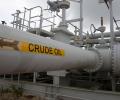
The government has slashed the windfall profit tax levied on domestically-produced crude oil as well as on export of diesel and ATF following a drop in global oil prices, according to an official order. The levy on crude oil produced by companies such as Oil and Natural Gas Corporation (ONGC) has been cut steeply to Rs 1,700 per tonne from Rs 4,900, the order dated December 15 said. Crude oil pumped out of the ground is refined and converted into fuel like petrol, diesel and aviation turbine fuel (ATF).
India, the world's third largest oil importing and consuming nation, is likely to save as much as Rs 1.8 lakh crore on import of crude oil and LNG if the trend of softening international energy rates continues, Icra said Wednesday. India, which meets over 85 per cent of its crude oil needs through imports, spent $242.4 billion on buying crude from overseas in the fiscal year ended March 31, 2025.
Truck rentals saw a positive momentum across most key trunk routes due to an increased pre-kharif agricultural activity and a resilient manufacturing sector. The Kolkata-Guwahati-Kolkata corridor witnessed a month-on-month (M-o-M) rise of 2.4 per cent, while the Mumbai-Chennai-Mumbai route grew by 1.9 per cent and the Delhi-Hyderabad-Delhi route saw a 1.6 per cent increase in truck rentals, said June edition of the Shriram Mobility Bulletin.
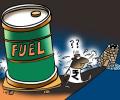
India's climate change goals are turning combustible. On the one hand, a protracted dispute between the government and manufacturers over subsidies threatens to slow the pace of electric vehicle (EV) sales. On the other hand, repeated assertions by different arms of the government over banning sales of new fossil fuel-fired vehicles have queered the pitch for energy investments. Before we address the issue of the recommended diesel vehicle ban in the recent report on energy transition, issued months before the next round of global climate talks begin in Dubai in November, let's look at what's at stake.

Smartphones, for the first time, emerged as India's largest individual export commodity by value over 10 months of any financial year, during the April-January period of FY25, based on harmonised system (HS) codes. During the period under review, smartphone exports from India reached $18.31 billion, according to data from the Department of Commerce, surpassing automotive diesel fuel exports, which stood at $16.04 billion.

The growing rift between MSIL and rival automakers has complicated the government's efforts to finalise the CAFE norms.

According to a situation report issued by the DGS, the oil containment measures have temporarily stabilised the situation, but full risk mitigation will happen only on successful commencement of saturation diving to extract the remaining trapped fuel oil from the vessel, MSC Elsa 3.
A looming global shortage of diesel in Europe presents India with more than one opportunity to profit from strong margins. A shortage of the fuel, a key contributor to inflation, has been exacerbated by the conflict in Ukraine, and western sanctions on Russian fuel supplies. The slowdown in natural gas supply means the West needs diesel to heat their homes this winter.
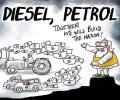
Petrol and diesel prices are unlikely to be increased despite firming raw material costs because of upcoming general elections next year, Moody's Investors Service said. Three state-owned fuel retailers -- Indian Oil Corporation (IOC), Bharat Petroleum Corporation Ltd (BPCL) and Hindustan Petroleum Corporation Ltd (HPCL) -- which control roughly 90 per cent of the market, have kept petrol and diesel prices on freeze for a record 18 months in a row. This is despite the raw material (crude oil) cost surging last year, leading to heavy losses in first half of 2022-23 fiscal year before easing oil prices propelled them to profitability.
'The question often being asked is whether the demand for petrol and diesel is price inelastic?' asks Arun Balakrishnan, former chairman and managing director, Hindustan Petroleum.
Petrol and diesel prices on Thursday were hiked by 35 paise per litre each, the second consecutive day of increase that took pump rates across the country to record high levels. The price of petrol in Delhi rose to its highest-ever level of Rs 106.54 a litre and Rs 112.44 per litre in Mumbai, according to a price notification of state-owned fuel retailers. In Mumbai, diesel now comes for Rs 103.26 a litre; while in Delhi, it costs Rs 95.27 per litre.

After Reliance Industries Ltd and its partner bp plc of the UK, Nayara Energy - the nation's largest private fuel retailer - has started selling petrol and diesel at Re 1 less than the fuel sold by state-owned retailers, officials said. While state-owned Indian Oil Corporation (IOC), Bharat Petroleum Corporation Ltd (BPCL) and Hindustan Petroleum Corporation Ltd (HPCL) continue to hold prices despite a drop in international rates, private fuel retailers have started passing on the benefit to consumers. "To further stimulate domestic consumption and cater to local customers better, we have introduced a Re 1 discount in our retail outlets until the end of June 2023," a spokesperson for Nayara Energy said.
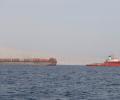
US strikes on Iran's three main nuclear facilities have once again raised concerns that Tehran might shut down the Strait of Hormuz - one of the world's most critical chokepoints, through which a fifth of global oil and gas supply flows.

The share of EVs in the luxury segment rose from 7 per cent in January-May 2024 to 11 per cent during the same period in 2025, marking a 66 per cent growth in the electric luxury segment.

Indian refiners are likely to import 2-2.2 million barrels per day of Russian crude oil in June - the highest in the last two years and more than the total volumes bought from Iraq, Saudi Arabia, the UAE and Kuwait, preliminary data by global trade analytics firm Kpler showed.

When it comes to the "all-new" Tata Altroz unveiled on Thursday, one might wonder if it's truly a complete overhaul or just a refreshed take on the familiar.

Petrol price on Friday was hiked by 30 paise a litre and diesel by 35 paise per litre as domestic fuel prices witnessed possibly the largest rally in rates. The price of petrol in Delhi rose to its highest-ever level of Rs 103.54 a litre and to Rs 109.54 per litre in Mumbai, according to a price notification of state-owned fuel retailers. Diesel rates too touched a record high of Rs 92.12 in Delhi and inched closer to the Rs 100-a-litre mark in Mumbai. It currently costs Rs 99.92 a litre in Mumbai.
Petrol and diesel sales in India jumped in September as economic activity picked up with the nearing festival season and the ending of the monsoon raised the demand, preliminary industry data showed. Petrol sales soared 13.2 per cent to 2.65 million tonnes in September when compared to 2.34 million tonnes of consumption in the same month last year. Sales were 20.7 per cent higher than Covid-marred September 2020 and 23.3 per cent more than pre-pandemic September 2019.

The government on Monday scrapped 30-month old windfall profit tax on domestically-produced crude oil and on export of jet fuel (ATF), diesel and petrol following a decline in international oil prices. Minister of State for Finance Pankaj Chaudhary tabled a notification in Rajya Sabha scrapping the levy on crude oil produced by firms like state-owned Oil and Natural Gas Corporation (ONGC) and exports of fuels done by companies like Reliance Industries Ltd.
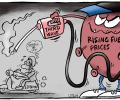
Petrol price on Thursday was hiked by 35 paise per litre and diesel by 15 paise, pushing rates to a new high across the country. Petrol in Delhi now costs Rs 101.54 a litre and diesel Rs 89.87 per litre, according to a price notification of state-owned fuel retailers. The increase comes after rates stayed mute for three days. Petrol price was last hiked on July 12, on a day when diesel rates had seen its first reduction in almost three months. The increase on Thursday neutralised the 16 paise price cut in diesel on July 12.
The government has reduced the windfall profit tax levied on domestically-produced crude oil as well as on the export of diesel and ATF, in line with softening international oil prices, according to an official order. The levy on crude oil produced by companies such as Oil and Natural Gas Corporation (ONGC) has been cut to Rs 1,900 per tonne from Rs 2,100 per tonne, the order dated January 16, said. Crude oil pumped out of the ground and from below the seabed is refined and converted into fuel like petrol, diesel and aviation turbine fuel (ATF).
The government has cut windfall profit tax on export of diesel and ATF to their lowest while also reducing the levy on domestically-produced crude in line with softening international oil prices, according to an official order. The levy on crude oil produced by companies such as Oil and Natural Gas Corporation (ONGC) has been cut to Rs 4,350 per tonne from Rs 5,050 per tonne, the order dated February 15 said. Crude oil pumped out of the ground and from below the seabed is refined and converted into fuels like petrol, diesel and aviation turbine fuel (ATF).

Petrol and diesel prices across the country soared to all-time high levels on Thursday as rates were hiked again in line with the spurt in international oil prices. Petrol price was increased by 30 paise per litre and diesel by 35 paise a litre, according to a price notification of state-owned fuel retailers. The price of petrol in Delhi rose to its highest-ever level of Rs 103.24 a litre and to Rs 109.25 per litre in Mumbai, the notification showed.
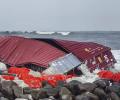
Containers from a Liberian cargo ship that sank off the Kerala coast have started washing ashore, prompting authorities to urge the public to stay away from them. The ship carried 13 hazardous cargos, including calcium carbide, which reacts with seawater to release highly flammable acetylene gas. The Indian Coast Guard is leading pollution response efforts and monitoring the spread of the oil slick.

A Liberian cargo ship carrying 640 containers, including 13 hazardous cargoes, has sunk off the coast of Kerala, raising concerns of environmental damage. The ship, MSC ELSA 3, capsized and sank in the early hours of May 25 after listing rapidly. The three remaining crew members were rescued by the Indian Navy. The Indian Coast Guard is monitoring the situation for any oil spills and has positioned a ship with pollution response equipment at the scene. The ship was carrying 84.44 MT of diesel and 367.1 MT of furnace oil, in addition to the hazardous cargo. The Kerala State Disaster Management Authority has cautioned the public against touching any cargo containers or oil spills that may wash ashore.
The government has put off by one month the levy of an additional Rs 2 per litre excise duty on petrol and diesel that is not doped with ethanol and bio-diesel in a bid to give the industry more time to implement the measure.

India, the world's third largest oil consuming and importing nation, spent 112.5 billion euro (about Rs 1.5 lakh crore) on buying crude oil from Russia since the start of the Ukraine war, a European think tank said on Thursday. The Centre for Research on Energy and Clean Air (CREA) released a report on payments to Russia for fossil fuels since February 24, 2022. "According to our estimates, since the beginning of the war, Russia earned EUR 835 billion in revenue from fossil fuel exports," it said.
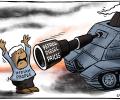
Uttam Ghosh offers his take on the daily increase in the prices of petrol and diesel.

The government has raised the windfall profit tax levied on domestically produced crude oil as well as on the export of diesel and ATF, in line with firming international oil prices, according to an official order. The levy on crude oil produced by companies such as Oil and Natural Gas Corporation (ONGC) has been increased to Rs 2,100 per tonne from Rs 1,700 per tonne, the order dated January 2, said. Crude oil pumped out of the ground and from below the seabed is refined and converted into fuel like petrol, diesel and aviation turbine fuel (ATF).
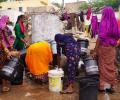
In Rajasthan's Karauli district, a decade ago, rampant drought and dwindling water sources forced many men into a life of dacoity, leaving their families in fear. However, the women of Karauli, tired of the despair, took matters into their own hands. They persuaded their husbands to give up their lives of crime and together they began reviving old water bodies and constructing new ones with the help of a local NGO. This community-led effort, which included building pokhars (water bodies) and reviving the Serni River, resulted in a remarkable transformation, bringing stability and hope to the region, and turning former dacoits into thriving farmers.
Petrol price on Thursday was cut by Rs 6.07 per litre and diesel price by Rs 11.75 in Delhi as oil companies passed on a record reduction in excise duty rates to consumers. Buckling under pressure, the government had on Wednesday cut excise duty on petrol by Rs 5 per litre and that on diesel by Rs 10 a litre to give reprieve to consumers battered by record high retail fuel prices. Since states charge local sales tax or VAT not just on the base price but also on the excise duty levied by the centre, the total incidence of price reduction is higher.
International oil prices surged close to $100 a barrel on Tuesday after Russian President Vladimir Putin sent troops into Ukraine, but petrol and diesel prices in India continue to be on freeze and are expected to rise once assembly elections in states like Uttar Pradesh end. Amid fears of supplies being disrupted because of Russian aggression, the price of futures contract for Brent crude oil with April delivery on London's ICE rose by 4.18 per cent to $99.38 per barrel on Tuesday morning, before paring some gains to settle just above $98. The last time Brent exceeded $99 per barrel was in September 2014. Russia makes up for a third of Europe's natural gas and about 10 per cent of global oil production.
Petrol and diesel prices were on Tuesday hiked by 80 paise a litre each, taking the total increase in rates in the last two weeks to Rs 9.20 per litre. Petrol in Delhi will now cost Rs 104.61 per litre as against Rs 103.81 previously, while diesel rates have gone up from Rs 95.07 per litre to Rs 95.87, according to a price notification of state fuel retailers.
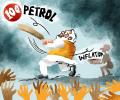
Petrol and diesel prices were on Wednesday hiked by 80 paise a litre each, taking the total increase in rates in the last nine days to Rs 5.60 per litre. Petrol in Delhi will now cost Rs 101.01 per litre as against Rs 100.21 previously while diesel rates have gone up from Rs 91.47 per litre to Rs 92.27 according to a price notification of state fuel retailers. Rates have been increased across the country and vary from state to state depending upon the incidence of local taxation.
Petrol and diesel price on Sunday was hiked again by 35 paise a litre and the auto fuels now cost a third more than the rate at which ATF is sold to airlines. The fourth straight day of 35 paise per litre hike sent petrol and diesel rates to record highs across the country. The price of petrol in Delhi rose to its highest-ever level of Rs 105.84 a litre and Rs 111.77 per litre in Mumbai, according to a price notification of state-owned fuel retailers.
The 17th daily increase in rates, since oil companies on June 7 restarted revising prices in line with costs after ending an 82-day hiatus in rate revision, has taken diesel prices to fresh highs.
