
The 17th daily increase in rates, since oil companies on June 7 restarted revising prices in line with costs after ending an 82-day hiatus in rate revision, has taken diesel prices to fresh highs.
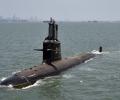
INS Vaghsheer is a silent predator on the prowl...

The excise duty cut will translate into a reduction of Rs 9.5 a litre on petrol and Rs 7 a litre in diesel after taking into account its impact on other levies.

Petrol and diesel prices on Friday rallied to their highest ever levels across the country, as fuel rates were hiked again by 35 paise a litre. The price of petrol in Delhi rose to its highest-ever level of Rs 105.14 a litre and Rs 111.09 per litre in Mumbai, according to a price notification of state-owned fuel retailers. In Mumbai, diesel now comes for Rs 101.78 a litre; while in Delhi, it costs Rs 93.87.

A strong demand for diesel SUVs has bumped up the contribution of these variants to Hyundai Motor India's sales to a three-year high, a company top official told Business Standard. The local arm of the South Korean carmaker has benefitted after some leading manufacturers - including car market leader Maruti Suzuki - pulled the plug on diesel models amid tightening regulations. Hyundai has also gained from the changing travel preference -people are frequenting getaways and taking to the road a lot more than what they did before the pandemic. This trend has been fuelling overall SUV sales.
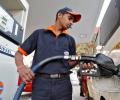
Diesel price on Monday went past the Rs 98-a-litre mark in a few places of Rajasthan as a relentless increase in fuel prices took rates to record-high levels. Petrol price was increased by 29 paise per litre and diesel by 26 paise a litre, according to a price notification of state-owned fuel retailers. The increase - 16th this month - pushed petrol and diesel prices to a fresh all-time high across the country. Sri Ganganagar district of Rajasthan saw petrol price climb to Rs 105.24 a litre and diesel to Rs 98.08 per litre.

Buying a car, particularly a diesel-powered one, is set to pinch the customers' pockets even more from the next financial year, as the second phase of Bharat Stage VI (BSVI) emission norms kicks in. The rules require cars to be compliant with real driving emission (RDE) norms, which measure pollutants emitted by cars while they are being driven on the road, unlike in a laboratory test. The norms may increase the cost of producing diesel vehicles by nearly Rs 75,000 to Rs 80,000, and petrol-powered ones by Rs 25,000 to Rs 30,000, analysts said.
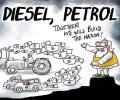
Petrol and diesel sales in the country fell in July over the previous month as the onset of monsoon chipped away demand in some sectors and restricted mobility, preliminary industry data showed. Diesel, the most widely used fuel in the country, saw consumption drop 13.1 per cent to 6.44 million tonnes from 7.39 million tonnes of demand in June. The arrival and intensity of monsoon weigh heavily on diesel demand in the country and consumption traditionally is lower in July-September than in April-June.
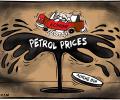
A proposal in the Union Budget 2022-23 to raise excise duty on dirtier, unblended retail petrol and diesel has met with some resistance from the petroleum ministry. However, finance ministry officials say no such communication arguing against the levy of extra duty on diesel has been received from the oil ministry. Until there are discussions between the two departments, the proposal will not be tweaked in the Finance Bill. The Rs 2 per litre additional excise duty proposed on unblended fuels in the Finance Bill will result in a uniform hike of diesel prices across the country from October 1.
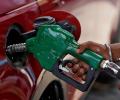
The price of petrol was hiked to Rs 101.39 a litre in Delhi from Rs 101.19 and to Rs 107.47 per litre in Mumbai, according to a price notification of state-owned fuel retailers. Diesel rates went to Rs 89.57 a litre in Delhi and Rs 97.21 in Mumbai.

Reliance Industries Ltd on Friday reported a 2.4 per cent rise in its March quarter net profit as store rationalisation in retail business and improved margins in telecom helped offset weakness in mainstay oil and petrochemicals business and higher finance cost. Consolidated net profit of Rs 19,407 crore, or Rs 14.34 per share, in January-March - the fourth quarter of April 2024 to March 2025 fiscal (FY25) - was higher than Rs 18,951 crore, or Rs 14 a share, in the same period a year back, the company said in a statement.

Petrol and diesel prices on Friday touched an all-time high across the country after rates were hiked for the third consecutive day by 35 paise per litre each. The price of petrol in Delhi rose to its highest-ever level of Rs 106.89 a litre and Rs 112.78 per litre in Mumbai, according to a price notification of state-owned fuel retailers. In Mumbai, diesel now comes for Rs 103.63 a litre, while in Delhi, it costs Rs 95.62 per litre.

Petrol price was hiked by 30 paise per litre and diesel by 35 paise a litre, according to a price notification of state-owned fuel retailers. The seventh straight day of price hike pushed fuel rates to a new record high. The price of petrol in Delhi rose to its highest-ever level of Rs 104.44 a litre and Rs 110.41 per litre in Mumbai, the notification showed. In Mumbai, diesel now comes for Rs 101.03 a litre; while in Delhi, it costs Rs 93.17.
International oil prices have hit a six-month low, helping Indian fuel retailers breakeven on petrol but they continue to lose money on diesel - the most used fuel in the country, officials said. The world's best-known crude benchmark, Brent was trading at $94.91 per barrel on Thursday after concerns of a global recession led to it slipping to a six-month low of $91.51 on the previous day. The current rates are a relief to India, which is 85 per cent dependent on imports for meeting its oil needs.
Petrol and diesel prices were on Monday hiked by 40 paise a litre each, taking the total increase in rates in the last two weeks to Rs 8.40 per litre. Petrol in Delhi will now cost Rs 103.81 per litre as against Rs 103.41 previously, while diesel rates have gone up from Rs 94.67 per litre to Rs 95.07, according to a price notification of state fuel retailers.
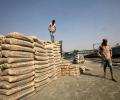
The 31st meeting of the Goods and Services Tax (GST) Council, held in December 2018, deferred a decision to reduce the GST rate for cement from 28 per cent to 18 per cent. This was despite recognising that cement - along with automobile parts - remained among the few mass-consumption items still taxed at the highest slab, which was originally meant for luxury and sin goods.

Buckling under pressure, the government on Wednesday cut the excise duty on petrol and diesel by Rs 5 and Rs 10 respectively to bring down retail rates from record highs. The announcement comes on the eve of Diwali which will help bring down the skyrocketing prices of fuel and provide some relief to the common man battling inflation.

The auto major is not just looking at domestic sales, but also planning to ramp up exports to key markets from here, like the Middle East, North Africa and Australia.
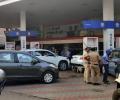
The Delhi government has announced that vehicles older than 15 years will be denied fuel at petrol pumps starting April 1.
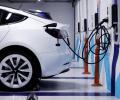
India's electric vehicle (EV) industry hit a new milestone in 2024, with sales surging 26.5 per cent year-on-year to 1.94 million units as of December 29, according to Vahan data from the Ministry of Road Transport and Highways (MoRTH).

After two days of lull, petrol and diesel prices on Thursday were again hiked by 35 paise per litre, sending retail pump prices to their highest ever level across the country.
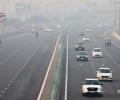
The city's 24-hour Air Quality Index (AQI), recorded at 4 pm daily, stood at 417, making it the worst in the country. On Friday, the AQI level was 396.
Petrol and diesel prices were hiked by 80 paise a litre each on Saturday, the fourth increase in five days as oil firms passed on to consumers the spike in cost of raw material. Petrol in Delhi will now cost Rs 98.61 per litre as against Rs 97.81 previously while diesel rates have gone up from Rs 89.07 per litre to Rs 89.87, according to a price notification of state fuel retailers. All the four increases since the ending of a four-and-half-month long hiatus in rate revision on March 22, have been of 80 paise a litre.
State-owned Indian Oil Corp (IOC) on Friday said international oil prices have been range-bound in the last few weeks, warranting no revision in retail petrol and diesel rates. While petrol price hasn't changed since September 22, diesel rates have been static from October 2.
Petrol and diesel prices on Sunday were hiked for the fourth straight day by 35 paise per litre each, pushing pump rates to new record high across the country with states with high incidence of local taxes such as Madhya Pradesh having the costliest fuel. The price of petrol in Delhi rose to its highest-ever level of Rs 109.34 a litre and Rs 115.15 per litre in Mumbai, according to a price notification of state-owned fuel retailers. Diesel now costs Rs 98.07 a litre in Delhi and Rs 106.23 in Mumbai.
The price of diesel sold to bulk users has been hiked by about Rs 25 per litre in line with a near 40 per cent rise in international oil prices, but retail rates at petrol pumps remain unchanged, sources said. Petrol pump sales have jumped by a fifth this month after bulk users like bus fleet operators and malls queued up at petrol bunks to buy fuel rather than the usual practice of ordering directly from oil companies, widening the losses of retailers. Worst hit are private retailers like Nayara Energy, Jio-bp and Shell, who have so far refused to curtail any volume despite a surge in sales.
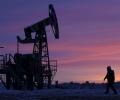
International oil prices jumped to the highest level since 2014, topping $87 a barrel but domestic petrol and diesel prices remained unchanged for the 74th day in a row - a freeze that may be linked to ensuing assembly elections in states like Uttar Pradesh and Punjab. Brent - the key global oil benchmark - soared to $87.7 per barrel mostly due to rising geopolitical tensions and supply-side disturbances due to Yemen's Houthi group's attack on oil facilities in the United Arab Emirates. Also, global inventories are waning. The attack, some analysts believe, may lead to more hostile behaviour between the two power centres in the Middle East - Iran and Saudi Arabia.
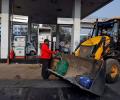
Diesel price on Friday was hiked by 20 paise per litre - the first increase in rates in over two months - as international oil prices neared their highest since 2018. Price of diesel was hiked to Rs 88.82 per litre in Delhi and to Rs 96.41 in Mumbai, according to a price notification of state-owned fuel retailers. Petrol price was not changed. It costs Rs 101.19 a litre in Delhi and Rs 107.26 in Mumbai.
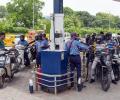
Petrol price on Monday was hiked by 30 paise a litre and diesel by 35 paise, taking the total increase in rates in the last one week to Rs 4-4.10 per litre. Petrol in Delhi will now cost Rs 99.41 per litre as against Rs 99.11 previously while diesel rates have gone up from Rs 90.42 per litre to Rs 90.77, according to a price notification of state fuel retailers. Rates have been increased across the country and vary from state to state depending upon the incidence of local taxation.

Although India's hopes to nab the big one went unrealised, it was heartening to see filmmaker Payal Kapadia and her globally acclaimed creation All We Imagine As Light, among the nominees for Best Non-English Film and Best Director. Aside from that disappointment, the Golden Globes remain a ho-hum affair livened up by occasional display of wit and wildness.
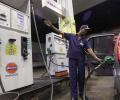
Petrol and diesel prices were hiked by 80 paise a litre each on Wednesday, taking the total increase in rates in 16 days to Rs 10 per litre.
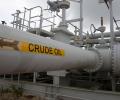
The basket of crude oil that India buys has hit a decade high of $121 per barrel, but retail selling prices of petrol and diesel continue to remain frozen. The Indian basket on June 9 touched $121.28, matching levels seen in February/March 2012, according to data available from the oil ministry's Petroleum Planning and Analysis Cell (PPAC). As per the PPAC, the Indian basket of crude oil averaged $111.86 per barrel between February 25 and March 29 - the immediate period after Russia's invasion of Ukraine sent oil on fire.
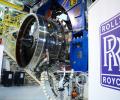
Aerospace major Rolls-Royce has announced its intention to double its supply chain sourcing from India over the next five years. The company plans to increase sourcing of complex parts for advanced aerospace engines, naval propulsion systems, diesel engines, and gas turbine engines to grow its presence and participation in India's defense sector. Rolls-Royce currently sources a wide range of high-precision parts and engine components from Indian partners for its civil aerospace, defense, and power systems businesses. The company highlights India's emergence as a preferred global sourcing hub and emphasizes its commitment to strengthening partnerships with both existing and potential Indian suppliers to develop capabilities for manufacturing complex engine components locally for global markets. Rolls-Royce highlights its established ecosystem of strategic partnerships, skilled talent, engineering and digital capabilities, service delivery, supply chain, and manufacturing in India, along with a history of successful technology transfer for licensed production of various engines in the defense domain. The company believes that strengthening the supply chain and enhancing ecosystem capabilities will pave the way for future co-production opportunities, supporting India's vision of becoming a self-reliant defense powerhouse. Rolls-Royce emphasizes its commitment to serving the needs of India's armed forces and its focus on participating in co-development opportunities for critical combat engine technologies.

'This market for diesel starts at around Rs 6.3 lakh and goes up to Rs 7 lakh, and with Saathi we have our usual price set at Rs 6.5 lakh, so we are slightly on the lower side with a superior product.'
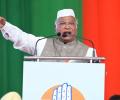
Congress president Mallikarjun Kharge has accused the BJP of rigging the Maharashtra assembly elections and called for a return to ballot paper voting. He also criticized the Modi government for selling off public assets, undermining democratic institutions, and promoting communal polarization. Kharge's remarks come as the Congress prepares for its AICC session in Ahmedabad, where it will present its political and economic views.
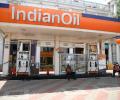
Petrol price on Tuesday was increased by 15 paise per litre and diesel by 18 paise as State-owned fuel retailers started passing on the increase in international oil prices to consumers after an 18-day hiatus.

The Indian Navy has commissioned three new warships, INS Surat, INS Nilgiri, and INS Vaghsheer, marking a significant step in India's defense self-reliance and indigenous shipbuilding capabilities. These state-of-the-art vessels are designed and built entirely in India, showcasing the country's growing expertise in defense production. The commissioning of these warships strengthens India's position as a global leader in defense and augments its maritime strength.

No change in retail prices as oil marketing firms to absorb increase

As auto major Mahindra & Mahindra (M&M) became the number two player in the retail passenger vehicle segment for the first time in February, powered by its new launches, the company is setting its sights on technology upgrades.

A war of words erupted in the Indian Parliament on Tuesday between Samajwadi Party (SP) MPs and BJP MP Hema Malini over the alleged mismanagement at the ongoing Maha Kumbh in Prayagraj. SP leaders accused the Uttar Pradesh government of failing to provide adequate food, water, and fuel, leading to the deaths of devotees. Hema Malini, however, defended the event's organization, claiming it was well-managed despite a stampede that occurred on January 29th.
