
Banaras Hindu University (BHU) has received approximately Rs 15 crore in funding from the Indian Council of Medical Research (ICMR) for six biomedical research projects. These projects aim to address critical national health priorities, including cancer detection, antimicrobial resistance, and pediatric septic shock, fostering advanced research and improving patient care.
Dr Komal Verma Saluja, a final-year student at Government Medical College Kota (GMCK), has been awarded the "Researcher of the Year Award 2026" by the India chapter of the American College of Physicians (ACP). She is the youngest and first medical student to receive this prestigious accolade. Saluja's research includes identifying an imaging biomarker for early cognitive decline in type 2 diabetes and developing a diagnostic method for fatty liver disease using echocardiography. Her achievements have brought pride to GMCK and highlight the need for more novel diagnostic and therapeutic research in India.
New research from the Revived Genomics of Personality Consortium, published in Nature, suggests that the genetics of personality, involving over 1,200 gene variants linked to the Big Five traits, are significantly associated with various life outcomes including health, education, and career paths. While individual gene variants have small effects, their combined impact is substantial, and environmental factors also play a crucial role in shaping personality.

The Union health ministry has deployed a National Joint Outbreak Response Team (NJORT) to Gujarat and Rajasthan to strengthen the response to the ongoing Chandipura Virus Disease (CHPV) outbreak.

The Maharashtra Public Health Department has issued a directive making healthy foods and beverages mandatory in all government canteens and official events. The order aims to reduce the consumption of ultra-processed foods and combat the rising incidence of non-communicable diseases by promoting a menu designed with ICMR-NIN and FSSAI guidelines.

An Indian-origin engineer couple, Anuradha and Vikas Sinha, have donated $20 million to the University of North Texas (UNT) to establish the Anuradha and Vikas Sinha College of Artificial Intelligence and Advanced Analytics. This significant gift aims to create new opportunities for students and faculty, focusing on building and deploying intelligent systems and understanding their operation within human contexts. The donation underscores the couple's belief in education and immigrant contributions to the American dream, supporting leadership, scholarships, professorships, research, and entrepreneurship.
Researchers at IIT (ISM) Dhanbad have secured a patent for a novel temperature-independent optical sensor designed to precisely measure structural tilt in two directions. This lightweight sensor, utilising Fiber Bragg Grating (FBG) technology, offers enhanced monitoring capabilities for various applications including bridges, robotics, aerospace, and geotechnical systems, promising low maintenance and long-term stability checks.
A new study published in The Journal of Neuroscience reveals a precise connection between individual breath patterns and neural activity in the brain. Researchers found that subtle variations in each breath, such as longer inhales or slower exhales, are directly reflected in corresponding brain activity patterns. This goes beyond traditional measures of breathing rate, offering a richer understanding of how respiration influences cognition, emotion, and memory, and could have implications for conditions like SUDEP and SIDS.

Researchers at IIT Madras have patented a chemical-free antibacterial surface that physically eliminates harmful bacteria, including "superbugs," without relying on antibiotics or disinfectants. This innovative technology uses specially engineered nanostructures to rupture bacterial cell walls, offering a sustainable solution to Antimicrobial Resistance (AMR) for biomedical and public health applications.

SCTIMST and Invasive Technologies have launched "Chitra Core," a new drug-eluting coronary stent designed with significantly less metal to reduce complications. This indigenous innovation, developed in collaboration, aims to provide advanced and cost-effective cardiac care, building on decades of Indian medical device development. The institute is also developing a unique TiN-coated stent for global markets.
The University of Liverpool and the Indian Institute of Science (IISc) have established a joint seed fund to promote research and innovation collaborations in areas such as AI, biomedicine, quantum technology, and space.

Karnataka Chief Minister D K Shivakumar met with AI major Anthropic to discuss a long-term partnership aimed at accelerating AI adoption across governance, education, healthcare, research, and the state's startup ecosystem. The collaboration focuses on deploying AI solutions responsibly, ensuring data privacy, and developing AI-focused skilling programmes and an AI University.

The Centre has reviewed the monsoon situation, noting a reduced rainfall deficit and ongoing preparedness for the kharif season amidst El Nino concerns. A high-level meeting chaired by the Principal Secretary to the Prime Minister discussed measures across various sectors, emphasising continuous monitoring and coordinated action to mitigate potential impacts on agriculture, water resources, and essential commodities.

'As bacteria become increasingly resistant, preserving the effectiveness of existing antibiotics is everyone's responsibility.'

Young adults in India are increasingly grappling with high blood pressure, a condition once thought to affect mainly the older demographics. Cardiologists point to sedentary lifestyles, obesity, chronic stress and unhealthy diets as primary drivers of this silent epidemic.

IIT Bhubaneswar researchers have developed 'ArsenSafe', a portable, low-cost device for rapid, on-site detection of arsenic in drinking water. This innovation aims to address the critical public health challenge of arsenic contamination in groundwater, offering a solution that doesn't require laboratory infrastructure.
IIT Madras researchers have developed an indigenous pilot plant in Tiruchirappalli capable of processing 100 tonnes of electronic waste annually. This zero-discharge, single-acid process recovers valuable metals like copper, lead, and tin from PCBs, addressing India's growing e-waste challenge and supporting circular economy initiatives.
IIT Madras researchers have developed an indigenous pilot plant in Tiruchirappalli capable of processing 100 tonnes of electronic waste annually. This zero-discharge, single-acid process recovers valuable metals like copper, lead, and tin from PCBs, addressing India's growing e-waste challenge and supporting circular economy initiatives.

A new study indicates that India's monsoon season could experience a significant increase in uncompensable heat stress under a 2 degrees Celsius global warming scenario, extending the duration of extreme heat conditions.
A new study reveals that herbal cigarettes, often marketed as a safe alternative to tobacco, produce emissions that are comparably or even more damaging than regular tobacco cigarettes.
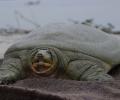
India's first satellite-tagged Ganges soft-shell turtle released in Kaziranga.

Love+happiness brings less doctor visits, less anxiety, less stress, quicker healing, all things that are good for your body.

India has launched its first repository of data on major psychiatric disorders, CALM-Brain, in Bengaluru. This initiative aims to systematically document details of patients with mental illness to improve diagnosis and treatment.

The FIFA World Cup in Vancouver has intensified concerns among locals regarding increased policing and displacement of homeless individuals and drug users. Residents report more aggressive sweeps and confiscation of belongings, despite city officials stating these are routine operations and not directly influenced by the tournament.
Experts highlight India's significant market potential for assistive technologies, estimated at Rs 75,000-95,000 crore by 2030. They advocate for a National Assistive Technology Policy to address current gaps in access and service delivery, fostering inclusion, independence, and economic participation for persons with disabilities and the elderly.

The Nizam's Institute of Medical Sciences (NIMS) in Hyderabad has achieved a significant milestone by completing 2,000 kidney transplants, making it one of the leading institutions in India for this procedure. The majority of these transplants were performed free of cost under government schemes.

"Rather than worrying, preparation is required. Contingency plans will be made for affected districts and crop changes will be considered wherever necessary"
Researchers at IIT Kanpur are studying alpha waves in the brain to understand how stress affects cognitive functions. The study aims to build automated models of stress dimensions using EEG and correlating them with factors like loss of control, helplessness, and anxiety.

Researchers have discovered that Delhi's urban forests are significant carbon sinks, storing substantial amounts of carbon in trees and soil, with the potential to generate revenue through carbon credits. The study highlights the importance of preserving and expanding these forests to combat climate change.

The government on Sunday gave a strong push to upgradation and expansion of healthcare infrastructure, medical education and pharma sector with the Union Budget 2026-27 announcing a slew of steps, including those aimed at making India a global hub for allied healthcare professionals and biopharma manufacturing.
Researchers at IIT Bombay have discovered that heatwaves in the Indo-Gangetic Plains are primarily caused by local land and weather conditions, rather than hot air originating from elsewhere, emphasising the need for location-specific early warning systems.
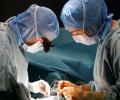
Doctors at AIIMS, Delhi, have successfully performed a simultaneous pancreas-kidney transplant after 18 years, marking a significant advancement in organ transplantation in India. The surgery was performed on a 30-year-old patient with end-stage renal disease caused by Type 1 diabetes.

Through his commitment to democratic norms, debate, dissent and constitutionalism, Jawaharlal Nehru helped ensure that parliamentary democracy took deep root in independent India. Utkarsh Mishra evaluates Nehru's 17 years as India's first prime minister, examining his role in nation-building, democratic institution-building, economic planning, scientific advancement and foreign policy.
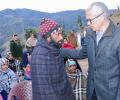
Fresh findings suggest pesticide compounds and elevated cadmium levels may be linked to the deaths of 17 people in a remote village in Rajouri district.

The two nurses, who tested positive for Nipah virus, have been admitted to the Beliaghata ID Hospital in Kolkata, a senior state health department official said, while describing their condition as extremely critical on Wednesday.

Union Minister Jitendra Singh inaugurated a new biotechnology facility and dedicated a national facility for recombinant cells and sensors at the Rajiv Gandhi Centre for Biotechnology in Thiruvananthapuram, highlighting India's focus on biotechnology and its potential for economic growth.

US President-elect Donald Trump has nominated Indian-American scientist Jay Bhattacharya to lead the National Institutes of Health (NIH), the country's top health research and funding institutions. Bhattacharya, a professor of Health Policy at Stanford University, is known for his research on the health and well-being of vulnerable populations. Trump also nominated Jim O'Neill as the deputy secretary of Health and Human Services to work alongside Robert F. Kennedy Jr.
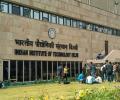
IIT Delhi, in collaboration with the University of Exeter, is developing cutting-edge sports technology, including wearable ultrasound sensors for injury prevention and helmets that can detect concussions in real-time, potentially revolutionising athlete safety and performance.
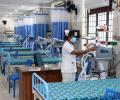
Two suspected cases of Nipah virus have been detected in West Bengal, prompting a national outbreak response team to be deployed. The central government is providing full support to the state.
The Union health ministry has been allocated Rs 99,858.56 crore in the Budget 2025-2026, an around 11 per cent hike over the Rs 89,974.12 crore in the budget (revised estimates) of 2024-2025 with the government announcing setting up daycare cancer centres at all district hospitals over the next three years.
