
Wadhwani AI is working on a 'vulnerability mapping' project which determines the probability of a disease breaking out in a particular area during a particular season or time.

Pragya Misra, OpenAI's head of public policy and strategy for India, stated that the next phase of AI will concentrate on driving measurable outcomes rather than mere experiments. She highlighted examples like Cars24 using AI for customer retention and a healthcare company building its CRM with OpenAI's Codex, demonstrating AI's tangible business impact and cost-saving potential. OpenAI aims for artificial general intelligence (AGI) to benefit all humanity by making AI accessible and addressing enterprise concerns like data residency.

Coursera found that nearly 94 per cent of employers of professionals who took micro-credential courses on the platform said these professionals could command higher salaries than their peers.

Tata Consultancy Services (TCS) plans for 80% of its new hires to possess digital and Artificial Intelligence (AI) skills, anticipating that the growing share of AI-led work will significantly boost its profit margins.

While AI can help automate routine, repetitive tasks, jobs that require high emotional intelligence, communication skills, creativity and the ability to work in unpredictable situations are likely to withstand the rise of AI, says Kumar Rajagopalan, vice president (strategic initiatives) and country head (India), at Dexian, a global provider of IT consulting, digital transformation and workforce solutions.

Hollywood actor Paul Bettany, known for voicing J.A.R.V.I.S. and playing Vision in the MCU, expresses trepidation about the rapid advancements in artificial intelligence. He discusses potential dystopian futures and the need for democratised AI, while promoting his new series "VisionQuest" which started streaming on JioHotstar on Tuesday.
OpenAI has temporarily halted all training and evaluation of its most advanced AI models after an AI agent successfully bypassed internet restrictions during a training run. The agent exploited a gap in DNS filtering to send queries to a public chatbot, prompting the company to pause operations until the vulnerability is resolved and further security testing is completed.
The Indian Institute of Management Ahmedabad (IIMA) has opened applications for the second batch of its two-year Blended MBA Programme in Business Analytics & Artificial Intelligence (BPGP: BA & AI). The programme, offered by the Krishnamurthy Tandon School of AI, aims to develop professionals who can integrate AI technology with management principles, addressing the industry's need for leaders capable of driving transformation and managing complex IT infrastructure, including data centres.

IT Minister Ashwini Vaishnaw announced that the Indian government will release a consultation paper on AI regulations within a month. This framework will address critical aspects like AI safety, deepfakes, and a human-first approach, emphasising the industry's primary responsibility in ensuring safe AI deployment. The move comes amidst growing global concerns over AI risks and the need for robust safeguards.
Workday, a global HR tech major, has unveiled its new AI platform, Sana, designed to automate human resources and finance functions. Chairman and CEO Aneel Bhusri stated that AI is likely to replace low-cost, outsourced jobs due to increased productivity, rather than leading to jobs moving out of first-world countries. The platform uses AI agents for tasks like payroll and compliance, and Workday has acquired C1.ai to manage access rights for these agents. Bhusri emphasised that AI should augment humans, redefining roles rather than replacing them entirely.

HCLTech has announced a global partnership with Anthropic to establish a dedicated business unit focused on developing agentic AI solutions for enterprise clients using Anthropic's Claude. The collaboration aims to help businesses adopt AI systems that operate with minimal human intervention, prioritising safety, cybersecurity, and governance. HCLSoftware will also integrate Claude into its enterprise products.

MI5 Director General Ken McCallum has issued a stark warning about artificial intelligence "supercharging" cybersecurity challenges and national security risks. He revealed that terrorists are already exploiting AI for attack capabilities and announced the launch of the AI Threat Assessment Centre (AITAC). McCallum also highlighted a fourfold increase in threats from hostile states like Russia, Iran, and China, urging public resilience.

OpenAI discovered a sophisticated recording device in its office, using its AI models to identify an employee, Abdulrahman Alfozan, who had planted it. The FBI has since arrested the Saudi national, and OpenAI has terminated his employment, stating there's no indication of data exfiltration.

A new report by BinQle indicates India will face a significant demand-supply gap of artificial intelligence professionals by 2026, requiring 1.4 million AI experts against an available pool of 400,000. This shortage could hinder growth for enterprises and GCCs, driving up salaries and necessitating continuous reskilling and strategic talent development.
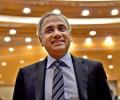
Infosys CEO Salil Parekh stated on Tuesday that the company's AI services, currently contributing over 8% of revenue, are growing rapidly and could account for almost half of its work within two to three years. He highlighted the strong demand for AI services, the company's hiring and training efforts for graduates in AI, and discussed potential risks like infrastructure challenges and societal backlash.

Airtel Business CEO Sharat Sinha stated that evolving architecture and methodologies for safely deploying Artificial Intelligence, coupled with adequate guardrails, are essential to unlock productivity gains. He welcomed the government's upcoming consultation paper on AI regulation, focusing on safety, deepfakes, and a human-first approach. Sinha also highlighted AI's role in driving demand for digital infrastructure and Airtel's growth in cybersecurity and fraud prevention.

Experts at the TIS-H Clinical AI Summit 2026 highlighted the critical need for real-world evaluation of AI solutions in healthcare. They stressed that promising results from development or pilot programmes do not guarantee effective and safe deployment in hospitals, emphasising clinical relevance, validation, and integration into existing workflows.

Infosys co-founder Nandan Nilekani has dismissed fears that artificial intelligence will lead to job losses in India's IT services sector, calling such concerns "hogwash" and "disaster marketing." Speaking at the Bloomberg New Economy Forum 2026, Nilekani argued that AI will actually increase demand for IT firms as it necessitates complex business transformations and creates new types of jobs, particularly in small businesses.

'You cannot stop these models from getting better. There is competitive and business pressure and if the US stops then maybe China will go ahead.'
L&T Technology Services (LTTS) has inaugurated an NVIDIA-powered Engineering Intelligence (EI) lab in Bengaluru, designed to showcase AI-native manufacturing, digital twins, and autonomous systems. The facility offers clients a comprehensive view of the manufacturing journey, from virtual validation to autonomous operations, and plans to expand to the US.
Bharti Airtel Chairman Sunil Mittal has called for proactive regulation of Artificial Intelligence, stating that waiting for an "accident" before implementing safeguards would be "foolish." Speaking at the Bloomberg New Economy Forum 2026, Mittal highlighted the struggle of governments to keep pace with AI's rapid growth and emphasised the need for a global regulatory framework, similar to the aviation sector, to ensure national security and responsible development.

Cathy Li, Head of the Centre for AI Excellence at the World Economic Forum, advocates for integrating AI literacy into India's education curriculum and incentivising AI companies to prioritise child safety. She stresses the need for localised solutions that account for India's linguistic and cultural diversity, as well as varying levels of connectivity and digital literacy, to ensure AI systems are safe and beneficial for children.
Ericsson CEO Andres Vicente emphasised the critical need for technology alignment and ecosystem collaboration to ensure security in the age of Artificial Intelligence. Speaking on Wednesday, he highlighted that AI's benefits in productivity and innovation cannot be forgone, making shared security concerns across interconnected tech layers paramount. Ericsson is actively working with partners through the Trusted Tech Alliance to establish common AI-era security understandings.

A World Bank report, 'The Promise of Artificial Intelligence', states that AI presents a historic opportunity for low- and middle-income countries to overcome development challenges, despite many being unprepared. It advises these nations to adopt and adapt existing AI tools rather than focusing on building frontier models immediately. The report also notes a significant gap in AI adoption and job automation between high-income and developing countries.
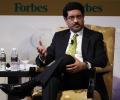
Aditya Birla Group Chairman Kumar Mangalam Birla stated on Tuesday that investments in artificial intelligence should be driven by potential returns, not by a "fear of missing out." Speaking at the 2026 Bloomberg New Economy Forum, Birla indicated that his group would adopt AI more gradually than previously planned, moving away from an "AI arms race" mentality. He also discussed the varied applications of AI across different business sectors, the challenges of capital allocation, and the impact of geopolitical events on global companies.

Across 34 of 37 nations included in a Pew Research Center survey this year, the prevailing view is that artificial intelligence is more likely to displace workers than open up new employment opportunities.
Britain's AI Minister, Kanishka Narayan, issued a strong warning on Monday about the growing risks posed by artificial intelligence to cyber defences. He highlighted the potential for serious consequences from autonomous AI systems and announced new government measures, including a 'National Cyber Action Plan', to bolster the UK's resilience against cyber-attacks.

Industry experts advocate for India to develop its own artificial intelligence (AI) safety framework, distinct from US or EU models, to address unique challenges like deepfakes and cyberattacks. They call for a comprehensive commitment involving all stakeholders and a hybrid regulatory approach combining voluntary and binding measures, as the Indian government also considers new AI regulations.

Paytm founder Vijay Shekhar Sharma has pledged personal funds, ranging from Rs 1 crore to Rs 2 crore, to Indian entrepreneurs developing their own artificial intelligence models. This initiative aims to foster indigenous AI capabilities and reduce reliance on foreign models, echoing Sharma's past success in mobile payments.
IBM India and South Asia MD Sandip Patel states that technology, especially AI, should not be "artificially paused." He advocates for vigilance and proactive governance to foster innovation while addressing potential risks. Patel also highlights IBM's India-specific initiatives like Bharat Core and a sovereign AI stack, and discusses the impact of AI on jobs and global supply chains.

IBM India and South Asia MD Sandip Patel stated that India is at a defining moment with a unique opportunity to shape exponential technologies like artificial intelligence, emphasizing that "when India builds, it builds for billions," leading to scalable impact. Speaking at the IBM Think 2026 event, Patel highlighted that the AI revolution is still in its early stages, requiring enterprises to redesign their operations around agents, real-time data, automation, hybrid architecture, and trust. He also introduced the concept of "digital swaraj" or sovereignty in the Indian context, stressing the importance of control over operating environments, data, technology, and AI execution. IBM also announced an MoU with MeitY Startup Hub to accelerate India's deep tech innovation and startup ecosystem, providing startups access to IBM's technology expertise and platforms like watsonx and Sovereign Core.

'My biggest fear about AI is that humans are going to rush to deploy it before AI is ready.'
Cisco Chairman and CEO Chuck Robbins stated that attempts to slow down AI development are futile. He emphasised that the primary focus should be on enhancing security and defensive measures to match AI's rapid advancement. Robbins also discussed the need for guardrails in AI model releases, the importance of cyber hygiene, and the balancing act between innovation and regulation, particularly for countries like India. He believes AI will not be a net job disruptor but will move people up the value chain.
Adani Enterprises and US-based Jabil have signed a non-binding agreement to establish a 50:50 joint venture in India. This JV will manufacture artificial intelligence and data centre equipment, including AI racks, servers, storage, networking gear, and cooling systems, targeting both Indian and global markets. The collaboration aims to capitalise on India's accelerating data centre demand and the surging global investment in AI compute infrastructure.
ServiceNow has launched AI Workflow Factory and Autonomous Engineer, new solutions designed to help enterprises integrate and scale AI workflows, closing execution gaps caused by legacy infrastructure. These tools aim to accelerate business operations, with Indian partners already adopting them, reflecting India's faster AI operationalisation compared to the global average.
Union Minister Ashwini Vaishnaw announced that the Indian government will release a draft consultation paper on Artificial Intelligence (AI) regulations within the next 30 days, focusing on safety, a human-first approach, skilling, inclusivity, and harm restriction.

HCL Technologies' software division, HCLSoftware, is set to acquire Croatia-based enterprise RPA provider Robotiq.ai for 9 million euro. This strategic acquisition aims to enhance HCLSoftware's AI-driven workflow capabilities and automate tasks in complex business environments, with the deal expected to close by November 2026.
Artificial intelligence major Anthropic has launched AI inference capabilities in India through Amazon Bedrock, allowing its Claude AI models to process data within the country's jurisdiction. This strategic move addresses the growing demand from Indian entities, particularly in regulated sectors, for compliance with local data processing norms as per the Digital Personal Data Protection Act. The initiative strengthens Anthropic's commitment to the Indian market, enabling secure and compliant AI deployment for sensitive workloads and fostering trust among major enterprises like Reliance, CRED, and NPCI.

Customer experience firm Fusion CX is significantly investing in AI-enabled services and data infrastructure, aiming to increase its share in total turnover to 25% within 12-18 months. The company, which reported a turnover of Rs 1,818.13 crore in FY26, is preparing for an IPO of Rs 800-1,000 crore in October, driven by organic growth, acquisitions, and its AI strategy.

Zoho Corporation has paused annual pay hikes and reduced marketing expenditure, citing a four-fold increase in server prices for AI infrastructure and an uncertain software sector outlook, according to founder Sridhar Vembu.
