
Early reform of the United Nations Security Council, terrorism and peacekeeping will be among the main issues that India will pursue during the world body's General Assembly session, Indian ambassador to the UN has said.

Prime Minister Narendra Modi on Sunday discovered a "special connection" with Mongolia when he entered the Buddhist country's Parliament to deliver a speech, the first foreign leader to do so on Sunday -- a holiday.

'There is an insistence that the government bring about reforms if India is to succeed. The fact is that many nations have done reforms, but are not Great Powers,' says Aakar Patel.

The G-4 foreign ministers' grouping, that includes India, on Thursday called for urgent reform of the United Nations, including the Security Council, an issue that India has emphasised for the past several years.
'Instead of isolation, India should respond militarily to every act of terrorism assessed to have come from across the border, unilaterally declare Pakistan a State that supports terrorism and cease all economic dealings with it.'

For a rising country like China with its sights set on global and regional power, any coming together of the US and India is the worst case scenario. Hence, China is concerned with the emerging equations between New Delhi and Washington, says Srikanth Kondapalli.

'Indira Gandhi and P N Haksar did not want Pakistan to leave as an embittered foe hell-bent on taking revenge for being humiliated so comprehensively.'

'Antonio Guterres takes over as the UN secretary-general with tremendous goodwill as the process of his election was without the usual horse trading and compromises.' 'We have every reason to believe that he will be sensitive to Indian positions,' says Ambassador T P Sreenivasan.

Sanctions against North Korea following its H-bomb test could have serious repercussions and may prove disastrous for all the players involved, says Debalina Ghoshal.

Rajaram Panda explains why the US president needs to restrain himself and build a relationship with China to put any credible pressure on North Korea.

Prime Minister Malcolm Turnbull's first State visit to India is an indication of the success of India's Act East Policy, says Dr Rahul Mishra.

'In the last 55 years India and Pakistan have gone to wars, but nobody spoke about scrapping the Indus Waters Treaty.'
'For every act of terrorism on Indian territory for which there is credible evidence pointing to the Pakistan army and the ISI's involvement, carefully calibrated military strikes must be launched against the Pakistan army,' says Brigadier Gurmeet Kanwal (retd).

''The avoidance of the 'P' word had less to do with reality and more to do with the politics -- domestic and international -- of Mr Modi and his efforts to both appear statesman-like (vis-a-vis Pakistan) and rid himself of the taint of being some kind of Muslim-baiting hardliner.'

The expulsion is likely to cloud India-China ties as Narendra Modi visits China for the G-20 Leaders Summit on September 4-5 and Xi Jinping is scheduled to be in Goa for the BRICS meeting on October 15-16.

'When sensitive territory goes into the hands of your enemy. he becomes more powerful in military terms.' 'Assuming the Chinese take over the Doklam Plateau they will not stop at that.' 'They will keep ingressing, and it will be easier for them to further expand their territory.' 'I feel the Chinese will vacate that area in two months after it begins to snow.'

China's intended role for AIIB is not so different from the existing Western lenders like the World Bank.

'We rarely choose to fight when the threat is still a nascent threat. When we do fight, we fight when the invaders reach Panipat and are preparing to knock on the gates of Delhi.'
Pyongyang wants the world to recognise its nuclear capability, says Srikanth Kondapalli.

Modi also made a call for European Union unity and said India would play a positive role in enhancing that through Germany.

Russian President Vladimir Putin has warned the United States against any unilateral military stike on Syria, saying it would trigger a new wave of terrorism, result in the collapse of the United Nations and claim more innocent victims as the conflict could spread beyond Syria's borders.

The strategic pacts were inked after the summit between Prime Minister Narendra Modi and his Japanese counterpart Shinzo Abe during which they also discussed international and regional issues of mutual importance including UN security reforms.

Trump said that America's relationship with Russia 'may be at an all-time low', but he hoped that it would have been wonderful if the two countries could get along.

The BRICS summit made clear that China's support for Pakistan is unwavering. China will continue to pressure India to ease tensions with Pakistan and resolve the Kashmir dispute.
Will the unpredictable North Korean leader provoke conflict on the Korean peninsula?

Narendra Modi's positive engagement with Barack Obama has well and truly washed away the doubts and slights of the past.

As India strives to make its Act East Policy a comprehensive politico-diplomatic and economic success, Brunei gains more salience, says Dr Rahul Mishra.

Yale University has issued a statement saying that Human Resource Development Minister Smriti Irani attended a weeklong programme and received a certificate from the university last year, along with several other lawmakers from India. George Joseph/Rediff.com reports from New York
'There is a problem with the rise of a popular view that sees Kashmir through the prism of the larger, chronic Hindu-Muslim tensions.' 'By redefining the Kashmir problem simplistically in Hindu-Muslim terms could end up keeping Kashmir but losing most Kashmiris,' says Shekhar Gupta.

'Pakistanis are very clever in manipulating us,' former Bush administration official tells US lawmakers.
'I say Modi was India's last chance.' 'Because the kind of work this government has done -- I'm talking about physical delivery -- is fantastic, like no time in our history.'
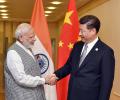
Chinese chief negotiator Ambassador Wang Qun told ANI on Friday, "NSG will not take up India's case as of now. There are differences on admitting non-Nuclear Non-Proliferation Treaty members. Signing the NPT first is one of five criteria (for membership). These have not been set by China, but by group as a whole."
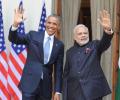
The greatest challenge before India is how to strike a fine balance of its relationship between its neighbour and strategic rival China, and the US.
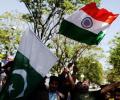
India suggested that Pakistan should refrain from using the Right of Reply and instead "use the right of introspection" to think about the direction in which the country is moving.

The previous democratically-elected government in Bhutan sought to get cosy with China. Will the new Tshering Tobgay dispensation mend the fences with India? Shubha Singh examines

United States Secretary of State John Kerry, heading a high-powered delegation of his cabinet colleagues and top military commanders, today left for India as part of his 10-day seven nation Asia trip.
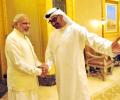
Apart from key bilateral issues, the two leaders also discussed situation in the region, particularly in wake of the increasing threat of terrorism and extremism from various sources including the Islamic State militant group.

The powerful United Nations Security Council on Monday unanimously adopted a resolution that endorses the landmark nuclear deal between Iran and six world powers.

Is North Korea really dismantling its nuclear programme? Rajaram Panda explains the many challenges to denuclearise the Korean Peninsula.
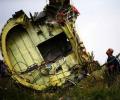
Balazs Jarabik, a visiting scholar at the Carnegie Endowment for International Peace, where his research focuses on Ukraine and Eastern Europe, says preliminary and not direct evidence points suggests that the Ukrainian rebels shot down the plane. In this interview with Rediff.com's Vicky Nanjappa, Jarabik says that it would not be right to call this an act of terror or a war crime as it appears to be a horrible mistake.
 © 2026 Rediff.com - Advertise with us - Disclaimer - Privacy Policy - Sitemap - Feedback - About us - Terms of use - Grievances