
The order will be effective till March next year for the festivals that require immersion of idols of deities, including those made of Plaster of Paris (PoP).
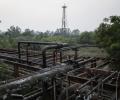
Incineration of entire 358 tonnes of toxic waste from the defunct Union Carbide factory finally concluded as contaminated soil and packaging material were burnt at a disposal plant in Madhya Pradesh's Pithampur on Thursday, over six months after the consignment was brought to the unit.

Heavy rains lashed Delhi, leading to a red alert, traffic snarls, and waterlogging. The IMD predicts continued rainfall.

The Maharashtra government has officially declared the Sarvajanik Ganeshotsav as the 'State Festival of Maharashtra', emphasizing its commitment to preserving and promoting the festival's cultural legacy. The government has also addressed issues related to POP idols and pledged financial support for celebrations.
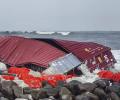
The Kerala State Pollution Control Board (KPCB) is on high alert after a Liberian vessel carrying hazardous cargo sank off the Kerala coast. While no calcium carbide containers have washed ashore yet, a thin layer of oil spill has been detected. The KPCB is working to contain the spill and prevent it from reaching the shore, but rough conditions at sea have hampered efforts to spray dispersants. The board is also taking steps to prevent the oil from reaching the Ashtamudi and Vembanad lakes.

Uttar Pradesh Chief Minister Yogi Adityanath on Wednesday dismissed concerns regarding faecal contamination in the waters at Triveni Sangam, stating that continuous monitoring and purification processes ensure its quality.
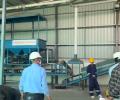
The trial incineration of 10 tonnes of waste from the Union Carbide plant in Bhopal, responsible for the 1984 gas tragedy, began on Friday afternoon in Pithampur, Madhya Pradesh. The process, ordered by the Madhya Pradesh High Court, is expected to take 72 hours to complete. The waste includes soil, reactor residues, pesticide residues, and other materials. The State Pollution Control Board says the chemicals in the waste have become "almost negligible" and there is no presence of methyl isocyanate gas. The incineration process is being monitored by the Pollution Control Board and broadcast live.

As many as 12 flights were diverted at the Delhi airport between 3 pm and 4 pm due to adverse weather conditions, an official said.

Temperatures are likely to remain in a similar range until Thursday, with a gradual fall expected from June 13.
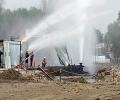
The district administration said that air pollution is still within the acceptable limit and the local office of Pollution Control Board, Assam is closely monitoring the situation.
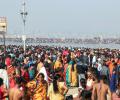
The National Green Tribunal on Wednesday slammed the Uttar Pradesh Pollution Control Board, asking whether it disputed the Central Pollution Control Board's finding on high levels of faecal coliform being found in the water at various locations in Prayagraj during the ongoing Mahakumbh.

The first round of trial incineration of 10 tonnes of waste connected to the 1984 Bhopal Gas Tragedy has begun in Pithampur, Madhya Pradesh, amid tight security. The Supreme Court refused to intervene in the MP High Court's order directing the transfer and disposal of waste at a private company-operated plant in Pithampur. The trial incineration is being conducted in the presence of scientists from the central and state pollution control boards. Protesters have expressed apprehensions about harm to the human population and environment due to the disposal of this waste, but the state government has rejected these concerns, saying that solid arrangements are in place for safe disposal.

A new report by the Central Pollution Control Board (CPCB) submitted to the National Green Tribunal has said that the water quality during the recently concluded Maha Kumbh in Prayagraj was fit for bathing, despite earlier reports indicating otherwise. The report, based on statistical analysis of water samples collected during the Kumbh, found that the median values for key parameters like pH, dissolved oxygen, biochemical oxygen demand, and fecal coliform count were within permissible limits. However, the report acknowledges significant variability in data due to factors like upstream activities and sampling conditions. The matter is set for hearing on April 7.

The Supreme Court of India has refused to interfere with a Madras High Court order quashing notices issued by the Tamil Nadu Pollution Control Board (TNPCB) against Isha Foundation, founded by Jaggi Vasudev. The notices were issued for alleged violation of environmental norms in the construction of a yoga and meditation center in Coimbatore. The court, however, emphasized that its order should not be seen as a precedent for regularizing illegal constructions and that Isha Foundation must comply with all environmental norms. The foundation had argued that its facilities fall under the education category, which exempts them from needing environmental clearance.

The Madras High Court has dismissed a petition seeking to prevent the Isha Foundation from conducting Mahasivarathri celebrations at its Coimbatore campus. The petitioner had alleged that the foundation lacked adequate sewage treatment facilities and caused noise pollution. However, the Tamil Nadu Pollution Control Board (TNPCB) informed the court that the foundation has adequate treatment facilities and complies with noise regulations. The court dismissed the petition, allowing the celebrations to proceed.
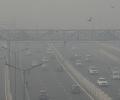
Delhiites continued to breathe toxic air on Tuesday as the air quality edged closer to the severe zone in some areas.

The Supreme Court on Wednesday rapped the Haryana and Punjab governments over non-prosecution of violators found guilty of stubble burning and summoned the state chief secretaries to appear before it on October 23 and submit. an explanation.

The Supreme Court of India has reprimanded the Tamil Nadu Pollution Control Board (TNPCB) for delaying legal action against Isha Foundation, a yoga and meditation center founded by Sadhguru Jaggi Vasudev, over alleged environmental violations. The court criticized the TNPCB for taking two years to challenge a Madras High Court ruling that quashed a showcause notice against the foundation. The court also emphasized the importance of environmental compliance for the yoga center, noting that it must meet all necessary parameters. The case highlights ongoing legal challenges and environmental concerns related to the Isha Foundation's activities.

A group of people in Dhar, Madhya Pradesh, performed 'Shavasana' (corpse pose) to protest against the proposed disposal of Union Carbide waste, connected to the Bhopal gas tragedy, in the district. They claim the disposal would harm the health of locals and the environment. The waste has been brought from Bhopal for incineration in Pithampur. Protests have been ongoing since the arrival of the waste last month, and local authorities are conducting an awareness campaign to address concerns.

Forty years after the Bhopal gas tragedy, 377 tons of hazardous waste has been shifted from the defunct Union Carbide factory for its disposal, an official said.
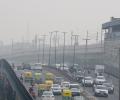
'The pollution has increased. We are facing breathing problems and irritation in the eyes'

A strong dust storm and gusty winds followed by rain hit Delhi-NCR on Friday evening, causing trees to be uprooted in several parts and leading to traffic congestion. Thunderstorms caused power disruptions in several parts of the city, primarily due to trees and branches falling on electricity cables. The India Meteorological Department (IMD) has issued an orange alert, recommending people stay indoors and avoid unnecessary travel.

Among heavy criticism of West Bengal Chief Minister Mamata Banerjee's remarks on Prayagraj's Mahakumbh, Jagadguru Shankaracharya Swami Avimukteshwaranand Saraswati Maharaj on Wednesday supported the CM, saying that the religious event has been mismanaged.

The unloading of 337 tonnes of hazardous waste from the defunct Union Carbide factory in Bhopal began at an incineration unit in Pithampur, Madhya Pradesh. The exercise, which commenced amid protests from locals concerned about its impact on health and environment, is being carried out following safety regulations. The waste, comprising soil, reactor residues, pesticide remnants, and other materials, has been transported from Bhopal to Pithampur for disposal. The Madhya Pradesh Pollution Control Board has asserted that the chemical effects of certain substances in the waste have diminished. The local administration has launched an awareness campaign to address concerns regarding the disposal process.

The Indian government has stated that the water in the Ganga river at Triveni Sangam in Prayagraj was fit for bathing during the recently concluded Maha Kumbh, citing a new report from the Central Pollution Control Board (CPCB). The report, however, contradicts an earlier CPCB report that found high faecal coliform levels at several locations in Prayagraj during the Maha Kumbh. The government also highlighted measures taken to ensure water quality during the event, including the installation of sewage treatment plants and the use of advanced oxidation techniques to treat wastewater.

The Uttar Pradesh government is taking comprehensive measures to ensure the Ganga River is "dip-safe" during the Maha Kumbh, a massive religious gathering. This includes daily water testing, a 200-km temporary drainage system for greywater, and state-of-the-art technology to manage human waste. Authorities are also emphasizing the importance of keeping the river clean by removing pooja waste and encouraging the use of reusable items.

The Uttar Pradesh government, citing a scientist, has asserted that Ganga water at the ongoing Maha Kumbh in Prayagraj is as pure as "alkaline water", debunking concerns raised by the Central Pollution Control Board (CPCB) about water quality. The government claims that a scientist found no bacterial growth or decline in the water's pH level, despite millions of devotees bathing in the river. However, experts caution that the quality of the Ganga water is not static and can vary greatly depending on various factors.
The Ganga water at the Triveni Sangam in Prayagraj, where lakhs of people are taking a holy dip every day during the ongoing Maha Kumbh, is currently unsafe for bathing as it exceeds the prescribed limit for biological oxygen demand (BOD), a key parameter to determine water quality, according to government data.
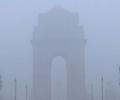
The India Meteorological Department (IMD) reported that very dense fog began forming around 5.30 am, resulting in a thick haze over different parts of the national capital.
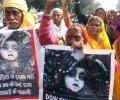
The work to remove 377 metric tonnes of hazardous waste from the now-defunct Union Carbide factory in Bhopal has begun. The waste will be transported to an incineration site in Pithampur near Indore, around 250 km from Bhopal. The move comes after the Madhya Pradesh High Court ordered the authorities to clear the site, 40 years after the deadly gas leak that killed thousands and left hundreds of thousands with health problems.

Dense fog enveloped Delhi for a second consecutive morning, leading to disruptions in air and rail traffic. Visibility dropped to zero in several areas, causing delays for 81 trains and diversions for 15 flights. The Met office attributed the fog to calm surface winds, and predicted continued dense to very dense fog throughout the day. Meanwhile, the national capital's air quality remained in the 'very poor' category, with an AQI reading of 380 at 9 am.

Delhi's air quality improved for the second consecutive day on Thursday, with the Air Quality Index (AQI) recorded in the "moderate" category at 165. This marks a significant improvement from the "poor" category recorded on Tuesday. Several restrictions imposed under Stage 4 of the Graded Response Action Plan (GRAP) were lifted, but some restrictions under Stage 2 remain in place. The Decision Support System (DSS) has not been updated since Friday, with technical difficulties hindering the update of data for the last six days.

This deterioration in air quality led to prompting enforcement of Stage II of the Graded Response Action Plan (GRAP) in the national capital.

The Indian government has announced staggered working hours for its employees in Delhi due to the severe air pollution in the city. The move comes after a week of 'severe' pollution levels, which have slightly improved but are still in the 'very poor' zone. The order also encourages employees to pool vehicles and use public transport to minimize vehicular pollution.

The Bombay High Court has declared a pollution-free environment a constitutional right and criticized the Maharashtra government for failing to address the issue of air pollution in Mumbai. The court expressed its disappointment with the government's lack of initiative, stating that citizens should not suffer due to the inaction of authorities. The court highlighted the severe air pollution levels in Mumbai, especially along major roads, and ordered the traffic department to take immediate action to reduce congestion and improve traffic flow.

The PMK has now lent its voice to the protests against the mining of atomic minerals in Kanyakumari.

A bench of Justices Abhay S Oka, Ahsanuddin Amanulllah and Augustine George Masih said the Commission for Air Quality Management in National Capital Region and Adjoining Areas Act of 2021 (CAQM Act) was enacted without creating required machinery for implementing the provision to curb air pollution.
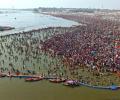
The Maha Kumbh, billed as the world's largest gathering, concluded on Wednesday after 45 days, with lakhs of devotees taking a dip in the Sangam, the confluence of the Ganga, Yamuna, and mythical Saraswati rivers. Despite a stampede that killed at least 30 people, millions continued to visit the Kumbh, seeking salvation through the ritual bath. The event saw a mix of faith, tradition, and technology, drawing pilgrims and tourists from across the globe.

The AQI recorded in Mumbai at 8 am was 131, categorised as 'moderate', as per the Central Pollution Control Board.

With such announcements grabbing the voters' attention, critical issues like pollution, especially the smog that chokes Delhi every winter, remain largely unaddressed. Many residents have raised concerns over the lack of concrete action plans to combat air pollution, which continues to pose a severe health risk to Delhiites.
 © 2026 Rediff.com - Investor Information - Advertise with us - Disclaimer - Privacy Policy - Sitemap - Feedback - About us - Terms of use - Grievances